


Pediatric Primary Care in Concord, NC: A Family Guide

What if the best pediatric primary care fit isn’t simply the closest office, but the one that can support your child’s care over time? When you’re looking for pediatric primary care Concord NC families can feel confident about, location and appointment convenience are natural starting points. Continuity, clear communication, and care that respects your family’s needs matter, too.
Ongoing pediatric primary care gives families a place to discuss preventive care, new illnesses, and questions about a child’s growth and development. Knowing what to expect can make it easier to compare options and prepare for routine visits or unexpected concerns.
This guide explains what pediatric primary care generally includes, what to consider when comparing options in Concord, and how to prepare for your child’s care. Quality Comprehensive Health Center is a Charlotte-based community nonprofit that offers pediatric care as part of its commitment to accessible, respectful healthcare. Use these practical steps to identify what matters most to your family and choose a clear next step.
Table of Contents
What Pediatric Primary Care Means for Families in Concord, NC
Choosing care for your child can feel like a big decision. You’re looking for more than a place to go when someone gets sick. Pediatric primary care is ongoing, age-aware care that helps address a child’s health needs over time, with a caregiver and care team working together. For families comparing pediatric primary care Concord NC options, continuity matters: a care team familiar with a child’s health history can put new questions and follow-up into context.
Routine care and attention to a new concern serve different purposes. A planned appointment offers time to discuss a child’s health, prevention, and questions that may not feel urgent. A new illness or sudden concern may need a more timely assessment. Considering the difference can help Concord families choose an appropriate next step instead of treating every concern as the same kind of visit.
For a broader overview of children’s health care, see Pediatrics. This video also offers general guidance on what families may value in a pediatrician:
What does a pediatric primary care home do?
A primary care home is an ongoing relationship, not a particular building. A child and caregiver return to a care team over time, building a shared picture of the child’s health needs, concerns, and relevant history. That continuity can help families know where to bring questions and help clinicians consider new concerns in context.
Primary care broadly includes prevention, discussion of health questions, and follow-up when needed. A caregiver might ask about a change in sleep, eating, mood, or activity, or discuss healthy habits as a child grows. These conversations give families space to raise concerns and understand possible next steps. The care plan depends on the child and the concern.
When do families commonly seek pediatric care?
Families may seek routine care to discuss a child’s overall health, preventive needs, or development. Questions often shift with age: caregivers may ask about early growth and routines, later notice school-age changes, or want support discussing social and emotional well-being with a teenager. These are general topics to raise with a clinician, not signs of a particular diagnosis.
A new concern that needs prompt attention is different from a routine question that can wait for a planned appointment. If you’re unsure how quickly a concern needs attention, contact an appropriate healthcare professional for guidance. Don’t wait for a routine visit if symptoms seem serious. For potentially life-threatening symptoms, call emergency services immediately.
These distinctions can help families compare options by considering whether care supports an ongoing relationship and makes communication clear. You don’t need to predict every future health question. Focus on finding an arrangement that works for your family and gives you a place to start.
How Pediatric Care Supports Children From Infancy Through the Teen Years
A child’s health questions change as they grow. Infants rely on caregivers to notice and describe changes, while older children can share more about how they feel. Over time, conversations may shift from feeding and sleep to school, friendships, emotional well-being, and greater independence. Pediatric primary care gives families a place to raise these changing questions and discuss prevention and development with a clinician.
Infancy and early childhood: building a foundation
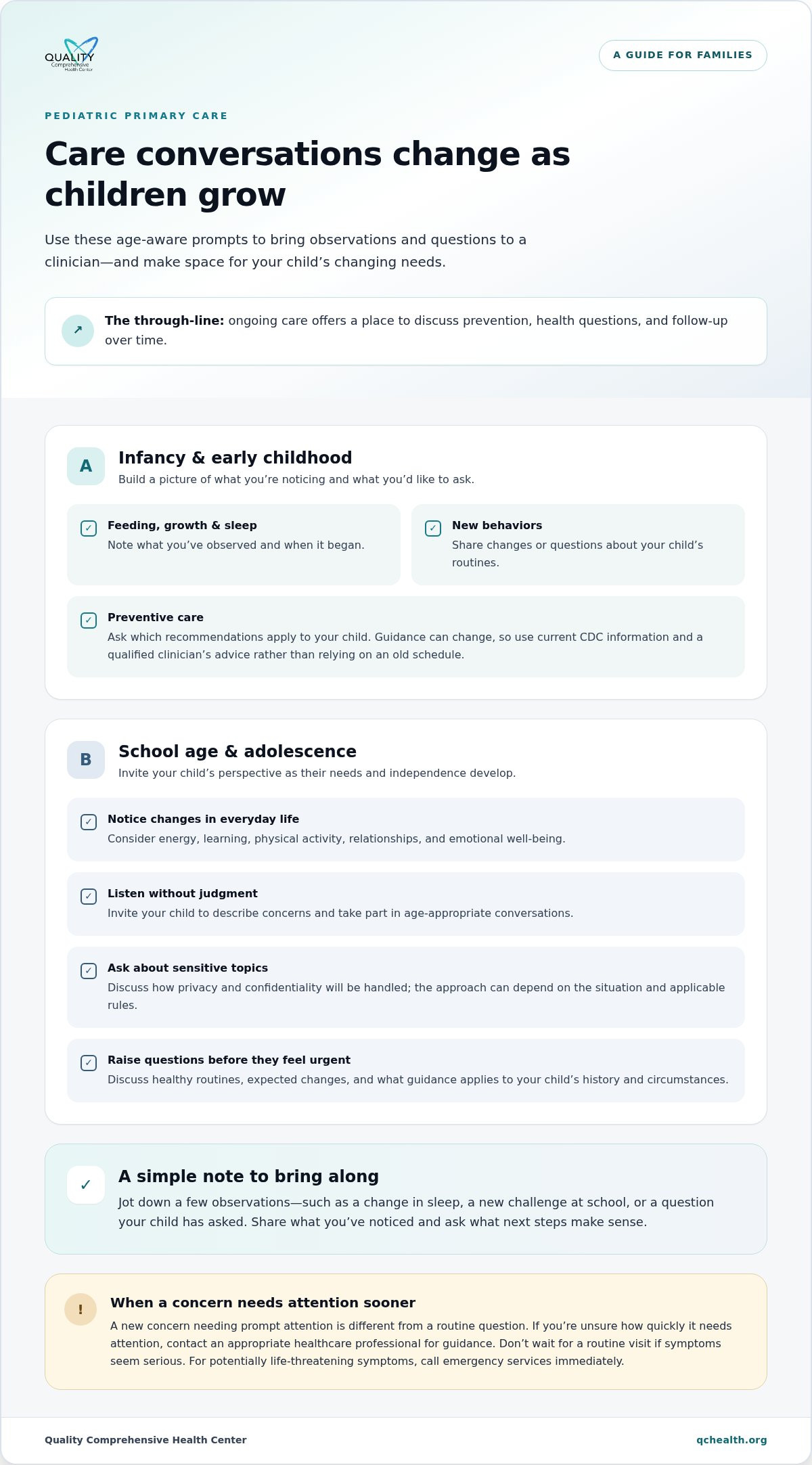
In the early years, caregivers may have questions about feeding, growth, sleep, or a new behavior. Note what you’ve observed and when it began, then bring those details to a clinician. Families can also discuss age-appropriate preventive care and which recommendations apply to their child. Because guidance can change, use current CDC information and a qualified clinician’s advice rather than relying on an old schedule. The American Academy of Pediatrics also provides child-health resources for families.
School-age children and teens: supporting changing needs
As children enter school and adolescence, conversations may include energy, learning, physical activity, relationships, emotional well-being, and growing responsibility for personal health. Parents can help by listening without judgment and inviting children to describe their concerns. A clinician can make space for age-appropriate participation while including caregivers in a way that supports the child. Privacy and confidentiality can depend on the situation and applicable rules, so discuss how sensitive topics will be handled rather than assume one approach applies to every visit.
Prevention isn’t limited to a checklist. It can include raising questions before they become urgent, discussing healthy routines, and asking what changes are expected at a particular stage. Recommendations should be individualized: a child’s history and circumstances matter, and a clinician can explain how current guidance applies. If you’re unsure what to raise, jot down a few observations, such as a change in sleep, a new challenge at school, or a question your child has asked.
For families considering pediatric primary care Concord NC, these age-related conversations help clarify what continuity can look like. Consider whether your child has room to speak, whether your questions are heard, and whether explanations make sense to you. Small interactions like these can build trust over time.
Quality Comprehensive Health Center is a Charlotte-based community nonprofit offering pediatric care and working toward health equity. Learn about its community-centered approach through QCHC pediatric care. Wherever your child receives care, bring questions to a qualified clinician and ask how recommendations fit your child’s age and needs.
How to Compare Pediatric Primary Care Options Near Concord
A convenient address is only one part of a good fit. When comparing pediatric primary care Concord NC options, weigh continuity, communication, travel, scheduling, and costs together. Features such as weekend hours or in-office services vary by practice, so focus on the details that affect your family’s day-to-day experience.
What matters beyond a clinic’s location?
Consider whether your child feels comfortable in the care setting and whether communication is accessible to your family. Think through the trip from Concord, who will take your child, and how appointment timing fits school and work. A nearby location may be convenient, but a workable travel plan, understandable follow-up, and respectful communication all contribute to a sustainable choice.
Compare the details that matter to your household rather than assuming a feature advertised by one practice is available elsewhere. Focus on how care is organized and whether that approach aligns with your family’s priorities.
How can families think about affordability and access?
Review your health plan’s benefits and consider possible out-of-pocket responsibilities for visits and related care. If your child is uninsured, look for clear affordability information and any eligibility criteria; don’t assume a discount or program applies automatically. Families can also explore this guide to Charlotte pediatric care for families without insurance and information about affordable well-child visits in Kannapolis.
There’s no single checklist for every household. Use these priorities to compare what matters most, then choose a practical next step based on your child’s needs and your family’s circumstances.
How to Prepare for Your Child’s First Pediatric Primary Care Visit
A little preparation can help you use the visit to focus on what matters most to your child and family. You don’t need to memorize every detail. A short note, available records, and a few questions give the conversation a useful starting point. If you’re exploring pediatric primary care Concord NC options, follow the clinic’s instructions for forms, records, and other arrangements.
Clarify the reason for the visit. Write a brief timeline of the concern: when it began, what you’ve noticed, and whether anything seems to affect it. For a routine appointment, note the topics you want to discuss.
Gather useful information. Collect relevant health records and a list of current medicines, allergies, and significant health history. Include family health history that may help the clinician understand your child’s circumstances. Bring insurance details or payment questions if applicable.
Prepare your questions. Choose the concerns you most want answered. A short list helps you return to important points if the conversation moves quickly or your child needs attention during the visit.
Plan for follow-up. Think about what would help you leave with a clear understanding of next steps. Ask what to watch for, whether anything needs to be arranged afterward, and how follow-up will work.
What information should caregivers gather?
Keep it practical. If your child has a new symptom, a concise timeline is often easier to discuss than trying to recall every detail during the appointment. Note changes you’ve observed and any questions about medicines or allergies. If you have prior records, bring them or follow the clinic’s instructions for sharing them. You don’t need to delay seeking care just because you can’t locate every document.
How can parents make the conversation useful?
Before the appointment, write down your top questions in plain language. You might note a concern about a change in sleep, an ongoing health question, or something your child has said about how they feel. Older children can add their own questions or describe what they want the clinician to understand. This supports their participation while keeping caregivers involved.
Before leaving, ask the clinician to explain the agreed next steps and how your family should follow up. If forms or records are needed, follow the clinic’s directions for what to bring or submit and when. A clear closing conversation can help everyone leave with the same understanding.
Urgent concerns: A scheduled appointment isn’t a substitute for emergency care. If your child has potentially life-threatening symptoms, call emergency services immediately. Don’t wait for an appointment or delay emergency care to gather records.
Learn about QCHC’s community-centered pediatric care through QCHC pediatric care.
Explore Community-Centered Pediatric Care With QCHC
Families comparing pediatric primary care Concord NC options may also consider the values behind a care organization. Quality Comprehensive Health Center (QCHC) is a Charlotte-based community nonprofit that offers pediatric care. Founded in 2004, QCHC is committed to health equity and serving underserved populations. Its location is in Charlotte, not Concord, so travel to Charlotte is an important practical consideration for families weighing whether QCHC fits their needs.
What community-centered care can mean for families
Community-centered care starts with treating each family with respect and recognizing that health conversations happen within the realities of daily life. A caregiver may be balancing work, school schedules, transportation, or other responsibilities while supporting a child’s health. These circumstances can shape the questions families bring to care. QCHC’s commitment to health equity reflects a broader focus on accessible, affirming support; each family’s needs and experience are different.
That perspective can help families feel welcome to share what matters to them. Consider whether communication feels clear, whether your concerns are taken seriously, and whether you can discuss practical barriers openly. These are useful considerations wherever your child receives care. They also help build a relationship where caregivers can participate and ask questions without feeling judged.
Choose a clear next step for your family
As you make a decision, bring together the factors explored in this guide: continuity with a care team, respectful communication, practical access for your household, and your child’s comfort. No single factor answers every question. A location that works for one caregiver may not suit another, and a supportive conversation can matter as much as appointment logistics.
Families who want to understand the role of an ongoing relationship can also read about why a primary doctor matters. Then use your priorities to choose a manageable next step, such as gathering your child’s health information or reviewing an organization’s care information.
QCHC’s pediatric care is part of its broader community-based healthcare work. Visit Explore QCHC’s care and take your next step for information about its services and contact pathways. Learning about QCHC’s approach can help you consider whether its Charlotte-based services align with your family’s needs, while keeping location and practical access in view.
Take the Next Step Toward Care That Fits Your Family
Choosing care doesn’t require predicting every health question your child may have. Start with one practical step: identify what would help your family feel supported, whether that’s clear communication, a consistent care relationship, or an approach that respects your circumstances. Use that priority to guide your next conversation about pediatric primary care Concord NC.
QCHC is a community-based 501(c)(3) nonprofit founded in 2004, with pediatric care among its offerings and a mission focused on health equity and support for underserved communities. Families considering QCHC can explore its care and decide whether it aligns with their needs.
Explore QCHC’s care and take your next step. Every thoughtful question brings you closer to a care relationship where your child and family feel heard.
Frequently Asked Questions
What does pediatric primary care include?
Pediatric primary care gives families a place to discuss a child’s health over time, including preventive needs, new concerns, and questions about growth or development. It can also help caregivers understand whether an issue is appropriate for a routine appointment or needs more immediate attention. The details of care depend on the child and the practice. Keep a note of questions between visits so you can raise them when needed.
How do I find a pediatric primary care provider in Concord, NC?
To find a fit, compare how clearly a practice explains its approach, how practical the trip is for your household, and whether its communication style feels comfortable. For pediatric primary care Concord NC families can consider, look beyond the map: think about who can bring your child, how follow-up works, and whether your child feels at ease. Review the practice’s information to understand its process for new patients.
When should my child have a well-child visit?
Well-child visits are preventive appointments, and their timing depends on your child’s age, health history, and current clinical guidance. If you’re unsure whether your child is due, review any visit records you have and discuss timing with a qualified clinician. Keep preventive care separate from an appointment for a new concern. A question that arises between routine visits can still be brought to a clinician rather than saved until the next checkup.
Can a pediatric primary care provider help when my child is sick?
Yes, a child’s primary care team can be a starting point for discussing a new illness or symptom and determining appropriate next steps. Share when the concern began and any changes you’ve noticed, without trying to diagnose it yourself. If symptoms seem severe or potentially life-threatening, call emergency services immediately rather than waiting for an appointment. For other urgent concerns, seek timely guidance from a qualified healthcare professional.
What should I bring to my child’s first pediatric appointment?
Bring relevant health records if available, along with a current list of medicines and known allergies. If your child has seen another clinician, records about prior evaluations may help provide context. You might also bring a written note describing the reason for the visit and questions you don’t want to forget. Follow the clinic’s instructions for paperwork, records, and any identification or insurance information it asks families to provide.
Does QCHC provide pediatric primary care near Concord, NC?
QCHC offers pediatric care in Charlotte, North Carolina, and is not a Concord-based clinic. It’s a community-based nonprofit focused on health equity and support for underserved communities. Families in or near Concord should consider the practical distance to Charlotte when deciding whether QCHC’s care fits their circumstances. Visit QCHC’s website for information about its care and contact pathways.
How can I make pediatric care more affordable?
Start by reviewing your family’s health coverage and checking whether your child may qualify for NC Medicaid. If your child is uninsured, QCHC offers a sliding fee scale for uninsured patients; the amount and applicable details depend on individual circumstances. Review payment information before planning care, and use current information from the relevant program or organization. Don’t assume eligibility based on income alone; review the criteria that apply to your household.



Comments