


Pediatric Physical Exam in Charlotte, NC: A Parent’s Guide

What if a child’s physical exam felt less like a mystery and more like a chance to help them feel ready for school, sports, and everyday life? If you’re arranging a pediatric physical exam Charlotte NC, you may be wondering what the clinician will check, how to help your child feel comfortable, or whether a school or sports form requires a specific exam.
A little preparation can make the visit more reassuring and useful for your family. This guide explains why children have physical exams, what may happen during an appointment, and how to help your child feel included. You’ll also learn how routine visits and school, camp, or sports requirements can differ, so you can bring the right information and paperwork.
Quality Comprehensive Health Center provides pediatric care as part of its community-focused commitment to supporting children and families in Charlotte. Read on for practical ways to prepare and topics to discuss, then explore QCHC’s pediatric care as a next step for your family.
Table of Contents
What Is a Pediatric Physical Exam, and Why Does It Matter?
A pediatric physical exam is a clinician’s assessment of a child’s health and development, shaped by the child’s age, health history, and individual needs. It may include a discussion of growth and health concerns alongside a physical examination. The visit also gives caregivers a chance to ask questions and share changes they have noticed.
Children’s needs change as they grow, so an exam isn’t a one-size-fits-all checklist. You might want to discuss sleep, appetite, energy, or a developmental change. Sharing specific observations, such as when a change began or how it affects daily activities, can help focus the conversation on what matters to your family. The exam and discussion may vary from one child or visit to another.
A physical examination is one way clinicians assess health, but its purpose depends on the visit. The general overview What is a Physical Examination? offers background on the practice. For a pediatric physical exam Charlotte NC families arrange, the child’s age, health, and reason for the appointment help shape what the clinician reviews.
How a child’s physical exam differs from a sick visit
A routine physical generally takes a broader view of a child’s health and development. A sick visit focuses on a current concern, such as a sore throat or new rash. Families can raise questions during either kind of care, but a routine exam isn’t a substitute for evaluation of a specific problem. If your child becomes ill or develops a concerning symptom, seek care for that issue rather than waiting for a preventive appointment.
When Charlotte families may seek a physical exam
Families may schedule preventive care to check in on a child’s health, ask questions, and discuss changes over time. There isn’t one schedule that fits every child and circumstance, so discuss timing with the clinician based on your child’s needs. A school, camp, or sports organization may also request an exam or paperwork. Requirements vary, so review the organization’s current instructions before the visit.
For families thinking through how to access care, this pediatric care guide for families without insurance offers related guidance. Whatever prompts the appointment, bringing your questions and the relevant form can keep the conversation focused. The visit is a chance to work together, not a test of whether you have every answer ready.
What May Happen During a Pediatric Physical Exam?
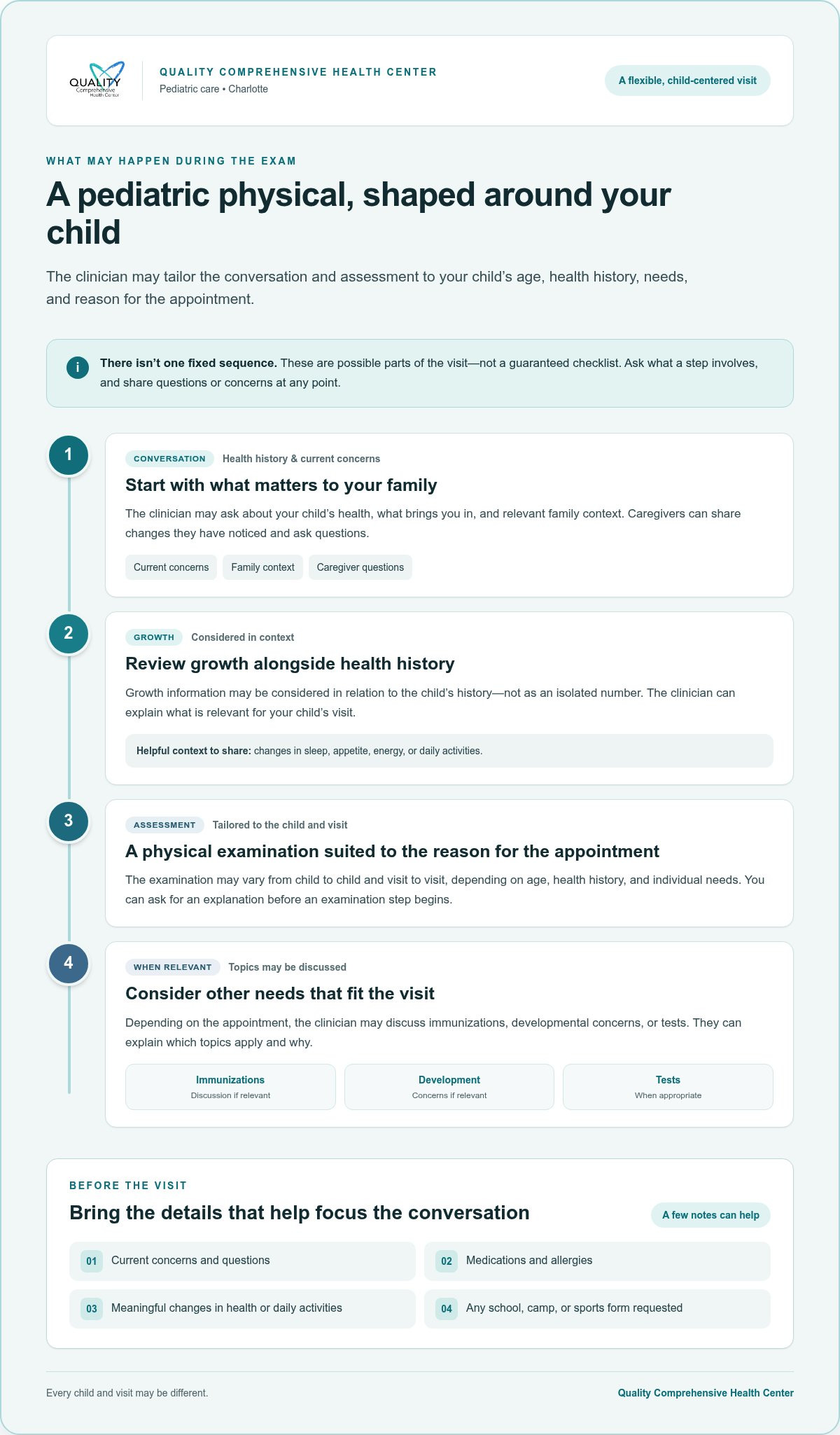
There isn’t one fixed sequence for every child. The clinician may begin by asking about your child’s health and what brings your family in, then tailor the assessment to the child’s age, history, and needs. You can ask what a step involves before it begins and share concerns at any point.
Depending on the visit, the discussion and assessment may include:
Health history, current concerns, and relevant family context.
Growth information considered alongside the child’s health history.
A physical examination suited to the child and reason for the appointment.
Discussion of immunizations, developmental concerns, or tests when relevant.
These are possibilities, not a guaranteed checklist. The American Academy of Family Physicians offers a broader overview of Components of a Well-Child Exam, including growth assessment and developmental screening. The clinician can explain which parts fit your child’s visit and why.
Health history, growth, and caregiver questions
Before the appointment, make a note of current concerns, medications, allergies, and meaningful changes in your child’s health. Details such as a change in appetite, sleep, energy, or daily activities can give context to your questions. Growth information is considered in relation to the child’s history, rather than as an isolated number. A short question list can help ensure the topics most important to your family come up during the visit.
Helping children feel comfortable during the exam
A calm, age-appropriate explanation can help a child know what to expect without creating pressure. You might say that the clinician will talk with you, check how your child is growing, and explain any examination steps. Avoid promising that every part will feel a certain way or happen in a particular order. Children respond differently, and the visit can be adapted to their needs.
If your child feels worried, let the clinician know before or during the exam. You can ask for an explanation in words your child understands or share what usually helps them feel at ease. Giving a child space to ask questions and express discomfort supports a more collaborative visit. Caregivers are partners in the conversation, not just observers.
For families arranging a pediatric physical exam Charlotte NC, preparation can start with a few notes and an open conversation. Quality Comprehensive Health Center provides pediatric care to Charlotte families. Explore pediatric care at QCHC to learn more.
Routine, School, and Sports Physicals: What Should Families Compare?
A routine physical and an exam requested for school, camp, or sports can overlap, but they may serve different purposes. Routine care supports a broader conversation about a child’s health and development. A form-related visit may also need to address the requesting organization’s specific questions, paperwork, or deadlines. Prepare based on why the exam is being requested and what the organization needs documented.
Use this comparison to identify what to bring and what to clarify. The paperwork column describes possibilities, not a guarantee that every organization uses the same form.
Forms, deadlines, and instructions can differ by school, camp, or athletic organization, and may change. Follow the current guidance from the organization requesting the exam, including its instructions for North Carolina. Don’t assume a general physical automatically meets a separate requirement.
Does a routine exam meet a school or sports requirement?
It depends on the organization’s form, the timing of the exam, and its stated requirements. Bring the exact paperwork, not just a description of what the organization needs, and note the submission deadline. If you’re scheduling a pediatric physical exam Charlotte NC for more than one purpose, share each reason with the clinician so the visit can address relevant questions and documentation.
Questions to resolve before the appointment
Before the visit, find out which form must be completed and whether the organization specifies when the exam needs to take place. Review the form for requests beyond a general physical, such as sections about health history or sports participation. Note where and how to submit the completed paperwork, and keep a copy for your family’s records.
A quick review can prevent avoidable confusion: match the form to the program, check the deadline, and bring it to the appointment. If your child also has a health concern, include that in your visit planning rather than treating paperwork as the only reason for care. Clear information helps caregivers and clinicians work together, while the requesting organization’s current instructions guide what documentation is needed.
How to Prepare Your Child for a Charlotte Pediatric Physical Exam
A little planning can help you feel organized and give your child a clearer sense of what to expect. You don’t need to have every answer ready. Focus on the details you want to share and anything the school, camp, or sports organization has asked you to bring.
Use this checklist to prepare for a pediatric physical exam in Charlotte, NC:
Appointment details: Keep the date, time, and location handy so you can plan the day together.
Forms: Bring relevant school, camp, or sports paperwork, and note the organization’s deadline.
Health information: Jot down current concerns, medications, allergies, and changes you’ve observed.
Questions: Write down what you’d like to discuss, even if it’s just a few words to help you remember.
This is a helpful starting point, not a list of mandatory documents. Bring information that’s relevant to your child and the reason for the visit. If you’re unsure how to describe a concern, a brief note about when it started or what you’ve noticed can help you explain it.
What caregivers can bring and share
If a form is involved, bring the exact paperwork and note when it must be submitted. Add any health details or questions you want the clinician to consider. You might note a recent change in sleep or energy, a medication, or a concern your child has mentioned. These reminders can keep important topics from slipping your mind during the appointment.
Making space for the child’s voice
Use language that fits your child’s age and understanding. For a younger child, explain simply that the appointment is a chance to talk about how they’re growing and feeling. Older children can describe concerns in their own words and ask questions directly. Let the clinician know if your child is worried or would benefit from reassurance or an explanation before a step begins.
Children may have different communication or comfort needs. If your child is sensitive to noise, prefers extra time to process information, or communicates in a particular way, share that with the care team. You can explain what tends to help, such as plain language or a pause to answer questions. There’s no need to wait until your child is upset to speak up.
Keep the conversation calm and honest. Avoid promising exactly what will happen or how it will feel. Instead, tell your child they can ask questions and that you’ll be there to help them share what they need. Preparing together makes room for both caregiver concerns and the child’s perspective.
Explore pediatric care at QCHC for supportive care rooted in the Charlotte community.
Find Pediatric Physical Exam Support in Charlotte at QCHC
Knowing what to bring and what to ask can make a child’s exam feel more manageable. Quality Comprehensive Health Center (QCHC) provides pediatric care to individuals and families in Charlotte. The community-based nonprofit supports accessible, affirming medical care and health equity.
For families searching “pediatric physical exam Charlotte NC,” local context matters, as does feeling respected during care. QCHC serves Charlotte from its facility on Beatties Ford Road. Families can plan what they want to discuss and bring relevant paperwork, including any requirements from a school, camp, or sports organization.
A community-centered place to begin
Children and caregivers bring different questions, experiences, and needs to a visit. A community-focused approach makes room for caregivers to share what they’ve noticed and take part in the care conversation. Bring questions about the exam, explain what would help your child feel more comfortable, and ask for information in clear language. Respectful communication helps families participate in decisions about a child’s care.
QCHC serves Charlotte from its Beatties Ford Road facility. Families can share what they’ve noticed, ask questions, and speak up if something is unclear or their child needs extra reassurance. Every family deserves to be heard without judgment.
Take the next step for your child’s care
Before an appointment, gather the information that will help you explain why you’re seeking care: your questions, relevant health details, and any form requested by a school, camp, or sports organization. Bring the exact form and keep its deadline in mind. These preparations can help your family discuss both the child’s needs and the requested documentation.
Each child is different, and families may seek support for different reasons. You don’t need to have every concern neatly organized before seeking care. Start with what you know and share what you’d like help understanding. A clear conversation can help caregivers feel prepared and give the child a chance to be included.
Explore pediatric care at QCHC as a next step for your family. QCHC’s community-centered mission is rooted in accessible, affirming care for Charlotte families.
Take the Next Step With Confidence
Your child’s care is an ongoing partnership, and a thoughtful conversation can help you feel prepared to take part in it. You don’t need to have every concern resolved before seeking care. Start with what matters to your family, and make room for your child’s questions, too.
If you’re considering a pediatric physical exam Charlotte NC, look for care that welcomes your questions and treats your family with respect. A clear, supportive conversation can help you understand the next steps for your child.
Quality Comprehensive Health Center is a community-based nonprofit serving Charlotte with accessible, affirming care. Families deserve to be heard and to receive information in a way they can understand.
Explore pediatric care at QCHC and take the next step for your family.
Frequently Asked Questions
What happens during a pediatric physical exam?
A clinician may review your child’s health history and current concerns, assess growth, and conduct a physical examination suited to the child. The steps can vary with age, health needs, and the reason for the visit. Caregivers can ask what the exam involves, mention questions they hope to address, and share comfort needs, such as needing an explanation or pause.
How often should a child have a physical exam?
There isn’t one schedule that fits every child; timing depends on age, health needs, and the clinician’s guidance. A child managing an ongoing condition, for example, may need a different follow-up rhythm than a child without current concerns. Ask the clinician what preventive-care timing makes sense for your child and how to adjust the plan as health or developmental needs change.
Can a routine pediatric physical count as a sports physical in North Carolina?
It depends on the school, league, or athletic organization’s current requirements and form. A routine visit won’t automatically satisfy every sports participation requirement. Review the organization’s instructions for the specific form, submission deadline, and any timeframe it sets for the exam. If the form asks for sports-related health information, bring it to the appointment so the clinician can see what documentation is requested.
What should I bring to my child’s physical exam?
Bring paperwork relevant to the appointment, a list of questions, and health information that may help explain your child’s needs. For instance, note when a concern began or what changes you’ve observed. If the visit is for school, camp, or sports, bring the organization’s form and note its deadline. Use the requesting organization’s instructions to identify required documents.
Can parents stay with their child during a physical exam?
Discuss your child’s comfort and preferences with the care team, since the approach may depend on the child’s age, the visit, and the examination. Explain what helps your child feel supported and ask the clinician to describe each step in age-appropriate language. If your child wants to speak privately about a concern, raise that respectfully and discuss how to support their comfort.
How can I help my child feel less nervous about a physical exam?
Offer a calm, honest explanation that fits your child’s age, and invite them to share questions. You might explain that the clinician will talk with your family and check on your child’s health, without promising exactly what will happen. If your child is worried about a particular part of the visit or needs extra reassurance, let the clinician know so you can discuss the concern together.
Where can families find pediatric care in Charlotte, NC?
Quality Comprehensive Health Center (QCHC) is a community-based healthcare provider serving individuals and families in Charlotte, and pediatric care is among its offerings. QCHC serves the community from its facility on Beatties Ford Road. Families searching “pediatric physical exam Charlotte NC” can explore QCHC’s pediatric care information as a next step in learning about care for their child.



Comments