


Pediatric Immunizations in Charlotte, NC: 2026 Guide

For families exploring pediatric immunizations Charlotte NC, it helps to separate vaccine guidance for a child’s health from the requirements for school or child-care attendance. Age-based recommendations, North Carolina entry rules, and questions about a child’s health history can feel like a lot to manage. A clear plan starts with understanding how these pieces fit together.
This guide explains how childhood recommendations differ from school and child-care requirements, what catch-up guidance may involve, and what information to gather before a conversation about your child’s care. You’ll also find practical ways to prepare for a visit and understand payment options. Quality Comprehensive Health Center provides pediatric checkups, preventive care, sick visits, and family-focused healthcare for Charlotte families. Medicaid, Medicare, and most private insurance plans are accepted, and sliding fee discounts are available for eligible patients.
As you plan, keep your child’s age, vaccine records, past reactions, and individual health needs in view. Having these details ready can make a conversation more useful and help your family decide on next steps.
Table of Contents
Pediatric Immunizations in Charlotte: Vaccine Benefits
Childhood immunization builds protection against infectious diseases, usually through vaccines given according to age-based clinical guidance. The CDC explains that vaccines help the immune system recognize and fight specific germs. A vaccine is the preparation that prompts this response; immunization is the protection the body develops afterward. Protection can vary by vaccine and person, so vaccination lowers risk but doesn’t guarantee a child will never get sick.
This distinction can make the topic easier to discuss. A vaccine is not the illness itself. It gives the immune system a chance to practice recognizing a disease without relying on the child to encounter it first. For a broader introduction to the science behind vaccines, families can explore how vaccines work and the different types used in medicine.
How vaccines help a child’s immune system recognize disease
After vaccination, the immune system learns to recognize a particular germ or part of it. If the child encounters that germ later, the body may respond more quickly. Responses vary, and protection doesn’t mean infection is impossible. Vaccination can help lower the chance of certain illnesses or their serious outcomes.
Analogy: Think of a vaccine like a practice fire drill. A drill helps people recognize what to do in a real emergency, but it can’t guarantee that every situation will unfold the same way. Similarly, a vaccine helps prepare immune defenses to recognize a threat. Recommended timing and doses depend on the child’s age, previous doses, health history, and current clinical guidance. Those details matter more than treating the schedule as a one-size-fits-all checklist.
Why vaccination supports families and Charlotte communities
Protection can extend beyond one child. When vaccination helps reduce the chance of infection, it may also limit opportunities for a disease to spread among close contacts, including household members, classmates, and caregivers. This matters for infants who are too young for certain vaccines and people whose health conditions may make infections more dangerous. Community protection is not complete or guaranteed, but each family’s informed decisions can contribute to a safer shared environment.
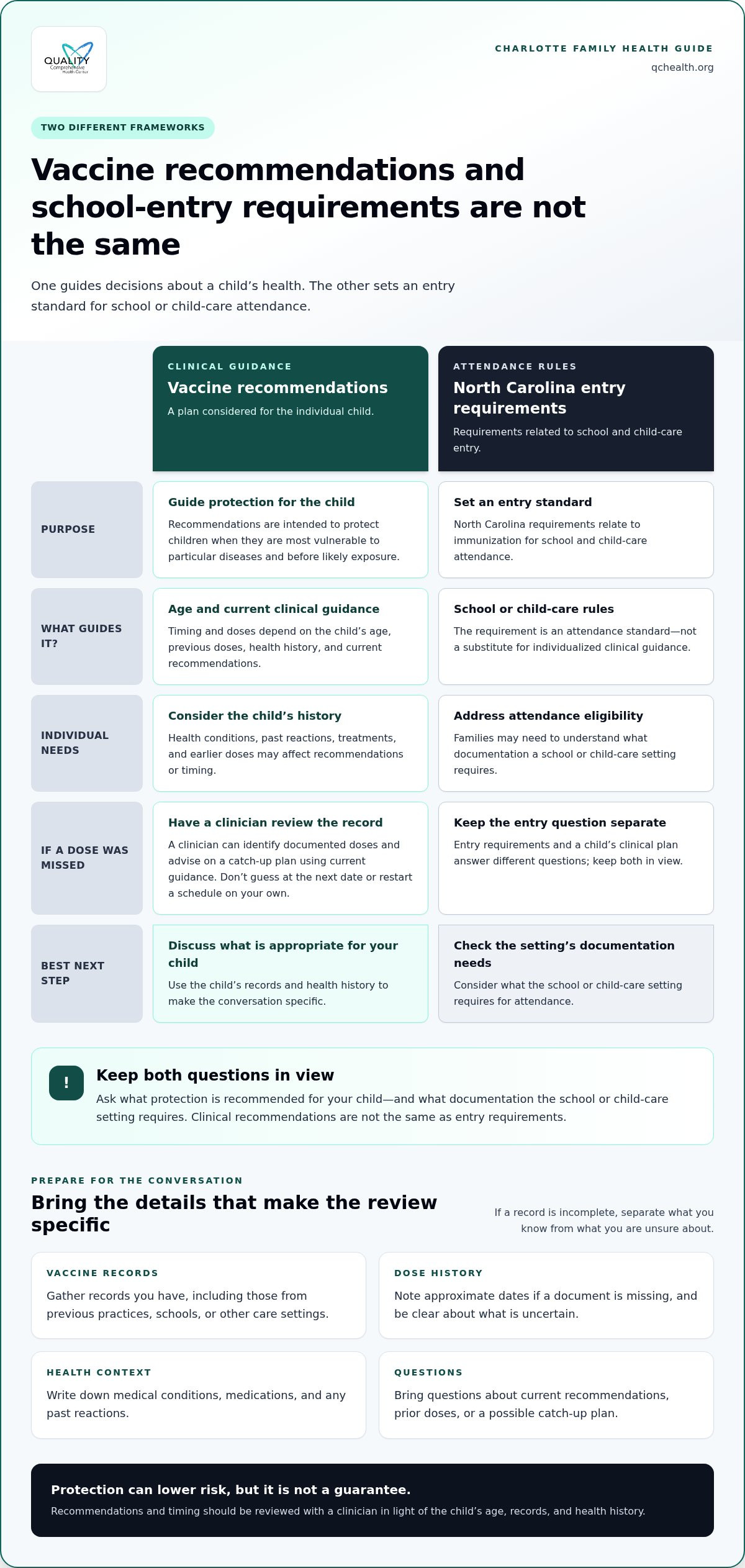
Schools and child-care settings bring children together, which can allow infections to move through close-contact groups. Vaccination can help lower that risk and support healthier classrooms and care environments. North Carolina’s school and child-care requirements relate to immunization, but they are not the same as clinical recommendations. A requirement sets an entry standard; clinical guidance considers what is appropriate for an individual child. Families exploring pediatric immunizations Charlotte NC can keep both questions in view: what protection is recommended for their child, and what documentation a school or care setting requires.
How pediatric vaccine recommendations change as children grow
A child’s vaccine schedule is age-based guidance, not a checklist that every family follows in exactly the same way. The timing is intentional: the CDC explains that recommendations are designed to protect children when they’re most vulnerable to particular diseases and before they’re likely to be exposed. The appropriate plan can also depend on earlier doses, health history, and current clinical guidance.
A schedule is a useful map, but it doesn’t replace reviewing a child’s record with a clinician. If a dose was delayed or a child has a health condition, the next step may differ from what a general calendar suggests. Families seeking pediatric immunizations Charlotte NC can use current schedules as a reference while keeping their child’s individual questions at the center of the conversation.
What parents should know about infant, child, and teen recommendations
Recommendations change as children grow. Infancy includes early protection against diseases that can be especially serious for very young children. Childhood visits provide opportunities to review continuing protection, while adolescent guidance may include vaccines relevant to older children and their changing risks. Exact timing can change as public health guidance is updated. Consult the current CDC childhood schedule and North Carolina Department of Health and Human Services (NCDHHS) resources rather than relying on an old chart or a schedule remembered from another child.
How clinicians approach missed doses and individual health needs
If a dose was missed or delayed, don’t guess at the next date or restart a schedule on your own. A clinician can review the record, identify what’s documented, and advise on a catch-up plan using current guidance. Health conditions, past reactions, treatments, and other medical details may affect recommendations or timing. Share your questions, even if you’re unsure which details matter. A careful review helps make the discussion specific to your child.
Before a conversation, gather any vaccine records you have, including records from previous practices, schools, or other care settings. Note approximate dates if a document is missing, but distinguish what you know from what you’re unsure about. Also write down your child’s medical conditions, medications, prior reactions, and questions. These details can help a clinician interpret the history instead of treating an incomplete record as complete.
Keep the conversation practical. You might ask:
Which recommendations apply to my child’s age and health history?
How do documented doses affect what may be due next?
Where can I find the current CDC and NCDHHS guidance for reference?
QCHC provides pediatric checkups, preventive care, sick visits, and family-focused healthcare. Learn about QCHC pediatric care and bring your vaccine questions to a conversation about your child’s care.
North Carolina school vaccine requirements versus recommendations
Families often encounter two kinds of vaccine guidance: recommendations based on a child’s health and requirements tied to attending school or child care. They’re related, but they answer different questions. A clinical recommendation guides care for an individual child; a school-entry requirement is a state rule for attendance in a particular setting.
The comparison below summarizes the distinction. North Carolina’s school requirements were confirmed as unchanged for the 2026-2027 school year, but families should use current NCDHHS guidance for complete rules, documentation, and exemption information.
Which North Carolina requirements apply to child care and K-12?
For kindergarten entry, the 2026-2027 requirements include DTaP, polio, MMR, hepatitis B, and varicella. Children who are 4 years old also have Hib and pneumococcal conjugate requirements. At 7th-grade entry, students need Tdap and meningococcal conjugate vaccination; a meningococcal conjugate booster is required for 12th-grade entry. These are school-entry rules, not a complete summary of every vaccine a clinician may recommend.
Child-care requirements are a separate category. Because requirements and documentation rules can depend on the setting and may change, review current North Carolina Department of Health and Human Services (NCDHHS) guidance before enrollment or a grade transition. Use its materials for current exemption information rather than relying on an old form or an informal summary.
Where Charlotte families can find local immunization information
Mecklenburg County Public Health provides local immunization information for Charlotte-area families. NCDHHS also offers a Vaccines for Children provider-finding resource at VaccinesForKids.nc.gov for families seeking information about providers participating in that program. These are public resources, separate from QCHC.
When planning pediatric immunizations Charlotte NC, consider school or child-care rules alongside your child’s individual care questions. Requirements can clarify what documentation is needed for attendance; a conversation about your child’s care can help put recommendations in context with their records and health history.
How to prepare for a child’s immunization conversation
A little preparation can make a vaccine discussion more focused and less stressful. You don’t need to know every schedule detail before the visit. Bring what you have, share your concerns, and work through questions with a clinician. For families planning pediatric immunizations Charlotte NC, clear records and an open conversation can help put the child’s history in view before discussing possible next steps.
What information to gather before a pediatric visit
Use this simple sequence to get ready:
Gather available records. Bring vaccination records from prior pediatric practices, health departments, schools, or other care settings. Dates and dose details help a clinician see what’s documented rather than relying on memory alone.
Note health history. Write down relevant conditions, current medications, known allergies, and any previous reactions after a vaccine. Include details you’re uncertain about, and label them as questions rather than confirmed facts.
List your concerns. Note what you want to understand, such as timing, safety, side effects, or how a health condition may affect recommendations. A short list can help you make space for important questions during the visit.
Review current guidance and plan follow-up. Look at current CDC and North Carolina Department of Health and Human Services resources for general guidance, then discuss how it applies to your child. Before you leave, note any next steps or follow-up the clinician recommends.
Complete records matter because a clinician needs to know which doses a child has already received and when. If records are missing or incomplete, don’t try to fill gaps by guessing or changing the schedule yourself. Explain what you know, share where records might be found, and ask how to proceed. Reviewing the available history can help distinguish a documented dose from one that still needs clarification.
Questions caregivers can ask about timing, side effects, and follow-up
There’s no need to hold back questions. Ask the clinician to explain the reasoning in plain language and connect it to your child’s age and health history. For example:
Which vaccines are recommended for my child now, and why is this timing recommended?
Could my child’s medical history, medications, or allergies affect the recommendation or timing?
What common reactions might occur, and what signs mean I should seek clinical advice?
If a dose is delayed or a record is missing, what should we do next?
Is any follow-up recommended, and how should I keep track of it?
Before the conversation ends, repeat the next steps in your own words. Ask for clear instructions about when to follow up and whom to contact if a concern comes up afterward. A brief recap can help your family leave with a plan you understand, even if some questions need further discussion.
For a child’s checkup, preventive care, or family-focused support, schedule a pediatric care appointment with QCHC.
Pediatric care in Charlotte: how QCHC supports families
Children’s health needs don’t begin and end with one question. Families may be thinking about growth, a new symptom, preventive care, or how to understand current vaccine guidance. Quality Comprehensive Health Center (QCHC) provides pediatric care in the Charlotte community with a compassionate, patient-focused approach. The center has served the community for over 20 years.
QCHC provides pediatric checkups, preventive care, sick visits, and family-focused healthcare. These visits offer a setting to discuss a child’s overall health and raise questions, including questions about vaccine recommendations or records. Sharing the child’s health history can help keep the conversation focused on their individual needs.
What families can expect from QCHC pediatric care
Care is shaped around the child and family, not just a single concern. A checkup can focus on general health, while a sick visit addresses a child’s current health needs. Preventive care supports ongoing attention to well-being. Families can share their priorities and ask questions in a respectful setting, whether they’re coming in with a specific concern or looking for continued pediatric care.
QCHC is located at 3607 Beatties Ford Rd., Charlotte, NC 28216. Clinic hours are Monday - Friday 9:00 am - 5:00 pm. Families can schedule an appointment online or call the clinic to schedule. If you’re preparing to discuss pediatric immunizations Charlotte NC, bring your child’s available health and vaccine records to help keep the conversation grounded in their individual history.
Finding accessible pediatric care in Charlotte
Payment options can be an important part of planning care. QCHC accepts Medicaid, Medicare, and most private insurance plans. Sliding fee discounts are available for eligible patients. These options can help families consider pediatric care within their circumstances, though discount eligibility depends on the patient’s situation.
For families without insurance, practical information can help clarify care options. QCHC’s Charlotte pediatric care guide for families without insurance shares more context. Each family’s needs and payment situation are different, and a welcoming place to discuss a child’s health can be a meaningful starting point.
From preventive visits to care when a child is sick, QCHC offers a community-based setting where families can bring their questions and be treated with respect. As you plan your child’s care, use current public health guidance for vaccine schedules and requirements, and bring individual questions to a pediatric care conversation.
Take the next step with confidence
A child’s health plan doesn’t need to come together all at once. Start with one manageable step: choose the question you most want answered and bring it into a conversation about your child’s care. Staying curious and keeping the conversation open can help you make thoughtful decisions as your child grows.
For families exploring pediatric immunizations Charlotte NC, reliable guidance and a respectful care relationship can make it easier to understand what applies to your child. QCHC provides pediatric checkups, preventive care, and sick visits for Charlotte families. Medicaid, Medicare, and most private insurance plans are accepted, and sliding fee discounts are available for eligible patients.
Let your family’s next step be a conversation grounded in your child’s needs. Schedule pediatric care with QCHC and connect with a community-based care team.
Frequently Asked Questions
Can my child receive vaccines if they have a mild cold?
A mild cold doesn’t automatically determine whether a child should receive a vaccine. A clinician can consider symptoms, how the child is feeling, and the circumstances of the visit before advising you. For pediatric immunizations Charlotte NC, share symptoms such as fever, worsening cough, or unusual tiredness, and ask how they affect the plan. Don’t cancel or proceed based on a general rule alone.
Do childhood vaccines cause autism?
Extensive scientific research has found no causal link between vaccines and autism. The CDC reviews vaccine safety evidence and addresses this question in its vaccine safety information about autism. It’s understandable to want clear answers about your child’s development and health. If you’re worried, share what you’ve heard with a clinician and ask them to explain the evidence and discuss your child’s questions without judgment.
How are childhood vaccines monitored for safety?
Vaccine safety is evaluated before approval and monitored after vaccines are in use. The U.S. Food and Drug Administration reviews vaccines before licensing, while the FDA and CDC monitor safety afterward through systems including the Vaccine Adverse Event Reporting System and the Vaccine Safety Datalink. These systems help identify and assess potential concerns. Monitoring supports ongoing evaluation, but it doesn’t mean side effects never happen or guarantee an individual child’s experience.
Are vaccine side effects always a sign that something is wrong?
No. Some reactions can occur after vaccination, and what a child experiences can vary in type and severity. A symptom doesn’t by itself show whether something serious is happening, so avoid diagnosing it at home. Follow the instructions provided by the clinician, and seek medical guidance if a symptom worries you, seems severe, or is getting worse. If you’re unsure what to watch for, ask for specific guidance before leaving the visit.
Can a premature baby receive routine immunizations?
Prematurity alone isn’t enough information to decide a baby’s vaccine timing. Recommendations depend on the infant’s circumstances and current clinical guidance, so discuss the baby’s age, health history, and care needs with a clinician. Bring discharge or medical records if available, especially if care has involved more than one team. Don’t delay, skip, or adjust doses independently; ask the clinician to explain the plan for your baby.
What should I do if my child has a history of a serious allergic reaction?
Tell your child’s clinician about any serious allergic reaction before discussing vaccination decisions. Share what caused it, what symptoms occurred, how soon they began, and what treatment was needed. If you have medical records or know the product involved, bring that information. Individual assessment matters, and allergies don’t all have the same implications. The clinician can review the details and explain what guidance applies to your child.



Comments