


Coping with Work Anxiety: 2026 Guide to Calm & Performance

Updated: Aug 14
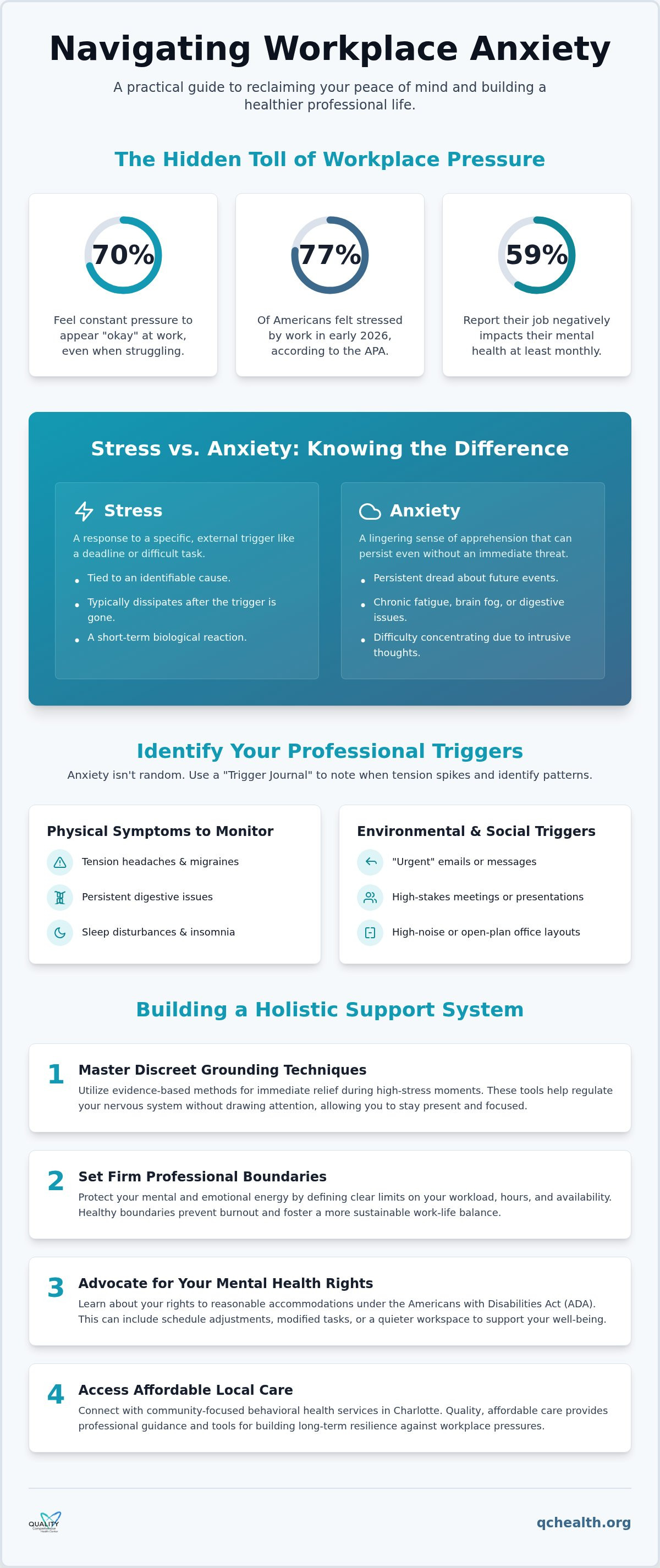
Nearly 70% of employees feel a constant pressure to appear "okay" at work even when they are struggling beneath the surface. You likely recognize that weight. It is the silent exhaustion of masking a racing heart during a meeting or pushing through brain fog to meet a tight deadline. If you feel like you are performing a role instead of doing your job, you are not alone. Coping with anxiety at work is a challenge shared by millions of professionals who fear judgment or burnout. We believe your mental Wellness is just as vital as your professional output.
You deserve a workspace where you feel grounded and capable. This guide offers practical, evidence-based techniques to help you manage workplace stress and reclaim your peace of mind. We will explore immediate relief tools, ways to set firm professional boundaries, and how to find affordable local support in Charlotte. From quick grounding exercises to navigating conversations with leadership, we provide a clear path toward a calmer workday. Let’s look at how you can transform your professional environment into a space of health, safety, and high performance.
Table of Contents
Understanding Workplace Anxiety in a Modern Professional World
In the fast-moving economy of 2026, work isn't just a place we go; it's an environment that often demands our total mental and emotional attention. Recent data from the American Psychological Association shows that 77% of Americans felt stressed by work in early 2026. For many, this isn't just a "bad day" at the office. It's a persistent struggle. When you find yourself coping with anxiety at work, your brain is often stuck in a loop of perceived threats. During a high-stakes meeting, your amygdala may trigger a "fight or flight" response. Your heart races; your palms sweat; your mind goes blank. This isn't a failure of your professional skill. It's a biological reaction to modern pressure. Validating this experience as a real health concern is the first step toward reclaiming your professional Wellness.
Anxiety vs. Stress: Knowing the Difference
It's easy to use the terms "stress" and "anxiety" interchangeably, but they represent different physiological states. Stress is typically a response to an external trigger, like a looming deadline or a difficult client. Once you complete the task, the stress usually dissipates. Anxiety is different. It's a lingering sense of apprehension that remains even when the immediate threat is gone. According to 2026 reports from Monster Jobs, 59% of workers say their job negatively impacts their mental health at least monthly. When work pressure crosses into a behavioral health concern, it often manifests as:
Persistent dread about the next workday or meeting.
Physical symptoms like chronic fatigue, brain fog, or digestive issues.
Avoidance of social interactions or collaborative projects.
Difficulty concentrating on simple tasks due to intrusive thoughts.
The Impact of Workplace Culture on Mental Health
Our local professional culture often rewards "hustle," but this mindset can lead to chronic nervous system arousal. We must recognize Psychosocial hazards in the workplace, such as excessive workloads, job insecurity, or a lack of social support. These aren't just HR issues; they are foundational health risks. At QCHC, we believe that health is a shared Community responsibility. We advocate for environments where mental health is prioritized over relentless output. Creating a safer professional space requires social advocacy and a commitment to inclusivity. If you are struggling to manage these pressures, finding affordable mental health counseling in Charlotte can provide the tools you need for long-term resilience. You don't have to navigate these hurdles alone. True professional excellence is built on a foundation of mental and emotional health.
Identifying Your Professional Anxiety Triggers
Anxiety isn't random. It often feels like a vague, heavy cloud, but it usually has specific roots in your daily routine. By pinpointing exactly what sets off your nervous system, you can move from reactive panic to proactive management. We recommend using a "Trigger Journal" for at least one week. Record every moment you feel a spike in tension. Note the time, the specific task, and who was present. Patterns will emerge quickly. You might realize your heart only starts racing before the Monday morning stand-up or when a specific supervisor sends an "urgent" email. Understanding these patterns is essential for coping with anxiety at work effectively.
Physical Symptoms You Should Not Ignore
Your body often knows you're anxious before your mind catches up. Physical signals like tension headaches, persistent digestive issues, and sleep disturbances are common indicators that you are struggling with Coping with stress at work. These aren't just minor inconveniences; they are health signals. Underlying health disparities can make these symptoms feel even more intense, especially if you haven't had consistent access to medical care. This is exactly why your primary doctor is important for your health when you are managing behavioral concerns. A physical check-up can rule out other medical issues and provide a stable baseline for your overall Wellness.
Environmental and Social Triggers
The physical office space or your digital workspace also plays a major role in your mental state. Sensory overload from high-noise environments or open-plan layouts can keep your nervous system on high alert all day. Social triggers are equally potent. For many professionals, especially those from marginalized backgrounds, coping with anxiety at work involves navigating microaggressions or gaps in workplace inclusivity. These experiences are real stressors that fuel a deep-seated fear of judgment. It helps to distinguish between a "fear of failure," which is about the quality of your work, and a "fear of judgment," which is about how others perceive you. Identifying the root of the fear allows you to apply the right grounding tool.
If your workplace environment feels increasingly overwhelming and you are struggling to find a sense of balance, our team at QCHC is here to support you with integrated behavioral health services designed for our Charlotte community.
Immediate Coping Strategies for High-Stress Moments
When a panic response hits in the middle of a presentation or a high-stakes meeting, you don't always have the luxury of stepping away. You need tools that work in seconds without drawing attention. Learning these rapid-response methods is a cornerstone of coping with anxiety at work. The 5-4-3-2-1 grounding technique is a clinical standard for pulling the brain out of a "future-dread" spiral and back into the present moment. By identifying five things you see, four you can touch, three you hear, two you smell, and one you can taste, you force your nervous system to re-engage with your physical surroundings. This simple shift can break the cycle of racing thoughts before they escalate into a full panic attack.
Box breathing is another powerful, discreet tool. Simply inhale for four seconds, hold for four, exhale for four, and hold for four again. This rhythmic pattern signals to your brain that you are safe, physically lowering your heart rate and blood pressure. For larger projects that feel insurmountable, we recommend the "Micro-Goal" method. Instead of looking at a week-long deadline, focus only on the next fifteen minutes. Breaking tasks into tiny, manageable bites prevents the overwhelm that often leads to procrastination and increased apprehension. You can even create a "Calm Kit" for your workspace, filled with small sensory items like a smooth stone, a specific essential oil, or a grounding photo that reminds you of your life outside the office.
Discreet Grounding Techniques for the Desk
Progressive muscle relaxation is a highly effective way to release physical tension without moving from your chair. Start with your toes; squeeze them tightly for five seconds, then release suddenly. Move up to your calves, thighs, and stomach. Under a desk, this remains completely invisible to coworkers. Another sensory anchor is a simple bottle of cold water. Holding the cold surface or taking a slow, mindful sip provides a sharp sensory input that can interrupt "brain fog." If you are on a difficult phone call, try visualizing a "Safe Space," a quiet, neutral environment where you feel completely in control. This mental retreat helps you maintain a professional tone even when your internal stress levels are high.
Digital Boundaries and Focus Tools
Constant pings and red badges contribute significantly to notification fatigue and baseline anxiety. We suggest silencing non-essential alerts to reclaim your focus. The Pomodoro Technique, which involves working for twenty-five minutes followed by a five-minute break, is excellent for anxious procrastinators because it provides a clear start and end point. At the beginning of each day, write a single sentence to define your "win" for the day. This keeps your focus narrow and achievable. While these tools provide immediate relief, persistent struggles may benefit from professional behavioral health services. Our team is here to help you build a long-term plan for professional Wellness that fits your specific needs.
Navigating Workplace Conversations and Mental Health Rights
Deciding whether to disclose a mental health condition is a deeply personal choice. In 2026, many professionals still feel the weight of stigma. Recent data from Monster Jobs indicates that 37% of workers believe they cannot speak openly about their mental health without facing negative professional consequences. When you are coping with anxiety at work, evaluating your workplace safety is an essential first step. Look for signs of a psychologically safe environment, such as inclusive leadership or existing Wellness programs, before sharing. If you decide to move forward, remember that the Americans with Disabilities Act (ADA) provides a legal framework for requesting "Reasonable Accommodations." These are not special favors. They are adjustments designed to ensure you can perform your job effectively while managing your health.
Scripting the Conversation with Your Manager
When you approach leadership, focus on "Workplace Support" rather than a "Clinical Diagnosis." You aren't required to provide your entire medical history to receive help. Instead, describe how specific symptoms impact your workflow and propose concrete solutions that allow you to maintain your performance. This shifts the focus to Success and professional output. Consider these specific requests:
Ask for "quiet hours" or the use of noise-canceling headphones to manage sensory overload.
Request written summaries following verbal meetings to help combat anxiety-induced brain fog.
Suggest a flexible start time to manage morning tension or to attend therapy appointments.
Always document these conversations in writing. Send a brief follow-up email summarizing what was discussed to ensure professional protection and clarity for both parties. This creates a transparent record of your proactive approach to health.
Establishing Healthy Professional Boundaries
Setting firm boundaries is a vital part of coping with anxiety at work. It involves learning to say "no" to non-essential tasks when your capacity is full. This isn't about being unproductive; it is about protecting the quality of your work and preventing long-term burnout. Protecting your personal time ensures your nervous system has a chance to reset outside of office hours. For many in our Charlotte community, navigating these conversations feels especially risky due to systemic inequities or job insecurity. We believe that professional resilience is a shared responsibility, and you deserve a workspace that respects your humanity. Starting with a mental health check-in in Charlotte can give you the clarity and confidence needed to advocate for yourself.
If you need professional guidance on managing these workplace dynamics or want to explore your behavioral health options, schedule an appointment with QCHC today. Our practitioners provide the compassionate, expert care you deserve in a safe, modern environment.
Building a Holistic Support System in Charlotte
Seeking professional support is an act of courage and a strategic career move. Coping with anxiety at work becomes much more manageable when you have a clinical partner who understands the local professional landscape. At Quality Comprehensive Health Center, we view behavioral health as a foundational pillar of your overall Success. By moving beyond self-help apps and into evidence-based clinical care, you gain personalized tools to navigate the specific pressures of the Charlotte job market. You deserve a support system that is as dedicated to your growth as you are.
Our integrated care model ensures that your mental and physical health are treated as one inseparable unit. Anxiety often has physical roots or consequences, from high blood pressure to sleep disorders. By addressing these together at our modern Beatties Ford Road facility, we provide a more efficient path to Wellness. Finding affordable mental health counseling in Charlotte should not be a secondary stressor. We are committed to removing the barriers that keep our neighbors from the care they deserve, ensuring that quality treatment is a right rather than a luxury.
Accessible Mental Healthcare for All
Financial uncertainty shouldn't dictate your access to health. We offer a sliding fee scale for our uninsured and underinsured patients to ensure that high-quality behavioral health services remain within reach. If you are struggling with rising insurance costs, learning how to get medical care with a high deductible plan can help you prioritize your mental state without draining your savings. Our team focuses on culturally affirming care that respects your unique background and professional challenges. We believe health equity is a shared Community responsibility that strengthens our entire city.
Your Journey to Wellness Starts Here
Your first behavioral health consultation at QCHC is a safe, welcoming space. You will meet with dedicated practitioners who listen first and diagnose second. We don't just see a patient; we see a professional, a neighbor, and a vital part of the Charlotte workforce. This initial meeting is about building trust and creating a roadmap for your future. Taking this first step toward a calmer, more productive professional life is the most important decision you can make for your career this year. We are here to walk with you every step of the way. Together, we can build a healthier, more resilient professional Community.
Empowering Your Path to Professional Wellness
You now have the practical tools to identify your specific triggers and apply immediate grounding techniques when workplace pressure builds. By establishing firm professional boundaries and understanding your rights under the ADA, you can transform your daily experience from one of persistent dread to one of steady performance. Coping with anxiety at work is a manageable process when you combine these individual strategies with dedicated clinical guidance. You don't have to mask your struggles or face exhaustion alone any longer.
At Quality Comprehensive Health Center, we have served as a supportive neighbor to the Charlotte community for over 20 years. Our holistic, integrated care model at our Beatties Ford Road facility ensures we treat the whole person, connecting your physical health with your behavioral well-being. We believe high-quality care should be accessible to everyone, which is why we offer a sliding fee scale for all income levels. Schedule your supportive mental health consultation at QCHC today. You are a worthy and vital part of our professional community, and we are ready to help you reclaim your peace of mind.
Frequently Asked Questions
Is workplace anxiety a valid reason for a leave of absence?
Yes, mental health conditions like anxiety are often covered under the Family and Medical Leave Act (FMLA) or the Americans with Disabilities Act (ADA). If your condition prevents you from performing essential job functions, you can request a leave of absence for treatment. You usually need documentation from a licensed provider to support this request. This time allows your nervous system to reset while you receive professional behavioral health services.
Can I get fired for having anxiety at work?
You cannot be legally fired solely for having a mental health diagnosis due to ADA protections. However, employers can still terminate employees for performance issues if no accommodations are requested. This is why it's vital to discuss your needs early. Coping with anxiety at work is much easier when you have legal protections in place. Documentation and open communication about your needs help ensure you are treated fairly.
How do I tell my boss I am struggling with my mental health?
You should focus the conversation on how your employer can support your productivity rather than sharing private clinical details. Use professional language to explain that you are managing a health matter and require specific adjustments to maintain your high standards. You might say, "I work best with written instructions to ensure I don't miss details during high-pressure periods." This keeps the focus on your professional Success.
What are some "reasonable accommodations" for anxiety in the office?
Common accommodations include flexible start times, noise-canceling headphones, or a workspace away from high-traffic areas. You might also request more frequent short breaks or the ability to attend therapy sessions during work hours. These adjustments are designed to remove barriers to your performance. They allow you to stay engaged with your team while effectively managing your internal stress levels in a sustainable, professional way that respects your health.
How much does mental health counseling cost in Charlotte if I do not have insurance?
Costs for counseling in Charlotte vary widely depending on the provider's experience and the type of practice. For those without insurance, many community health centers offer a sliding fee scale based on your household income. This ensures that behavioral health services remain accessible to everyone in our city. We recommend looking for providers who prioritize health equity and offer transparent options for uninsured or underinsured workers in our community.
What happens if I have a panic attack at my desk?
If a panic attack occurs, prioritize your immediate safety by using the 5-4-3-2-1 grounding technique or box breathing. If possible, step away to a quiet area like a breakroom or your car to let the physical symptoms subside. Remember that these episodes are temporary physiological responses. Once you feel grounded, you can return to your tasks. Coping with anxiety at work involves recognizing these moments as health signals that require compassion.
Is there an affordable mental health clinic near Beatties Ford Road?
Quality Comprehensive Health Center (QCHC) provides accessible, high-quality care right on Beatties Ford Road. Our state-of-the-art facility offers a safe and modern environment for the Charlotte community. We focus on making healthcare welcoming and affordable for all neighbors. Whether you need primary care or specialized behavioral health support, our team is committed to serving the underserved and ensuring no one is turned away due to financial barriers or insurance status.


Comments