


Annual Physical Exam Charlotte NC: What to Expect

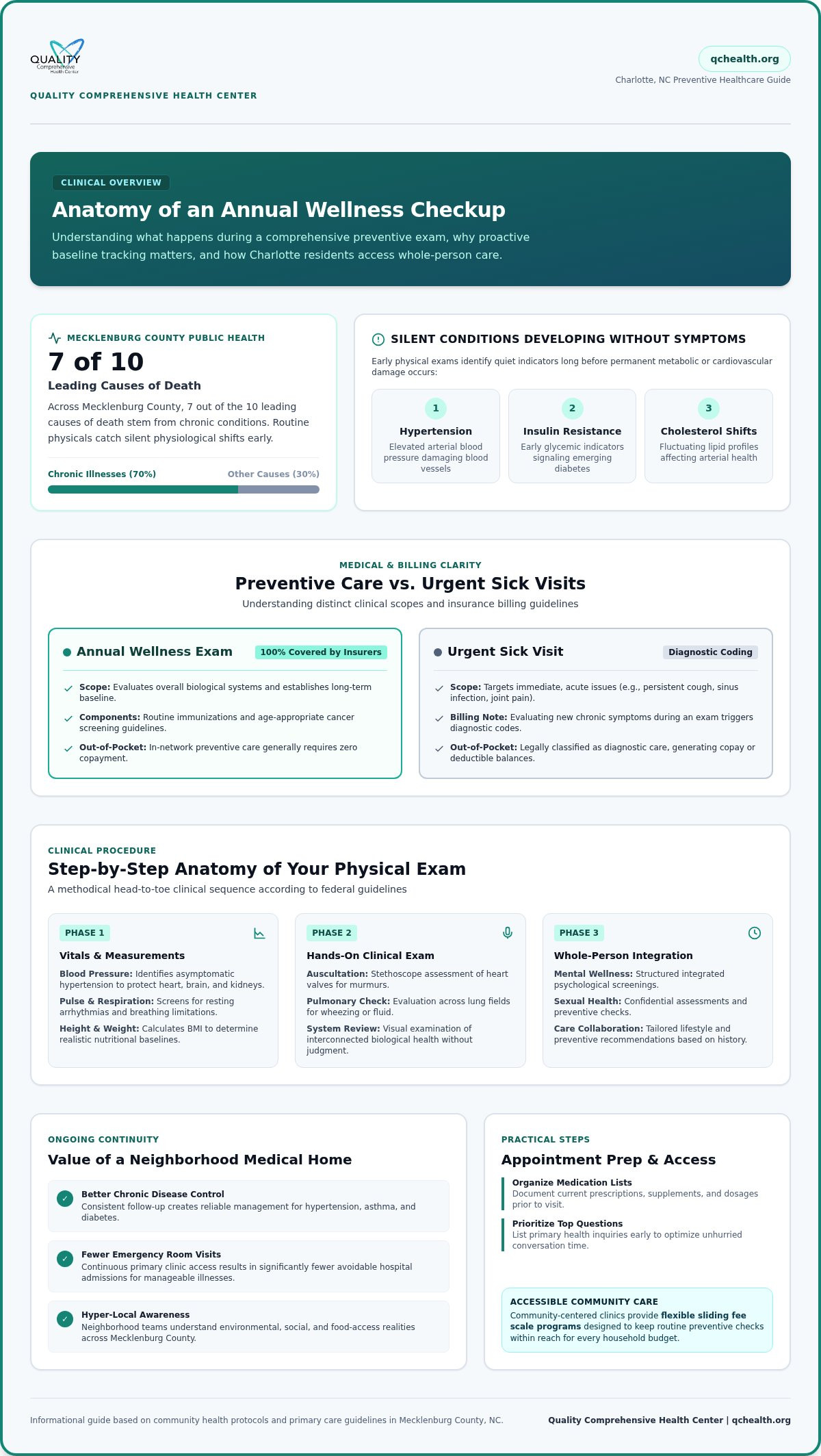
Chronic conditions account for 7 out of the 10 leading causes of death across Mecklenburg County, yet fear of unexpected bills and clinical judgment keeps thousands of neighbors from seeking care. When you schedule an annual physical exam Charlotte NC providers should treat you as a whole person, not just a ten-minute time slot. You deserve a dedicated healthcare partner who listens to your story, respects your lived experience, and honors your dignity without clinical pretense.
If you've ever stressed over hidden lab charges or felt confused about the difference between a sick visit and routine prevention, you aren't alone. In this comprehensive guide, you'll discover what happens during an annual wellness exam, why preventive screenings matter, and how to access compassionate care that respects your household budget. We'll break down essential age-based health screenings, share practical steps to prepare your questions, and show you how community-centered primary care can support your long-term health journey.
Table of Contents
Why an Annual Physical Exam in Charlotte NC Protects Long-Term Health
What Happens During an Annual Physical Exam: Step-by-Step Overview
Whole-Person Wellness: Integrating Mental and Sexual Health Screenings
How to Prepare for Your Charlotte Wellness Checkup: Checklist and Tips
Affordable Preventive Care: Finding Compassionate Clinics in Charlotte
Why an Annual Physical Exam in Charlotte NC Protects Long-Term Health
Preventive medicine centers on one simple truth: catching a health concern early transforms your treatment options. A comprehensive routine physical examination serves as an essential yearly checkpoint designed to protect your vitality before quiet symptoms turn into complex diagnoses. Rather than reacting to unexpected illnesses, this dedicated visit gives you time to build a proactive baseline with a trusted clinician.
Silent conditions often develop without a single warning sign. Elevated blood pressure, early insulin resistance, and fluctuating cholesterol levels rarely cause noticeable discomfort in their initial stages. During a routine annual checkup, your care team tracks these subtle physiological changes over time. By looking at these numbers alongside your personal and family medical history, your provider can recommend targeted lifestyle modifications or early medical interventions long before permanent cardiovascular or metabolic damage occurs. Read more about why your primary doctor is important for your health in 2026 to see how steady, ongoing partnership safeguards your future.
Preventive Care vs. Sick Visits: Understanding the Core Difference
Many patients wonder why their routine wellness appointment feels different from an urgent sick visit. A sick visit addresses an immediate, acute problem, such as a persistent cough, a sinus infection, or joint pain. In contrast, an annual wellness physical steps back to assess your overall biological systems, update routine immunizations, and review age-appropriate cancer screening guidelines.
Insurance billing standards strictly differentiate these two appointment types. Routine wellness visits use specific preventive codes that insurers generally cover at 100% with no out-of-pocket copay. If you bring up a new chronic symptom or request diagnostic evaluation for an active illness during the exam, clinics are legally required to code that portion as diagnostic care, which can generate a separate copay or deductible balance.
The Value of Establishing a Neighborhood Medical Home
True healing thrives in community. Establishing a permanent medical home in your local neighborhood delivers significant long-term clinical benefits:
Better chronic disease control: Seeing the same clinical team creates consistent follow-up for managing hypertension, asthma, or diabetes.
Fewer emergency room visits: Patients with an accessible primary clinic experience significantly fewer avoidable hospital admissions for manageable illnesses.
Hyper-local awareness: Neighborhood clinics understand the environmental, social, and food-access realities shaping daily life across Mecklenburg County communities.
When seeking an annual physical exam Charlotte NC residents benefit most from medical homes that view health as a shared, lifelong relationship built on mutual trust.
What Happens During an Annual Physical Exam: Step-by-Step Overview
Walking into a clinic without knowing what to expect can cause unnecessary stress. Knowing each clinical phase transforms the visit from an intimidating test into an empowering conversation. Following federal annual health checkup guidelines, a structured wellness appointment evaluates how your body functions as an interconnected system. The entire visit flows methodically from vital sign collection to an unhurried, hands-on clinical assessment.
Vital Signs Assessment and Clinical Measurements
Your appointment begins with baseline physiological metrics collected by the clinical staff:
Blood pressure monitoring: Identifies asymptomatic hypertension early, protecting delicate blood vessels throughout your heart, brain, and kidneys.
Pulse and respiration tracking: Screen for resting arrhythmias, heart rate irregularities, and underlying breathing limitations.
Height and weight measurement: Used to calculate body mass index (BMI), giving your doctor context to discuss realistic nutritional and metabolic targets without shame or judgment.
Head-to-Toe Physical Evaluation by Your Provider
Once vitals are recorded, your doctor conducts a hands-on physical exam. Using a stethoscope, the clinician listens closely to your heart valves to check for abnormal murmurs and assesses all lung fields for wheezing or fluid congestion. Next comes gentle palpation of the abdomen to evaluate internal organ comfort, liver boundaries, and any hidden tenderness.
The provider will also inspect your ears, nose, throat, and thyroid gland, checking lymph nodes along your neck for signs of infection or cellular swelling. Reflex checks evaluate neurological responses, while a visual skin check screens for irregular lesions that warrant closer review.
Routine Preventive Lab Work and Screenings
Laboratory work provides objective biological insights that surface long before physical signs appear. Standard preventive orders routinely incorporate three foundational panels:
Complete Blood Count (CBC): Measures red and white blood cells alongside platelets, screening for anemia, clotting issues, and immune challenges.
Comprehensive Metabolic Panel (CMP): Assesses fasting blood glucose levels, liver enzyme balance, and kidney filtration efficiency.
Lipid profile: Measures LDL, HDL, and triglyceride levels to construct a reliable baseline for long-term cardiovascular health.
If you're ready for an affirming, comprehensive annual physical exam Charlotte NC practitioners can provide the unhurried attention and respectful environment you deserve.
Whole-Person Wellness: Integrating Mental and Sexual Health Screenings
True vitality goes deeper than a healthy heart rate or stable blood work. Emotional balance, daily social pressures, and intimate wellness influence your physical stamina just as much as diet or exercise. During a comprehensive preventive care benefits for adults evaluation, modern clinical practices bridge these historical divides. Rather than isolating your body into disconnected compartments, community providers view your physical, emotional, and social life as one connected whole.
Behavioral Health Check-ins and Stress Assessments
Emotional exhaustion directly impacts physiological markers like blood pressure and sleep quality. Standard intake procedures now incorporate validated emotional health tools, such as the Patient Health Questionnaire (PHQ-9) for depression and the GAD-7 screen for persistent anxiety. These short questionnaires help uncover emotional burnout, sleep disruptions, and prolonged strain in an affirming, judgment-free environment.
Your primary clinician treats these discussions with the same matter-of-fact compassion as measuring cholesterol. When daily stress or grief feels overwhelming, community-based medical centers can coordinate direct referrals to licensed clinical social workers and behavioral health counselors under the same roof. Explore our guide on a mental health check-in Charlotte residents rely on to learn how integrated counseling supports whole-person recovery.
Confidential Preventive Sexual Health and Infection Screenings
Routine preventive physicals create a confidential space to address intimate well-being without fear of shame. Mecklenburg County reports an overall sexually transmitted infection rate of roughly 1,388.9 per 100,000 residents, with local rates reaching 873.8 per 100,000 for chlamydia and 390.5 per 100,000 for gonorrhea according to public health surveillance data. Because these conditions frequently show zero physical symptoms in their early stages, laboratory panels provide critical protection.
Your clinician can comfortably incorporate routine screenings into your blood or urine panels:
Routine HIV and viral hepatitis checks: Detect silent bloodborne viruses early, preserving liver vitality and immune function.
Chlamydia and gonorrhea evaluations: Shield reproductive health and fertility through prompt, simple antibiotic therapies.
Proactive prevention counseling: Offers non-judgmental guidance on barrier methods, pre-exposure prophylaxis (PrEP), and relationship communication.
Review our resource detailing how often should I get tested for STDs to collaborate with your doctor on a screening schedule tailored to your lifestyle. When scheduling an annual physical exam Charlotte NC patients deserve care that honors every facet of their daily well-being with unwavering privacy and respect.
How to Prepare for Your Charlotte Wellness Checkup: Checklist and Tips
A successful wellness visit is a collaborative conversation, not an interrogation. Taking twenty minutes to organize your thoughts before stepping into the exam room helps you make the most of your time with your doctor. When arriving for an annual physical exam Charlotte NC clinicians appreciate when you come prepared with your top three health concerns written down. Putting your main priorities on paper ensures your primary questions get addressed early in the visit.
Compiling Your Complete Medication and Supplement List
Accurate medication tracking protects you from dangerous pharmacological interactions. Write down every substance you take on a regular or occasional basis, noting:
Prescription therapies: List the exact drug names, current milligram dosages, and how many times per day you take them.
Over-the-counter additions: Include herbal remedies, daily multivitamins, sleep aids, and occasional pain relievers, since these can interact with prescription medications.
Known reactions: Document any adverse drug side effects or verified allergies you have experienced in the past.
Documenting Family Health History and Personal Milestones
Your biological roots offer helpful clues about your personal health roadmap. Gathering health milestones from parents, siblings, and grandparents allows your doctor to personalize preventive cancer screenings and cardiovascular checks. Focus on identifying close relatives diagnosed with diabetes, high blood pressure, early heart attacks, or stroke.
Take note of your personal clinical timeline as well. Jot down dates of major surgical procedures, prior hospital stays, and any gaps in your adult vaccine records. Sharing recent life shifts, such as changes in your daily exercise, nutrition, work stress, or caregiving duties, gives your care team the complete context behind your baseline health metrics.
Taking charge of your wellness starts with open communication and accessible support. If you want a compassionate neighborhood team that listens to your concerns and honors your individual story, schedule your annual physical with QCHC today.
Affordable Preventive Care: Finding Compassionate Clinics in Charlotte
Financial strain should never keep a family from life-saving medical attention. Many residents delay preventive screenings because they dread unexpected laboratory charges or confusing insurance deductible rules. If your household manages a high-deductible policy, review our practical guide on how to get medical care with a high deductible plan for transparent cost-saving clinic strategies. In a thriving city like Charlotte, high-standard healthcare must be accessible to everyone, regardless of employment status or income bracket.
Navigating Sliding Fee Scales and Insurance Coverage
Community health centers believe quality medical treatment is a shared civic responsibility. Unlike private practices that require steep out-of-pocket payments upfront, mission-driven clinics welcome patients covered by NC Medicaid, Medicare, and commercial insurance plans, while extending open doors to uninsured neighbors.
For individuals paying directly, sliding fee scales adjust service costs according to household size and verified income:
Simple documentation: A recent tax filing, pay stub, or proof of residence qualifies your household for discounted appointment tiers.
Affordable maintenance drugs: Qualified community clinics connect patients with on-site pharmacy programs, keeping regular prescriptions manageable.
Enrollment guidance: Dedicated medical social workers assist eligible neighbors with enrolling in North Carolina Medicaid expansion, which covers preventive wellness checks without copays.
Quality Comprehensive Health Center: 20+ Years Serving Charlotte
Deeply rooted in the community, Quality Comprehensive Health Center (QCHC) has stood as a dependable medical home on historic Beatties Ford Road since 2004. Over the past two decades across Mecklenburg County, QCHC has proven that top-tier primary medicine belongs within the neighborhood it serves. By bringing primary care, pediatric care, behavioral health services, HIV/STD screenings, and pharmacy support into one interconnected facility, our clinical teams treat patients as complete individuals.
Whether you need to establish routine care after years away from a clinic or want an affordable annual physical exam Charlotte NC families can rely on QCHC for affirming, barrier-free medicine delivered with community pride.
Prioritize Your Well-Being with Care Built for Charlotte
Your routine wellness check is far more than a clinical formality; it's an active investment in your everyday vitality. Taking an hour to evaluate silent metabolic shifts, review preventive screenings, and speak candidly about emotional stress helps you build a strong defense against chronic illness before symptoms ever emerge.
At Quality Comprehensive Health Center, we believe exceptional healthcare begins with genuine belonging. For over 20 years, our accredited non-profit 501(c)(3) health center on Beatties Ford Road has provided accessible, community-rooted primary care across Mecklenburg County. We know medical expenses can cause anxiety, which is why our flexible sliding fee scale ensures uninsured and underinsured families receive attentive treatment without financial distress.
You don't have to navigate your well-being alone. When it's time to arrange your next annual physical exam Charlotte NC neighbors can count on our clinical team for affirming, non-judgmental guidance. Schedule your annual physical exam with our compassionate Charlotte team today and take charge of your health in a center that honors your dignity at every visit.
Frequently Asked Questions
What is the difference between an annual physical exam and a routine wellness checkup?
While often used interchangeably, a routine wellness visit and an annual physical exam Charlotte NC providers conduct can involve different clinical components. A routine wellness visit frequently centers on cognitive screenings, vaccine updates, and personal health risk assessments without a head-to-toe examination. A comprehensive physical includes hands-on evaluations of your heart, lungs, abdomen, and reflexes. Both emphasize proactive prevention rather than acute sick care, giving you a baseline for long-term health.
Do I need to fast before attending my annual physical exam in Charlotte?
Fasting depends on the specific laboratory panels your provider plans to run. Routine tests evaluating fasting blood glucose and certain lipid markers often require abstaining from food and caloric beverages for 8 to 12 hours beforehand. Black coffee and plain water are generally permitted, keeping your veins hydrated for easy blood draws. Call your clinic ahead of your appointment to verify whether fasting is necessary for your scheduled morning panels.
Can I get an annual physical exam in Charlotte if I do not have health insurance?
Yes, you can readily schedule an annual physical exam Charlotte NC community clinics provide, even without active health insurance. Non-profit centers like Quality Comprehensive Health Center offer compassionate primary care through sliding fee discount scales based on household income and family size. By bringing proof of residency and recent earnings statements, uninsured patients receive complete preventive assessments, routine lab work, and pharmacy support without facing unexpected medical bills.
How long does a comprehensive annual physical exam appointment typically take?
Most comprehensive physical appointments take between 30 and 60 minutes from arrival to discharge. The clinical team begins with ten to fifteen minutes recording your vital signs, reviewing intake questionnaires, and confirming current medications. Your physician then conducts the physical assessment and discusses prevention goals for roughly twenty to thirty minutes. If your provider orders same-day laboratory draws or immunizations on-site, plan for a few extra minutes.
Will my doctor perform routine blood tests during my wellness visit?
Yes, providers typically order routine blood panels to evaluate biological metrics that physical examinations cannot reveal. Standard preventive orders routinely incorporate a complete blood count, a comprehensive metabolic panel to check kidney and liver function, and a lipid profile for cardiovascular health. Depending on your personal age and lifestyle background, your clinician may also recommend hemoglobin A1c testing for diabetes or confidential blood screens for hepatitis and HIV.
What should I wear to my annual physical examination appointment?
Choose loose-fitting, comfortable clothing that allows easy access to your arms and legs. Wearing a short-sleeved shirt makes vital sign collection and routine blood draws much simpler, while slip-on shoes save time during balance checks and height measurements. Avoid intricate jewelry or tight garments that complicate abdomen palpation or lung auscultation. Dressing comfortably helps you relax so your clinical team can obtain accurate baseline readings.
Are mental health screenings included as part of an annual checkup?
Yes, modern preventive visits routinely include standardized emotional well-being assessments. Clinicians administer brief intake questionnaires, such as the PHQ-9 for depression and the GAD-7 for generalized anxiety, to evaluate emotional balance alongside physical vitals. If your screening indicates prolonged stress, sleep disruption, or burnout, an integrated primary care clinic can connect you directly with licensed behavioral health counselors and social workers for compassionate, ongoing support.


Comments