


The Life-Changing Benefits of an Integrated Care Model in 2026

Updated: Jun 2
Imagine spending your Tuesday driving across the city, repeating your medical history to three different specialists, and still feeling like nobody sees the whole picture. It's exhausting to manage your health when your doctors don't talk to each other. One of the primary benefits of an integrated care model is that it replaces this fragmentation with a single, compassionate home for your well-being. By bringing primary care, behavioral health, and pharmacy services under one roof, we ensure your history is known, your time is valued, and your health is prioritized. Listening, healing, and growing together is the new standard for modern medicine.
You shouldn't have to be your own medical courier or project manager. With U.S. healthcare costs projected to rise by 9.6% in 2026, finding a system that works efficiently for your family is more vital than ever. We believe that health is a shared responsibility, rooted in Dignity and collective support. This guide will show you how a unified approach simplifies your life and improves your long-term Wellness. We'll explore the shift toward value-based care, the power of collaborative teams, and the ways we're closing the gap for those who have been underserved for too long.
Key Takeaways
Discover how a "medical home" approach unites your primary and behavioral health to provide a foundation for lifelong Wellness.
Learn to reclaim your time and resources by moving away from fragmented clinics that cause miscommunication and redundant paperwork.
Explore the primary benefits of an integrated care model, including how a single care team improves the management of chronic conditions.
Understand the vital connection between unified healthcare systems and health equity for marginalized populations across the Charlotte region.
Gain a clear roadmap for your first visit to a center where primary care, pediatric care, and pharmacy services work together for you.
Table of Contents
What is an Integrated Care Model? Defining the Medical Home
True health is more than a list of symptoms or a collection of prescriptions. It's a state of total Wellness that requires a team-based approach. At its heart, an integrated care model is a unified system where your primary doctor, behavioral health specialist, and pharmacist work as one. This shift from fragmented, siloed clinics to a medical home means you're no longer a number passed between strangers. You're a neighbor receiving coordinated, compassionate care. Understanding What is Integrated Care? helps clarify why this model is the foundation for a healthier community.
The 2026 healthcare landscape is changing rapidly. With U.S. medical costs projected to rise by 9.6% this year, the old way of doing things is no longer sustainable. We've moved beyond basic referrals toward a model where every practitioner shares the same goal. Central to this success is the use of a shared Electronic Health Record (EHR). This digital tool ensures every member of your team sees the same data in real time. It eliminates the need for you to repeat your history and allows for immediate collaboration on your treatment plan. Healing. Listening. Growing.
The Core Pillars of Integration
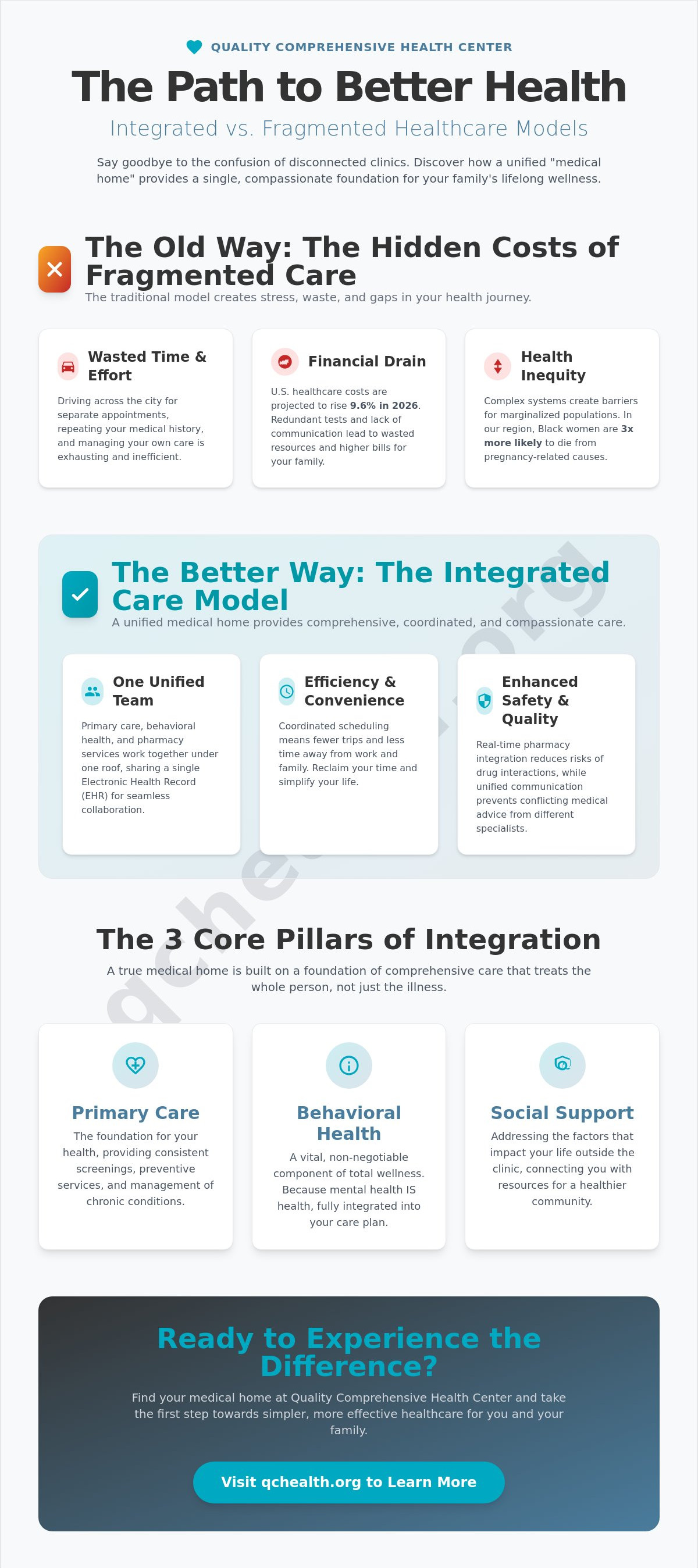
A true medical home rests on three essential principles. First, primary care serves as the foundation, providing consistent screenings and preventive services. Second, behavioral health is treated as a vital, non-negotiable component. Mental health is health. Finally, social support services address the factors that impact your life outside the clinic walls. One of the greatest benefits of an integrated care model is this holistic view of the human experience. We don't just treat the illness; we support the person. This approach ensures that every patient feels seen, heard, and valued.
Fragmented vs. Integrated Care
Traditional "fee-for-service" models often create disconnected clinical practices. In these systems, doctors are sometimes incentivized by the volume of services rather than the quality of your outcomes. This creates a heavy emotional toll, forcing you to act as your own medical coordinator. It's stressful, confusing, and often leads to gaps in your history. An integrated system solves these issues through:
Safety: Real-time pharmacy integration reduces the risk of dangerous drug interactions.
Clarity: Unified communication prevents conflicting advice from different specialists.
Efficiency: Coordinated scheduling means fewer trips across the city for separate appointments.
By choosing a medical home, you're choosing a partner in your long-term health. We believe in Dignity. We believe in Equity. We believe in your right to a simpler healthcare experience.
The Hidden Costs of Fragmented Healthcare
Fragmented healthcare is more than a nuisance. It is a financial drain. With U.S. medical costs projected to rise by 9.6% in 2026, every wasted dollar impacts your family's stability. In a city like Charlotte, the "time tax" of traditional medicine is particularly high. Driving from a primary care office in Uptown to a specialist in Ballantyne, then to a separate pharmacy, steals hours from your week. This complexity creates a barrier to Wellness, especially for those already balancing work and community commitments. Simplifying. Saving. Supporting.
The psychological stress of navigating a complex, uncaring system can be overwhelming. When your doctors don't talk, you become the messenger, the project manager, and the courier. This burden is even heavier for marginalized populations in North Carolina, where health disparities persist. For example, Black women in our region are three times more likely to die from pregnancy-related causes than white women. These statistics are not just numbers; they are a call for a more unified, compassionate approach to Dignity in medicine.
Redundant Testing and Wasted Resources
Fragmented systems often lack real-time communication, which leads to duplicate bloodwork or imaging because one doctor cannot see the other's results. One of the core benefits of an integrated care model is the elimination of these redundancies. When your team shares data, diagnoses happen faster and more accurately. Understanding how to get medical care with a high deductible plan is significantly easier when integrated billing prevents you from paying for the same diagnostic test twice. This collaborative effort ensures your resources are focused on healing, not bureaucracy.
The Safety Risk of Siloed Specialists
Siloed care isn't just expensive; it's dangerous. When specialists operate in isolation, the chance of conflicting treatment plans increases. Imagine a scenario where a specialist prescribes a medication that reacts poorly with a behavioral health prescription because neither provider had access to the full record. In an integrated setting, the pharmacist and doctor sit at the same table. This shared oversight recently allowed a team to catch a potential medication error for a patient, preventing an avoidable hospitalization. We believe your safety is a shared responsibility. If you're tired of the "time tax" and want a more unified experience, consider how our primary care and pharmacy services can bring your health back into focus. We are here to provide the Quality you deserve.
4 Key Benefits of an Integrated Care Model for Your Health
Putting people first means creating a system that talks to itself. When your primary care provider, behavioral health therapist, and pharmacist share a single vision, your care becomes seamless. You no longer have to explain your medications to three different people. Instead, your team works behind the scenes to sync your treatment. This collaborative effort ensures that your physical, mental, and social needs are met with Dignity and precision. Seeking, receiving, and thriving.
One of the most powerful aspects of this model is how it addresses life outside the clinic. Health isn't just a lab result; it's influenced by your nutrition, your housing stability, and your access to transportation. By integrating social support directly into your medical home, we remove the barriers that often stand in the way of true Wellness. This holistic approach is essential in 2026 as we move toward a healthcare system that values outcomes over the number of appointments you attend.
Treating the Whole Person, Not the Symptom
Mental health is inseparable from physical recovery. In 2024, approximately 48% of U.S. adults with a mental illness did not receive treatment. We close this gap through "warm hand-offs." If you mention feeling overwhelmed during a pediatric care or primary care visit, your doctor can introduce you to a behavioral health specialist in the same building immediately. There is no waiting for a referral or driving to another office. Additionally, Charlotte medical social worker services bridge the gap to community resources, ensuring you have the food and housing security needed to focus on your recovery. Empowerment starts with being seen as a whole person.
Better Outcomes for Chronic Conditions
Managing long-term illnesses requires constant, coordinated vigilance. One of the primary benefits of an integrated care model is the ability to keep chronic conditions like diabetes and hypertension stable through proactive outreach. Since 2017, integration in primary care settings has grown by 25%, and the results are clear. Patients see more consistent A1C levels and blood pressure readings because their entire team is monitoring the data together.
Proactive Care: We reach out before a small issue becomes a crisis.
Medication Therapy: Our pharmacy team ensures your prescriptions align perfectly with your doctor’s goals.
Quality of Life: Integrated patients report higher satisfaction and lower stress.
Your health is a shared responsibility, and a unified team is the best way to protect it. We are committed to your success because your well-being strengthens our entire community.
How Integrated Care Advances Health Equity in Charlotte
Healthcare is a fundamental right. For many in our community, the path to wellness is blocked by systemic hurdles and historical neglect. One of the most significant benefits of an integrated care model is its power to dismantle these barriers through intentional advocacy. We don't just see patients; we serve neighbors. By combining primary care with social support, we ensure that every person who walks through our doors feels worthy of high-quality treatment. Advocacy. Inclusivity. Empowerment.
Equity requires more than just clinical excellence. It demands a system that understands the socio-economic challenges of the people it serves. In North Carolina, uninsured rates in 2024 remained higher for Black and Hispanic residents than for white residents. An integrated model addresses this through a sliding fee scale, ensuring that cost is never a barrier to pediatric care or life-saving screenings. We believe in providing a safety net that catches everyone, regardless of their financial situation. This is how we build a stronger, healthier Charlotte together.
Removing Transportation and Access Barriers
Working families often struggle to balance hourly jobs with medical appointments. Traditional, fragmented care forces parents to take multiple days off to visit different clinics. A "one-stop" medical home changes the narrative. By housing primary care and pharmacy services in a single location, we respect your time and reduce the "time tax" mentioned earlier. Treatment adherence is much higher when you can receive a diagnosis and pick up your prescription in the same visit. For those in our surrounding areas, utilizing a 340B pharmacy Concord NC provides essential savings through integrated pricing. These services are life-saving tools for our community.
Building Trust Through Continuous Care
Trust is the foundation of effective medicine. When you see the same care team every time, you're more likely to be honest about your symptoms and lifestyle. This continuity is vital for advancing health equity. In North Carolina, Black babies are nearly 2.5 times more likely to die than white babies. These disparities require more than just medicine; they require deep-seated community trust. Community-based clinics serve as civic pillars, offering culturally affirming care that respects your background and experiences. Our practitioners use a "supportive neighbor" tone to lower the barriers to healthcare, making standard screenings feel like a shared responsibility rather than a clinical chore. If you're looking for a team that values your voice, schedule your appointment at QCHC today and experience the difference of a unified medical home.
Finding Your Medical Home at Quality Comprehensive Health Center
For over 20 years, Quality Comprehensive Health Center has served as a foundational civic pillar in the Charlotte community. We aren't just a clinic; we are a mission-driven home where your health is our shared responsibility. Our history is rooted in social advocacy and a deep-seated commitment to those who have been historically underserved. When you walk through our doors, you'll find a blend of modern medical technology and deep-seated community empathy. One of the primary benefits of an integrated care model at QCHC is the peace of mind that comes from knowing every specialist on your team is aligned with your personal goals. From Primary care and Pediatric care to specialized HIV/STD screenings, we treat every neighbor with the Dignity they deserve. Listening. Healing. Advocating.
The 2026 healthcare landscape demands a partner that can manage complexity for you. As medical costs rise and systems become more automated, we remain personally attentive. During your first visit, you won't feel like a number in a database. You'll meet with a team that looks at your whole life, including your physical health, your mental well-being, and your social needs. We use advanced digital tools to coordinate your Behavioral health services and Pharmacy needs seamlessly. This ensures that your care is both technologically advanced and humanly compassionate. We believe that excellence should be approachable, and your first visit is the beginning of a lifelong journey toward total Wellness.
Personalized Care with a Human Face
We believe that healthcare works best when it is personal. That's why we make it a priority for you to know your practitioners and leadership by name. This personal accountability builds the trust necessary to eliminate health disparities in our region. Our modern facilities provide a welcoming environment designed for your comfort. By focusing on innovation and cultural integration, we provide a standard of care that feels like a supportive neighbor rather than a detached institution. We are proud of our high standards, yet we remain humble and focused on the collective effort of keeping Charlotte healthy.
Join Our Community of Wellness
Becoming part of our medical home is a simple, welcoming process. To schedule your first appointment, you can reach out to our team via our website or by phone. We ask that you bring a photo ID and any current medical records, though our shared electronic systems will help us gather your history quickly. For our uninsured neighbors, we offer a sliding fee scale because we believe your worthiness of care isn't defined by your financial situation. Health is a shared responsibility, and we are here to support your part in it. You can Experience the difference of integrated care at QCHC today. Together, we can build a future of approachable excellence and lasting health.
Empowering Your Future with Unified Care
Choosing a healthcare partner is a deeply personal decision that impacts your entire family's future. By embracing the benefits of an integrated care model, you move away from the chaos of fragmented appointments toward a unified home for your Wellness. We've seen how this approach protects your time, reduces safety risks, and ensures that mental health is never treated as an afterthought. It's a commitment to seeing the person behind the patient. Listening. Healing. Growing together.
At Quality Comprehensive Health Center, we've spent 20 years championing the health of our Charlotte neighbors. Our state-of-the-art facility on Beatties Ford Road stands as a symbol of our dedication to approachable excellence. Whether you need primary care or specialized screenings, our sliding fee scale ensures that high-quality medicine remains accessible to all. You deserve a team that advocates for your Dignity every single day. Join the QCHC Family and Simplify Your Healthcare Journey. Your health is our shared responsibility; let's build a vibrant future together.
Frequently Asked Questions
Is an integrated care model more expensive for the patient?
Integrated care often reduces your total out-of-pocket costs by eliminating redundant diagnostic tests and administrative errors. Because your team works within the same system, you don't have to pay for duplicate bloodwork or travel to separate locations for basic screenings. We also offer a sliding fee scale to ensure our neighbors have equitable access to care regardless of their insurance status. Healing. Saving. Growing.
Can I still see my outside specialists if I use an integrated care center?
You are welcome to maintain relationships with outside specialists while calling our center your medical home. Our team will work to coordinate with your external providers to ensure your treatment plan remains cohesive. We believe in collaborative participation to protect your health. By sharing information securely, we prevent conflicting advice and ensure that every practitioner involved in your care is on the same page.
How does an integrated model improve my mental health?
Mental health is addressed as a vital part of your physical recovery rather than a separate issue. Because our behavioral health services are woven into your primary care visits, you receive support exactly when you need it. This approach reduces the stigma often associated with seeking help. It ensures that your emotional well-being is prioritized alongside your physical health during every single appointment you have with us.
What is the role of a case manager in an integrated care team?
Case managers serve as your personal advocates to help you overcome barriers like housing, transportation, or food insecurity. They bridge the gap between the clinic and the community to ensure your basic needs are met. This role is essential because we know that health happens outside the exam room. Your case manager works with your doctors to create a realistic plan for your long-term wellness.
Do I need a referral to see a behavioral health specialist at QCHC?
You don't need a referral to access our behavioral health services as an existing patient. We've removed this traditional barrier to make seeking help as simple as possible. If you or your child needs support, our team can facilitate a connection immediately. This direct access is a core part of our mission to provide inclusive, community-centric care for every neighbor we serve at QCHC.
How does an integrated pharmacy benefit me?
An integrated pharmacy ensures that your pharmacist is a direct member of your care team who reviews your records in real time. This proximity helps us catch potential drug interactions before they happen. It also makes picking up prescriptions easier after your primary care or pediatric visit. We use our pharmacy resources to help lower your costs and improve how you manage your medications safely. For readers interested in how community-focused providers manage these needs, you can visit Sage Creek Pharmacy to learn more about their personalized care model.
Is my medical data safe if it is shared between different providers?
Your medical data is protected by high-level encryption and strict HIPAA-compliant security protocols. We only share information between your specific providers to improve the safety and accuracy of your treatment. Trust is the foundation of our relationship with the Charlotte community. We take our responsibility to safeguard your personal history very seriously while using technology to provide more personally attentive and secure care.
How do I know if an integrated care model is right for my family?
This model is the right choice if you want to stop acting as your own medical coordinator and start focusing on healing. One of the main benefits of an integrated care model is that it places the burden of communication on the providers, not the family. You'll experience better communication, lower costs, and a team that treats you with the Dignity and respect you deserve.


Comments