
Support for Newly Diagnosed HIV in Charlotte: A 2026 Compassionate Guide
- QCHC Communications

- 3 days ago
- 13 min read
In a city as vibrant as Charlotte, it's easy to feel invisible when you're staring at a positive test result, yet you're one of nearly 8,000 resilient neighbors currently navigating this journey in Mecklenburg County. You're likely feeling a heavy mix of fear about local stigma and deep anxiety over how you'll find support for newly diagnosed HIV in Charlotte. It's completely normal to feel overwhelmed by the thought of paperwork for North Carolina HMAP or Ryan White eligibility when you just want to feel healthy again. We center your Worthiness and view your health as a Collective Responsibility.
This guide provides the clarity you need to navigate these first steps, ensuring you move from uncertainty to empowered action. You'll learn how to handle the 2026 HMAP updates, including the 300% Federal Poverty Guideline threshold and the new Medicaid requirements for those at or below 140% of the poverty level. We'll preview how to access Specialty Care, manage medications through a dedicated Pharmacy, and join a judgment-free support system. Securing your treatment, protecting your Behavioral Health, and finding your community starts right here.
Key Takeaways
Take control of your health journey by learning the immediate steps to confirm results and transition into a mindset of long-term wellness.
Uncover how to access vital financial assistance through Ryan White and HMAP, which are essential pillars of support for newly diagnosed HIV in Charlotte.
Address the emotional impact of your diagnosis by finding affirming, community-based spaces that prioritize your behavioral health as much as your viral load.
Prepare for clinical success by understanding what to expect during your first medical visit, from initial bloodwork to personalized goal setting with your provider.
Learn how an integrated care model brings primary care and pharmacy services together to provide a seamless path toward health equity and empowerment.
Table of Contents
First Steps After an HIV Diagnosis in Charlotte
Receiving a positive diagnosis can feel like the world has suddenly shifted. Take a breath. It's essential to understand that in 2026, HIV is a manageable chronic condition. Your diagnosis doesn't define your future or your Worthiness. Finding immediate support for newly diagnosed HIV in Charlotte is about moving from a place of shock to a place of empowerment. You aren't walking this path alone; our community is a Collective Responsibility.
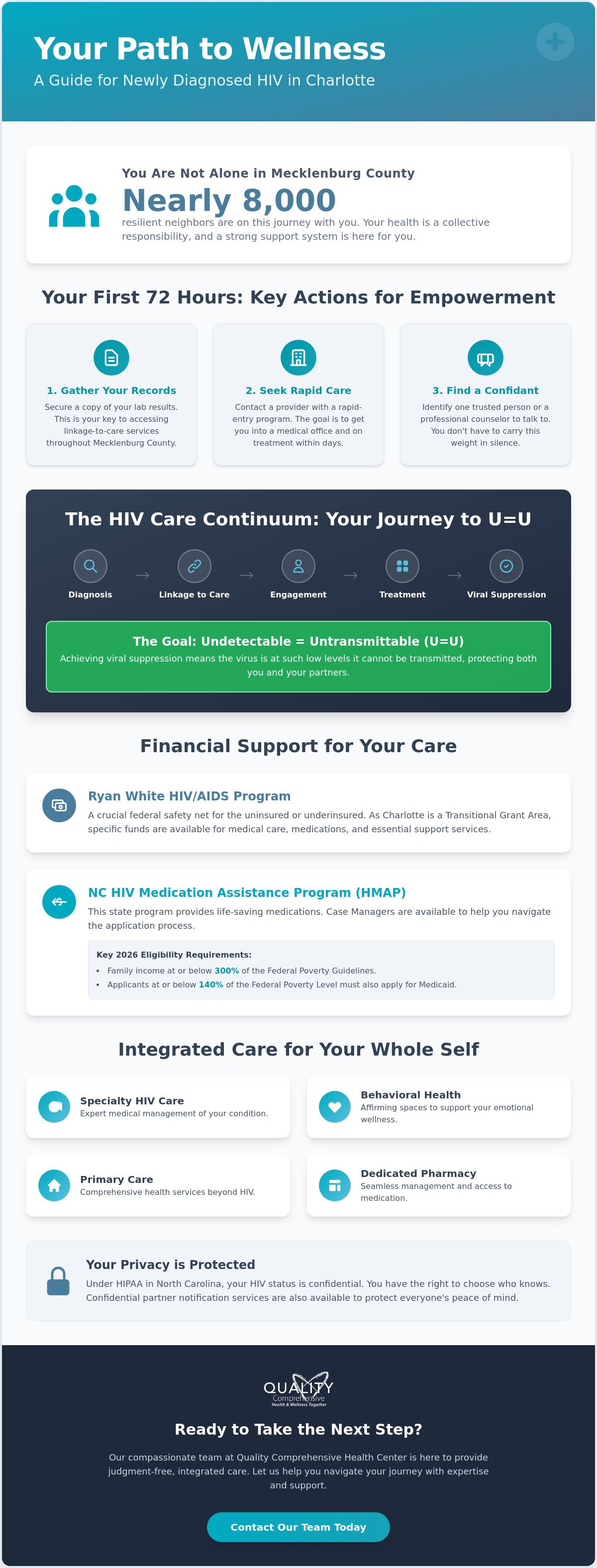
Your first 72 hours should focus on three specific actions: accepting your status, gathering your records, and seeking your team. First, ensure you have a physical or digital copy of your lab results. This documentation is your "passport" for linkage to care services across Mecklenburg County. Second, reach out to a provider that offers rapid-entry programs. In Charlotte, these programs aim to get you into a medical office and potentially on medication within just a few days. Finally, identify one trusted individual or a professional counselor to talk to. Carrying this weight in silence only feeds anxiety.
The current medical management of HIV has advanced to the point where treatment is highly effective and often consists of just one pill a day. Modern medicine allows you to live a long, vibrant life. By acting quickly, you protect your long-term health and reclaim control over your narrative. We're here to help you navigate every step of this transition with compassion and professional expertise.
The HIV Care Continuum in Mecklenburg County
The journey to wellness follows a clear path known as the Care Continuum: Diagnosis, Linkage, Engagement, Treatment, and Viral Suppression. Each step is a milestone toward the ultimate goal of "Undetectable = Untransmittable" (U=U). When you achieve viral suppression, you protect both your own immune system and your partners. Viral Suppression is the state where the virus is at such low levels it cannot be transmitted. Reaching this stage is a powerful act of self-care and community protection.
Immediate Confidentiality and Legal Protections
Privacy is a fundamental right. Under HIPAA protections in North Carolina, your HIV status is confidential medical information. You have the right to choose who knows your status; employers, landlords, and casual acquaintances do not have a legal right to this information. Community-based health centers often provide an extra layer of personalized privacy compared to large, impersonal hospital systems. If you need help with partner notification, Charlotte offers confidential services to inform others of potential exposure without revealing your identity, ensuring everyone's safety while maintaining your peace of mind.
Navigating Financial Support: Ryan White and HMAP
Financial anxiety often feels like the heaviest part of a new diagnosis. You might worry about the cost of antiretroviral therapy (ART) or wonder how you'll afford regular lab work. In Charlotte, you aren't expected to carry this burden alone. Accessing support for newly diagnosed HIV in Charlotte includes tapping into a robust network of federal and state programs designed to ensure that your income never dictates your health. We view healthcare as a Collective Responsibility, and these financial tools are the foundation of that commitment.
The Ryan White HIV/AIDS Program serves as a critical federal safety net for individuals who are uninsured or underinsured. Because the Charlotte-Gastonia area is designated as a Transitional Grant Area, local organizations receive specific funding to provide medical care, medications, and essential support services. Complementing this is the North Carolina HIV Medication Assistance Program (HMAP). As of the March 12, 2026 manual update, HMAP continues to provide life-saving medications to eligible residents, ensuring that the cost of prescriptions remains manageable.
To qualify for HMAP in 2026, your modified adjusted gross family income must be at or below 300% of the Federal Poverty Guidelines. Additionally, a policy revised on February 18, 2026, requires all applicants with an income at or below 140% of the Federal Poverty Level to apply for Medicaid. While these rules might sound complex, Case Managers act as your dedicated advocates. They help you gather documentation, submit applications, and navigate the system so you can focus entirely on your physical wellness. If you're feeling overwhelmed, you can consult with our team to start the process today.
Applying for Assistance in Charlotte
Success starts with organization. You'll generally need proof of residency in Mecklenburg County, recent income statements, and a copy of your HIV diagnosis. Expert Charlotte medical social worker services are instrumental during this phase. They bridge the gap between your initial diagnosis and your first covered prescription. If you need medication immediately, many local clinics provide bridge supplies or sample packs while your HMAP or Ryan White paperwork is being processed, ensuring no gap in your treatment.
Pharmacy Access and the 340B Program
Choosing the right pharmacy is just as important as choosing the right doctor. Many community health centers participate in the 340B program, which significantly lowers the cost of medications for the facility and the patient. The 340B program allows clinics to stretch federal resources to reach more underserved patients. By utilizing a specialty pharmacy in Charlotte that understands HIV care, you gain access to pharmacists who can monitor drug interactions, manage side effects, and help you stay adherent to your treatment plan.
Holistic Care: Mental Health and Overcoming Stigma
Living with HIV in 2026 means managing more than just a viral load. While modern medicine handles the biological side of the virus, the emotional weight of a diagnosis requires its own dedicated strategy. Your Worthiness isn't tied to a lab result, yet internalized stigma often creates barriers to staying in care. Finding comprehensive support for newly diagnosed HIV in Charlotte must include a focus on your psychological well-being. Healing the heart, strengthening the mind, and empowering the spirit are just as vital as any prescription.
Integrated care models represent the gold standard for long-term health. When your Primary Care provider and your therapist work in the same building, your outcomes improve significantly. This collaborative approach ensures that your medical team understands how your mental state affects your treatment adherence. You don't have to explain your history to five different offices; instead, you enter a sanctuary where your physical and behavioral health are treated as one inseparable journey. This seamless transition from a medical check-up to a counseling session lowers the hurdle of seeking help and reinforces the idea that health is a Collective Responsibility.
Overcoming stigma in the Charlotte community starts with finding affirming spaces. Many residents fear judgment in traditional healthcare settings, which can lead to missed appointments or delayed treatment. Resources like Mecklenburg County Public Health HIV Services provide a foundation, but community-based centers often offer the warmth and social advocacy needed to feel truly seen. Support groups across Mecklenburg County allow you to connect with others who are thriving, proving that a diagnosis is a new chapter, not an ending.
Signs You May Need Behavioral Health Support
It's common to experience a range of intense emotions following your results. Identifying depression, persistent anxiety, or trauma early can prevent these feelings from impacting your physical health. A regular mental health check-in Charlotte helps you stay grounded during the first year of treatment. Licensed clinical social workers who specialize in HIV care provide a safe place to process your diagnosis, helping you build the resilience needed for a long, healthy life.
Building Your Support Network
Disclosure is a personal choice, but building a trusted circle is essential for your success. When talking to a partner, focus on the facts of modern prevention, such as how PrEP and PEP can protect their health. Understanding how often should I get tested for STDs is a key part of partner health guidance that keeps everyone safe. Connecting with peer advocates in Charlotte who have navigated these same conversations can provide you with the scripts and confidence you need to move forward without shame.
Accessing Medical Services in Mecklenburg County
Establishing a Medical Home is the single most important step in securing your future wellness. While public health clinics offer essential screenings, a medical home provides a centralized sanctuary where your history is known and your Worthiness is celebrated. This model ensures that your Specialty Care, Primary Care, and Pharmacy needs are coordinated by a single, integrated team. In Mecklenburg County, finding specialized support for newly diagnosed HIV in Charlotte often means looking for providers with deep roots in the community, particularly along the Beatties Ford Road and Freedom Drive corridors. These neighborhoods have become hubs for compassionate, high-standard medical services that prioritize the human being behind the diagnosis.
Your first medical appointment is a foundational moment for trust and transparency. You can expect a thorough review of your medical history, a physical exam, and comprehensive bloodwork to establish your baseline. This initial meeting isn't just about collecting data; it's about setting personal health goals that matter to you. Whether you want to focus on starting a family, maintaining your fitness, or simply reaching an undetectable status, your provider should listen with deep-seated empathy. You are the leader of your care team, and your voice is the most important one in the room. If you're ready to find a provider who truly understands your journey, schedule an appointment with our compassionate team today.
Preparing for Your First Appointment
Coming prepared with questions can help lower your anxiety and increase your confidence. Consider asking your new specialist about your treatment options, how often you'll need labs, and what side effects you should monitor. Understanding your lab results is also key to personal empowerment. Your CD4 count measures the strength of your immune system, while your Viral Load tracks the amount of HIV in your blood. Learning these numbers helps you see the direct, positive impact of your treatment. Establishing this relationship early is vital, and why your primary doctor is important for your health becomes clear when you have a trusted advocate for every challenge you face.
Transportation and Ancillary Support
Empowering you to reach your appointments is a priority for our community. Charlotte offers specific programs like CATSPass and Ryan White transportation assistance to ensure that distance or lack of a vehicle never stands in the way of your wellness. Beyond the clinic walls, comprehensive support for newly diagnosed HIV in Charlotte extends to where you live and what you eat. Case managers work tirelessly to connect you with nutrition programs and housing stability resources. If you are currently experiencing homelessness, specialized navigators are available to help you secure a safe environment. We believe that health begins with a stable foundation and a supportive neighbor.
Compassionate HIV Care at Quality Comprehensive Health Center
For over 20 years, Quality Comprehensive Health Center (QCHC) has served as a foundational civic pillar for the residents of Mecklenburg County. Our mission is rooted in advancing health equity, providing specialty care, and ensuring community wellness. We understand that finding support for newly diagnosed HIV in Charlotte requires more than just a medical prescription. It requires a sanctuary where your Worthiness is recognized and your health is treated as a Collective Responsibility. Our history of service is built on the belief that everyone deserves access to high-standard, modern facilities regardless of their socio-economic status.
The QCHC Integrated Model is designed to lower the barriers to healthcare by bringing essential services under one roof. By combining Primary Care, Behavioral Health Services, and a full-service Pharmacy, we eliminate the need for you to navigate multiple offices across the city. This approach ensures that your medical provider and your therapist are in constant communication, creating a seamless journey toward viral suppression. We take immense pride in our personal accountability; our practitioners and leadership team are deeply integrated into the fabric of Charlotte, providing a human face to your clinical treatment. Navigating your care, honoring your journey, and securing your wellness are the principles that guide every interaction within our walls.
Our commitment to social advocacy means we provide a judgment-free, affirming environment for every individual who walks through our doors. We recognize the specific challenges faced by marginalized populations and work tirelessly to provide an inclusive space that feels like a supportive neighbor rather than a detached institution. At QCHC, we don't just treat a condition; we care for the broader well-being of our clients, ensuring you have the tools and support for newly diagnosed HIV in Charlotte to live a vibrant, healthy life.
Why Choose QCHC for Your HIV Journey?
Located in the heart of the community, our state-of-the-art facility on Beatties Ford Road was designed with your dignity and comfort in mind. We believe that modern, technologically advanced care should be accessible to everyone. To fulfill this promise, we offer sliding fee scales for uninsured patients, ensuring that financial barriers never prevent someone from receiving life-saving treatment. Our dedication to the underserved populations of North Carolina is unwavering, and we continue to expand our outreach to meet the evolving needs of our neighbors.
Getting Started with Us Today
Taking the first step toward treatment is an act of courage and empowerment. We've made our intake process simple and confidential to help you start your journey as quickly as possible. When you arrive for your first visit, please bring a form of identification, any recent lab results you may have, and proof of residency if you're seeking financial assistance. Our team will guide you through the paperwork and introduce you to the specialists who will be by your side every step of the way. You deserve a partner who is as committed to your health as you are. Schedule your appointment with QCHC today and join a community that truly cares.
Your Path to Wellness and Empowerment Starts Now
Your journey doesn't end with a diagnosis; it begins with a choice to prioritize your long-term wellness. You've seen that navigating the 2026 HMAP updates and securing Ryan White assistance are manageable steps when you have a dedicated advocate by your side. True health requires an integrated approach where your physical needs and behavioral health are treated as one inseparable mission. Finding the right support for newly diagnosed HIV in Charlotte is about more than clinical visits. It is about entering a sanctuary where your Worthiness is the standard of care.
With over 20 years of community service in Charlotte, QCHC provides an integrated medical and behavioral health model that centers your humanity. We offer a sliding fee scale for uninsured patients to ensure that high-standard care remains accessible to every neighbor. You don't have to carry this weight in silence. We are here to help you navigate every medical, financial, and emotional hurdle with approachable excellence and deep-seated empathy.
Begin your journey toward wellness and viral suppression at QCHC. Your health is a Collective Responsibility, and we are honored to walk this path with you toward a vibrant future.
Frequently Asked Questions
Is HIV treatment free in Charlotte if I don't have insurance?
HIV treatment is accessible at little to no cost for those without insurance through the Ryan White Program and HMAP. Many community health centers also utilize a sliding fee scale based on your income. These programs ensure that financial barriers never compromise your Worthiness or your access to life-saving specialty care. Access to medication is a fundamental right, not a privilege reserved for those with private coverage.
How soon can I start medication after being diagnosed with HIV?
You can often start medication within 24 to 72 hours through local rapid-entry initiatives. Charlotte providers prioritize immediate linkage to care to help you reach viral suppression as quickly as possible. Starting treatment early is a powerful step in protecting your immune system and reclaiming your narrative. Acting fast, seeking care, and starting treatment are the rhythmic first steps toward a long, healthy life.
Will my employer find out about my HIV status?
Your employer will not find out about your status unless you choose to disclose it. Strict HIPAA regulations and North Carolina privacy laws protect your confidential medical information at all times. You have the right to keep your diagnosis private while you seek support for newly diagnosed HIV in Charlotte. Maintaining your privacy is a core principle of the respectful, neighborly care provided in our city.
What is the difference between Ryan White and HMAP?
Ryan White is a comprehensive federal program that funds medical visits, transport, and various support services. HMAP is the state-specific program in North Carolina focused primarily on paying for your antiretroviral medications. Both systems work together to provide a complete safety net for your wellness journey. They function as a Collective Responsibility to ensure no resident is left without essential medical resources.
Can I still have a family if I am HIV positive?
You can absolutely have a healthy family and HIV-negative children in 2026. With modern medical management, reaching an undetectable viral load means you cannot transmit the virus to a partner. Specialized pediatric care and prenatal protocols ensure that parents living with HIV can raise healthy, vibrant families without fear. Your diagnosis is a chapter in your life, but it doesn't dictate your ability to be a parent.
What happens if I miss a dose of my HIV medication?
Take the missed dose as soon as you remember, but don't double up if it's almost time for your next scheduled pill. Consistency is vital for maintaining viral suppression and preventing drug resistance over time. If you struggle with your schedule, your pharmacy team can provide tools like pill planners or mobile reminders to keep you on track. We're here to support your adherence without judgment.
Are there HIV support groups for Black/African American men in Charlotte?
Charlotte hosts several culturally affirming support groups specifically designed for Black and African American men living with HIV. These spaces focus on social advocacy, collective healing, and overcoming community-specific stigma in a safe environment. Finding a judgment-free support system is an essential part of finding support for newly diagnosed HIV in Charlotte. Connecting with others who share your lived experience builds the resilience needed for long-term wellness.
How do I find a doctor in Charlotte who specializes in HIV care?
You can find specialized doctors by visiting community health centers located in neighborhoods like the Beatties Ford Road corridor. Look for providers who offer an integrated model of care, combining primary care with behavioral health services. These practitioners provide a human face to medicine and understand the unique socio-economic needs of our local community. Choosing a provider who feels like a supportive neighbor makes all the difference in your care journey.


Comments