


Stress Management Techniques in Charlotte: A 2026 Guide to Holistic Wellness

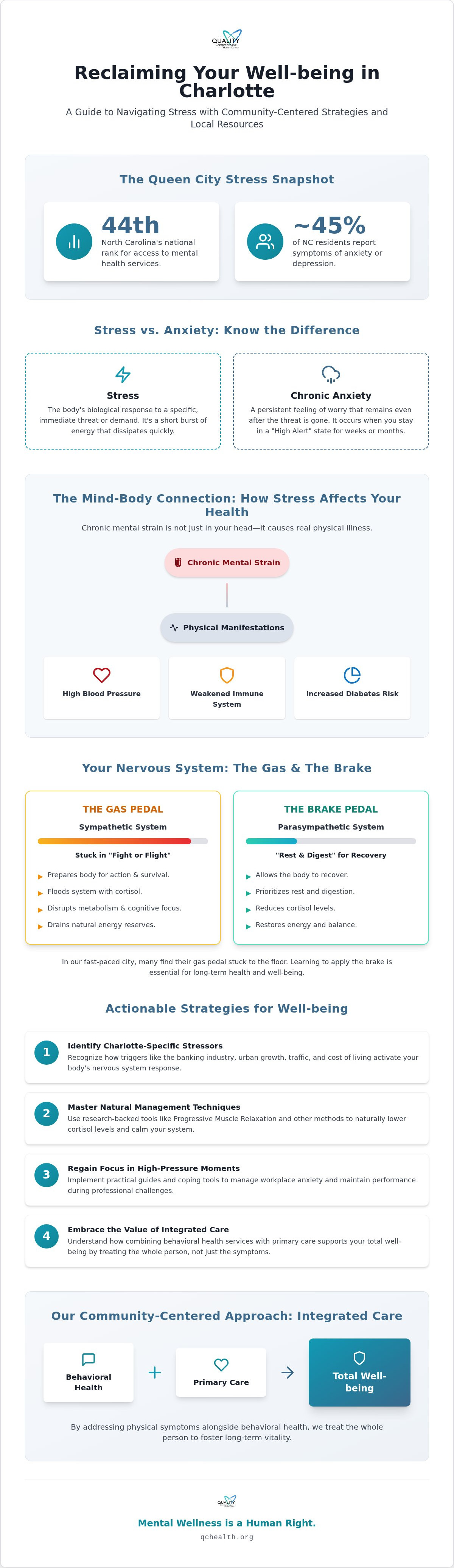
Did you know that North Carolina currently ranks 44th in the nation for access to mental health services, even as nearly 45 percent of our neighbors report symptoms of anxiety or depression? Finding effective stress management techniques Charlotte residents can actually afford shouldn't feel like another full-time job. We know the weight of workplace anxiety in our fast-paced city. We understand the frustration of high private therapy costs and the confusion of physical symptoms that stem from mental strain. You're not alone in this struggle. Your health is a shared responsibility we take seriously.
This guide empowers you with community-centered strategies and local resources to reclaim your mental well-being. We promise to help you bridge the gap between clinical expertise and personal advocacy. We'll explore how to lower cortisol levels naturally, navigate the link between physical stress and mental health, and find actionable coping tools for your professional life. From our state-of-the-art hub on Beatties Ford Road to every corner of the Queen City, we're here to ensure that quality care remains human, compassionate, and accessible to all.
Table of Contents
Understanding Stress and Anxiety in the Queen City
Living in the heart of Charlotte means balancing the ambition of a global banking hub with the realities of rapid urban growth. While our city thrives, the pressure can be relentless. We often view stress as an inevitable byproduct of success. However, we believe that Mental Wellness is a Human Right. It is a fundamental Principle that guides our care. Stress is your body’s biological response to a specific threat or demand. Anxiety is the persistent feeling of worry that remains even after the threat is gone. Implementing effective stress management techniques Charlotte families can rely on is the first step toward reclaiming your peace. It's about protecting your peace, preserving your health, and empowering our community.
Our neighbors frequently face unique local stressors. The daily crawl on I-77, the high-stakes culture of Uptown finance, and the rising cost of living all contribute to a state of constant vigilance. When these pressures mount, your body stays in a "fight or flight" mode far longer than nature intended. Finding the right stress management techniques is not just about relaxation; it's about survival in a fast-paced environment.
To better understand how stress impacts your physical health, watch this helpful overview:
The Difference Between Healthy Stress and Chronic Anxiety
Acute stress is a temporary survival mechanism that helps you meet a deadline or avoid an accident. It's a short burst of energy that dissipates quickly. But when you remain in a "High Alert" state for weeks or months, it transforms into chronic anxiety. This is the tipping point where your internal resources are exhausted. If you find that worry interferes with your sleep, your work, or your relationships, it's time for professional intervention. Recognizing the need for help is an act of strength and a step toward personal Worthiness.
How Mental Stress Impacts Physical Health
Your mind and body are not separate systems. They are deeply interconnected through the gut-brain axis, which influences everything from your digestion to your mood. Chronic mental strain often manifests as physical illness. We see this daily in our clinics. Untreated stress leads to high blood pressure, weakened immune systems, and an increased risk for diabetes. This is precisely why your primary doctor is important for your health in our integrated model. By addressing the physical symptoms of hypertension alongside behavioral health, we treat the whole person. Utilizing consistent stress management techniques Charlotte residents can integrate into their routines helps lower these risks and fosters long-term vitality.
The Science of Stress: How Your Body and Mind Connect
Understanding your body's internal wiring is the foundation of Empowerment. Your nervous system operates on two primary modes that dictate how you experience the world. The Sympathetic system acts as your "gas pedal," preparing you for action and survival. Conversely, the Parasympathetic system serves as the "brake," allowing your body to prioritize rest, digestion, and recovery. In our fast-paced city, many neighbors find their gas pedal stuck to the floor. To help restore this balance through precise spinal alignment, Chiropractic Lifestyle Family Practice P.C. offers non-invasive care designed to support your nervous system's health. This chronic imbalance is where clinical expertise meets deep-seated community Advocacy. We provide Approachable Excellence by combining advanced medical insights with a supportive, neighborly touch. Learning Healthy ways to cope with stress starts with knowing how these biological systems interact to protect or deplete your health.
Cortisol and the 'Fight or Flight' Response
Your body doesn't distinguish between a prehistoric predator and a high-priority email notification. Both modern triggers mimic ancient threats, causing your adrenal glands to flood your system with cortisol. While this "fight or flight" surge was once vital for survival, sustained high levels in the modern world take a heavy physical toll. It disrupts your metabolic health, clouds your cognitive focus, and drains your natural energy reserves. Biological literacy is the first step in your journey toward Worthiness. When you understand the "why" behind a racing heart or a restless mind, you can better apply effective stress management techniques Charlotte professionals recommend. You deserve to feel in control of your own biology. If you're feeling overwhelmed by these physical responses, our behavioral health services are here to help you restore your energy, reclaim your focus, and renew your spirit.
The Role of Sleep and Nutrition in Resilience
Resilience isn't just a mindset; it's a physical state supported by your daily habits. Sleep deprivation creates a vicious cycle by significantly increasing your stress reactivity. When you're tired, your brain's emotional center becomes overactive, making minor daily hurdles feel like major catastrophes. Supporting your mood with local Charlotte nutritional staples can also build a biological buffer. Incorporating leafy greens or omega-3-rich foods found at our local community markets helps stabilize energy levels and supports brain health. Integrating consistent stress management techniques Charlotte residents can use daily ensures your body has the fuel and rest it needs to thrive.
Resetting your nervous system requires a deliberate transition from the day's chaos to nighttime rest. Use this checklist to build a Soothing Bedtime Routine:
Power down all digital devices 60 minutes before your target sleep time.
Dim the lights in your living space to signal your cortisol levels to drop.
Practice five minutes of deep, rhythmic belly breathing to engage the Parasympathetic system.
Keep your sleeping environment cool and dark to support deep REM cycles.
Consistent habits turn your internal "brake" into a reliable tool for wellness, ensuring you wake up ready to face the day with a grounded perspective.
Natural Stress Management Techniques for Daily Life
Building a life of wellness requires two distinct approaches. Short-term "reset" techniques provide immediate relief during a crisis. Long-term "resilience" habits build your internal strength over time. We believe that Health is a Shared Responsibility. It's a collective effort that starts with individual action and ripples through our neighborhoods. One of the most effective, research-backed stress management techniques Charlotte residents can use is Progressive Muscle Relaxation (PMR). This clinical tool involves tensing and then releasing different muscle groups. It helps you recognize where you hold tension and teaches your body how to let it go. By mastering these tools, you move from a state of survival to one of empowerment and Worthiness. Identify your triggers, master your tools, and reclaim your health.
Social connection remains a vital pillar of our community-centric approach. Isolation often amplifies the "High Alert" state of the nervous system. Reaching out to a neighbor or participating in local outreach projects can lower cortisol levels significantly. We aren't just patients and providers; we are a collective force working toward a healthier Queen City. Supporting our neighbors, strengthening our bonds, and uplifting our community creates a foundation for lasting mental health.
Mind-Body Practices: Breathing and Meditation
Mindfulness is a powerful way to quiet the noise of a busy city. It trains your brain to stay present rather than worrying about the future. The "4-7-8" breathing technique is a simple, portable tool for any situation. Inhale through your nose for four seconds. Hold that breath for seven seconds. Exhale forcefully through your mouth for eight seconds. This rhythmic pattern signals your brain to move out of "fight or flight" mode. Consider practicing these stress management techniques Charlotte has to offer in our beautiful outdoor spaces. Freedom Park or the Little Sugar Creek Greenway provide the perfect backdrop for a morning meditation or a quiet moment of reflection. Nature acts as a natural stabilizer for your mood.
Physical Movement as Stress Relief
Movement transforms your internal chemistry. Gentle practices like yoga focus on flexibility and breath, while vigorous exercise like running or HIIT sessions trigger a significant endorphin release. Endorphins are your body's natural painkillers and mood elevators. They help neutralize the effects of stress hormones. Engaging in community-based exercise groups fosters both physical health and social bonds. Whether it's a neighborhood walking club or a local gym class, moving together strengthens our civic pillar of wellness. Breathe deeply, move intentionally, and connect authentically to build your resilience. We encourage you to find a rhythm that feels sustainable. Small, consistent actions lead to profound, lasting change for your body and mind.
How to Cope with Anxiety at Work: A 5-Step Guide
Charlotte’s professional sectors, from Uptown finance to the growing tech corridor, demand high performance and relentless focus. This fast-paced environment often triggers midday panic or a sense of being overwhelmed. We believe that your mental well-being is essential for professional success. Developing a Personalized Stress Toolkit allows you to respond to pressure with Practical Action rather than reactive fear. By integrating these stress management techniques Charlotte professionals use, you transform your workday from a source of strain into a space of growth. Protect your peace, preserve your focus, and empower your performance.
Workplace boundaries are a fundamental form of Self-Advocacy. It’s about recognizing that your capacity is finite and your health is a priority. When you take steps to manage your anxiety, you’re not just helping yourself. You’re contributing to a more sustainable and compassionate work environment for everyone in our community. We see this as a shared mission to elevate the standard of wellness in our city’s professional life.
Immediate Grounding Techniques for the Office
When anxiety spikes during a high-stakes meeting or while facing a tight deadline, you need tools that work instantly. These three steps provide immediate relief without requiring you to leave the building. They are designed to be discreet and effective.
Step 1: The 5-4-3-2-1 Method. Ground yourself by identifying five things you see, four things you can touch, three things you hear, two things you can smell, and one thing you can taste. This shifts your brain’s focus from internal worry to the external reality of your surroundings.
Step 2: Take Micro-breaks. Physical distance creates mental clarity. Leave your desk for just two minutes. Walk to the breakroom or step into the hallway. This brief change of scenery resets your nervous system and breaks the cycle of rumination.
Step 3: Controlled Breathing. Use the "4-7-8" breathing pattern between meetings. It’s a quiet, invisible way to lower your heart rate and signal to your brain that you’re safe, even in a high-pressure office.
Long-Term Workplace Stress Management
Sustainable wellness requires more than just quick fixes. It demands consistent habits and the courage to seek support when needed. We view Collaborative Participation as the key to a healthier office culture. When we support each other’s boundaries, we all thrive.
Step 4: Set Digital Boundaries. Constant notifications keep your brain in a state of "High Alert." Turn off non-essential alerts on your phone and computer. Designate specific blocks of time to check emails. This protects your cognitive energy and reduces baseline anxiety.
Step 5: Professional Support. Self-help is a powerful start, but it isn't always enough. If workplace stress begins to feel unmanageable or starts impacting your physical health, it's time to seek a mental health check-in Charlotte residents can trust for compassionate care.
Your worthiness isn't tied to your productivity. Taking care of your mind is the most productive thing you can do for your long-term career and happiness. If you're ready to build a more resilient professional life, reach out to our behavioral health team to start your journey toward balanced wellness today.
Integrated Care: QCHC’s Community-Centered Approach
At QCHC, we believe that true healing requires a unified approach. We don't just treat symptoms; we care for the entire person. Our model brings Primary Care and Behavioral Health services under one roof at our state-of-the-art hub on Beatties Ford Road. For over 20 years, this facility has served as a foundational Civic Pillar for our community. By integrating these services, we ensure that your physical health and mental well-being are addressed in tandem. This seamless transition between departments allows us to provide Compassionate Excellence to every neighbor who walks through our doors. It's a journey from seeking belonging to receiving professional treatment.
One of the greatest barriers to accessing effective stress management techniques Charlotte residents face is the high cost of private care. We're committed to lowering these barriers through our sliding fee scale for uninsured patients. This ensures that quality healthcare remains an accessible right rather than a luxury. Your financial situation shouldn't dictate your ability to find peace and vitality. We stand with you as a supportive neighbor, dedicated to the socio-economic well-being of everyone we serve. Your Worthiness is our priority.
Breaking the Stigma in Our Community
Historically, underserved populations have faced significant hurdles when seeking mental healthcare. These barriers often include systemic inequality and a lack of culturally sensitive providers. At QCHC, Health Equity isn't just a goal; it's our formal Principle. We work tirelessly to break the stigma surrounding behavioral health by providing a welcoming, inclusive environment. We view health as a shared responsibility. When one member of our neighborhood finds healing, our entire community grows stronger. Our mission is to provide a space where everyone feels seen and supported.
Getting Started with Professional Support
Taking the first step toward professional support is a profound act of self-advocacy. Our team includes licensed clinical social workers and professional counselors who are ready to listen and help. We've simplified the process of booking a behavioral health consultation to make it as stress-free as possible. Whether you need help managing workplace anxiety or want to explore natural stress management techniques Charlotte experts recommend, we're here to guide you through every step of the process.
For those seeking a comprehensive approach to wellness, finding the right Charlotte care center is essential for addressing your holistic needs. You can visit us on Beatties Ford Road to experience our integrated model firsthand. We invite you to join our collective effort toward a healthier, more resilient Queen City. Your journey to wellness is a path we walk together, ensuring that care remains human, compassionate, and deeply personal.
Embrace a Future of Balanced Well-being
Managing the demands of a growing city requires more than just willpower. It takes a dedicated plan and a supportive community. You've learned how your biology responds to pressure and how to use practical tools to reset your nervous system during the workday. Most importantly, you now know that you don't have to navigate this journey alone. Your health is a shared responsibility, and your Worthiness is a fundamental Principle that guides our care.
By implementing these stress management techniques Charlotte residents can bridge the gap between clinical expertise and personal advocacy. For over 20 years, we've provided integrated medical and behavioral health support to our neighbors. We believe that quality care should be accessible to everyone; that's why we offer a sliding fee scale for all who need it. You deserve a healthcare partner that acts as a supportive neighbor and a foundational pillar of strength.
Take the first step toward wellness with a QCHC Mental Health Check-in today. We're here to help you find your balance, protect your peace, and strengthen our collective community. Your journey to a healthier life starts with a single, courageous choice.
Frequently Asked Questions
What are the most effective stress management techniques in Charlotte for busy professionals?
Busy professionals find success by integrating micro-habits into their high-pressure schedules. Effective stress management techniques Charlotte experts recommend include time-blocking for deep work and practicing rhythmic breathing between meetings. Utilizing our city’s greenways for a quick walk also helps. These small shifts protect your cognitive energy and prevent burnout in our fast-paced banking and tech sectors. Your focus is a valuable resource that deserves protection.
How can I manage work anxiety if I don't have time for a long break?
You can manage sudden anxiety by using the 5-4-3-2-1 grounding method right at your desk. This technique requires less than two minutes and effectively pulls your mind out of a spiral. Additionally, try a one-minute "box breathing" exercise during transitions between tasks. These brief moments of Practical Action signal your nervous system to downregulate without interrupting your workflow. Small actions lead to significant changes.
Is there affordable mental health counseling available in Charlotte, NC?
Yes, quality care is accessible through community-based organizations like QCHC. We believe that financial status shouldn't be a barrier to wellness. Our facility provides integrated behavioral health services designed for all neighbors. We offer various programs to ensure that mental healthcare remains a right for everyone in our community. We focus on lowering barriers to ensure quality care remains human and compassionate for every individual.
Can chronic stress cause physical symptoms like headaches or stomach pain?
Chronic stress frequently manifests as physical ailments, including tension headaches, digestive issues, and high blood pressure. This happens because sustained cortisol levels keep your body in a state of inflammation. Our integrated model combines primary care and behavioral health to address these symptoms holistically. Treating the mind and body together is essential for long-term recovery. We address the root cause to help you reclaim your vitality.
What is the difference between normal stress and an anxiety disorder?
Normal stress is a reaction to a specific external trigger and usually dissipates once the situation is resolved. An anxiety disorder involves persistent, excessive worries that don't go away even when the trigger is absent. If your feelings of dread are constant and interfere with daily functioning, it may indicate a clinical condition. Understanding this difference is a vital part of your journey toward biological literacy and Empowerment.
How do I know if I need professional help for my stress levels?
You should consider professional support if stress begins to disrupt your sleep, appetite, or relationships. Other warning signs include feeling a sense of hopelessness or experiencing physical symptoms that don't respond to standard medical treatment. Seeking help is an act of strength—whether you are navigating workplace burnout or the emotional weight of pet end-of-life care with Pet Requiem. Our team of practitioners is here to provide a human face and personal accountability for your care. You aren't alone in this process.
Does QCHC offer a sliding fee scale for behavioral health services?
QCHC offers a sliding fee scale for all neighbors, including those who are uninsured. This program is a core part of our mission to promote Health Equity across Charlotte. Eligibility is based on your household size and income. We are dedicated to lowering the barriers to healthcare by functioning as a supportive neighbor. This ensures that every member of our community has access to the care they deserve.
What are some local Charlotte parks good for mindfulness and relaxation?
Charlotte offers several peaceful retreats for mindfulness, such as the quiet trails of the Reedy Creek Nature Preserve or the serene gardens at Wing Haven. Freedom Park also provides expansive green space for grounding exercises. Using these spaces to practice stress management techniques Charlotte residents love is a powerful way to reset your system. Connecting with nature serves as a natural stabilizer for your mood and spirit.


Comments