


Help Navigating the Healthcare System: A Comprehensive 2026 Guide

Updated: Jun 14
With 61% of consumers reporting strong negative sentiment toward medical debt and rising costs, the path to wellness often feels like a maze designed to keep you out. You might feel overwhelmed by the 2026 return of the ACA subsidy cliff or the projected 8.5% rise in medical costs. It's frustrating to face confusing insurance networks or feel unheard during a short appointment. We believe you deserve better. This guide provides the help navigating the healthcare system you need to reclaim your power. We will show you how to secure affordable coverage, find a permanent medical home, and advocate for your own well-being.
Yes, many integrated health centers offer transportation assistance through their Case Management teams. If you have Medicaid, you may also qualify for non-emergency medical transportation (NEMT) services provided by your local Department of Social Services. You can also find out more about Scheduled Private Transportation Fees to see how services like Chucktown Transit provide reliable alternatives for those needing dedicated support. Our team works to remove every barrier that stands between you and your appointment. We understand that you can't get healthy if you can't get to the clinic. We coordinate. We support. We deliver.
You can master these complexities with a clear roadmap for insurance, affordable services, and patient Advocacy. We will walk through the 2026 enrollment deadlines, explain how to maximize Pharmacy savings, and help you access vital Primary Care and Behavioral Health services. From understanding the 100% to 400% FPL income thresholds to finding Specialty Care that sees you as a person, this guide prepares you for every step. Prepare to lower your costs, find your voice, and achieve the health you deserve. Listen. Support. Empower.
Key Takeaways
Understand how integrated care models create a seamless link between primary care, behavioral health, and pharmacy services to save you time and energy.
Identify the specific "Health Essentials" you need for every appointment to ensure your voice is heard and your medical history is respected.
Discover how to use sliding fee scales and the 340B program to significantly reduce out-of-pocket costs for essential specialty care and prescriptions.
Follow a practical, three-step roadmap that offers reliable help navigating the healthcare system and finding a permanent medical home for your family.
Learn how dedicated medical social workers in Charlotte provide personal advocacy and support to help you overcome socio-economic barriers to wellness.
Table of Contents
Understanding the Barriers: Why Navigating Healthcare Feels Overwhelming
The 2026 healthcare environment is a storm of shifting regulations and rising costs. With medical expenses projected to grow by 8.5%, many families feel left behind. This systemic complexity isn't your fault. It's the result of a landscape where insurance networks change annually and financial assistance feels like a moving target. Finding help navigating the healthcare system is the first step toward reclaiming your peace of mind. We believe that health is a shared responsibility. You shouldn't have to carry the burden of a broken system alone.
We see the "Fragmented Care" problem every day. You visit a specialist for one issue and an urgent care for another, but your records never meet. This lack of communication leads to duplicate tests, conflicting advice, and dangerous gaps in treatment. Beyond the clinic walls, Social Determinants of Health (SDOH) impact your wellness more than any prescription. These factors include:
Economic Stability: The ability to afford medications and co-pays.
Neighborhood Safety: Access to clean air and safe places to exercise.
Food Security: Consistent access to nutritious, affordable meals.
Transportation: Reliable ways to reach your appointments on time.
Establishing a "Medical Home" provides the foundation you need to stop feeling like a number in a database. It serves as your anchor in a sea of confusion. A medical home ensures that your history is known and your future is planned with care. We prioritize your Worthiness. We focus on your Growth. We commit to your Wellness.
The Emotional Impact of Systemic Barriers
Living underinsured or uninsured in North Carolina creates a constant weight of anxiety. One unexpected illness can feel like a threat to your family's stability. The "red tape" involved in government assistance programs often adds layers of frustration to an already difficult situation. We understand this burden. Quality Comprehensive Health Center acts as a supportive neighbor to lower these barriers. We provide a space where you are heard, valued, and respected. Our team works to untangle the bureaucracy so you can focus on healing.
Fragmented Care vs. Holistic Support
Many patients get caught in the "revolving door" of urgent care centers. While convenient for a quick fix, these facilities don't know your history or your long-term goals. A consistent primary provider offers something different: continuity. By choosing the benefits of an integrated care model, you ensure that your Primary Care, Behavioral Health, and Pharmacy services work in harmony. Our Charlotte Care Center maintains a unified health record. This means your providers collaborate in real time. We replace the chaos of disconnected appointments with a steady, reliable path to health.
Decoding Financial Language: Insurance, Sliding Scales, and 340B
Financial jargon often stands as a wall between you and the care you deserve. To break down these barriers, you must first understand the language of 2026 insurance. A Deductible is the amount you pay for covered services before your insurance plan starts to pay. Co-insurance is your share of the costs, typically a percentage, while the Out-of-pocket maximum is the most you will have to pay for covered services in a plan year. For many Charlotte residents, the return of the ACA subsidy cliff means financial assistance is now limited to those with incomes between 100% and 400% of the Federal Poverty Level. For a single person in 2026, this range is $15,650 to $62,600. If you fall outside these lines, professional patient navigation services can help you find alternative paths to affordability.
When insurance isn't enough or isn't available, community health centers offer a Sliding Fee Scale. This is a discount program based on your household size and income. It ensures that your Worthiness of care is never defined by your bank account. Additionally, the 340B Drug Pricing Program allows eligible centers to purchase medications at significantly reduced prices. These savings are passed directly to you, making life-saving treatments for chronic conditions accessible. With North Carolina's Medicaid expansion, more neighbors than ever qualify for coverage. We believe in your right to health. Our team is here to provide the help navigating the healthcare system that turns confusion into a clear plan for wellness.
Navigating Care with High Deductibles
If you have a plan with a high deductible, you might feel tempted to skip appointments to save money. You can learn how to get medical care with a high deductible plan by staying proactive. Always ask for a "Good Faith Estimate" before any procedure. This document outlines the expected costs so you aren't surprised by hidden bills. Before scheduling specialty care, confirm the provider's "In-Network" status. Staying in-network ensures you get the negotiated insurance rate, which counts toward your deductible faster. You can speak with our financial counselors to explore payment options that fit your life.
Affordable Prescriptions and Pharmacy Access
Prescription costs shouldn't force a choice between medicine and food. Utilizing a 340B pharmacy Concord NC or Charlotte location can reduce your medication expenses by 20% to 50% or more. If your insurance denies a specific medication, don't give up. On-site pharmacists at community health centers are experts at navigating these denials. They work directly with your doctors to find affordable, effective alternatives. Having a pharmacy co-located with your primary care provider ensures your treatment is seamless and coordinated. We stand with you. We advocate for you. We care for you.
The Integrated Care Advantage: Why Coordination Matters
Integrated care isn't just a clinical term; it's a promise that your physical and emotional needs are treated as one. When your Primary Care provider, Behavioral Health specialist, and Pharmacist all work under the same roof, the "red tape" mentioned earlier begins to vanish. This coordination provides the essential help navigating the healthcare system that keeps you from falling through the cracks. We call this Approachable Excellence. It means we provide high-standard, modern facilities while remaining humble and focused on your individual story. We listen. We coordinate. We heal.
Having co-located services like labs and an on-site Pharmacy saves more than just time; it ensures accuracy. If a doctor adjusts your medication, the pharmacist knows immediately. Case Management acts as the bridge for your referrals. These advocates ensure that when you need Specialty Care, your records travel with you. This level of coordination is also vital for Understanding your health care costs, as it prevents unnecessary duplicate testing and ensures you stay within your provider network. By keeping your care within a single "Medical Home," you reduce the risk of conflicting treatments and unexpected bills.
Mental Health and Physical Health Synergy
QCHC manages Behavioral Health alongside chronic conditions like HIV or hypertension. When your therapist and primary doctor are in the same building, they can discuss your care in real-time. This synergy improves outcomes because your providers see the full picture of your life. Integrated check-ins make mental health a standard part of your wellness journey, which helps reduce the stigma often associated with seeking help. We believe that a healthy mind is inseparable from a healthy body. We support. We empower. We advocate.
Specialty Care Coordination
Electronic health records are the backbone of this unified approach. You won't have to repeat your medical history to five different doctors because your information is already there. For marginalized populations, this coordination includes a deep commitment to affirming care. Whether you are seeking HIV/STD Screenings or Pediatric Care, our team ensures you feel safe and seen. This seamless transition from a primary visit to a specialty consultation ensures that no detail is lost. We believe that health is a shared responsibility, and integrated care is how we fulfill that promise to our community.
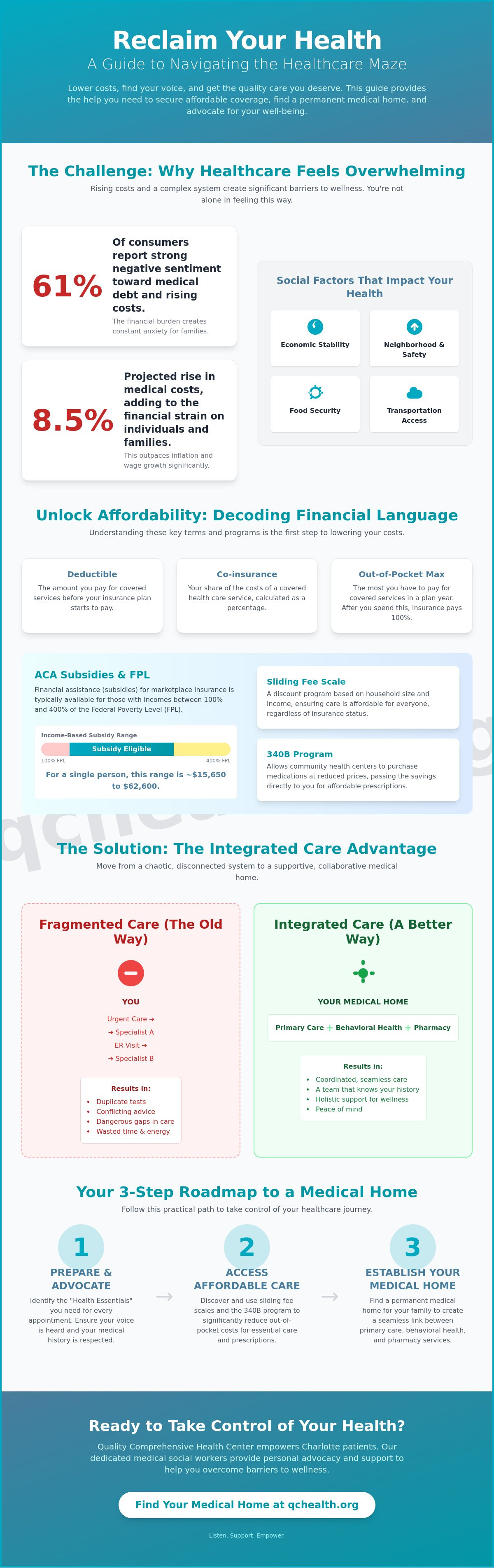
Your Step-by-Step Roadmap for Healthcare Navigation
You have the knowledge; now you need the plan. Transforming your health journey requires moving from passive recipient to active partner. This roadmap provides the structural help navigating the healthcare system you need to replace exhaustion with action. We believe that clarity is the first step toward Empowerment. We provide the tools. We build the bridge. We honor your journey.
Step 1: Identify your Medical Home. Stop the cycle of disconnected visits. Choose a center that offers Primary Care, Behavioral Health, and Pharmacy services in one location to anchor your future care.
Step 2: Gather your Health Essentials. Prepare a folder with your ID, insurance card or income proof for sliding scales, and a list of all current medications. This preparation ensures your provider has a clear picture of your current status from minute one.
Step 3: Schedule a comprehensive baseline visit. This isn't just a check-up; it's a strategy session. Use this time to establish your health goals and review any chronic conditions.
Step 4: Request a meeting with a Case Manager. These professionals specialize in Advocacy. They help you manage referrals and connect you with community resources that address Social Determinants of Health.
Step 5: Utilize the patient portal. Modern care is digital. Use the portal for direct communication with your team, viewing lab results, and keeping your own digital record of every visit.
You don't have to wait for a crisis to take these steps. You can schedule your baseline primary care visit today to begin building your foundation.
How to Advocate for Yourself During Appointments
Appointments often feel rushed, but you have the right to understand your care. Use the "Three Question" rule to stay focused. Ask your provider: What is my main problem? What do I need to do? Why is it important? If English isn't your first language, always ask for a translator or cultural liaison. These are free services designed to ensure your Worthiness is respected. If a visit feels complex, bring a trusted friend or "health advocate" to take notes. Two sets of ears are always better than one when discussing Specialty Care or new diagnoses.
Managing Post-Visit Follow-up
Your journey doesn't end when you leave the exam room. Always review your After Visit Summary (AVS) before you reach the parking lot. This document is your map for the next few weeks. It lists your new medications, upcoming lab work, and any referrals for tests like MRIs or X-rays. If you don't hear back about lab results within the expected timeframe, use your patient portal to send a message. Tracking these details prevents delays in treatment. We are your partners in this process. We listen. We coordinate. We heal.
How Quality Comprehensive Health Center Empowers Charlotte Patients
For over 20 years, Quality Comprehensive Health Center has served as a foundational pillar on Beatties Ford Road. We are more than a medical facility. We are a mission-driven home for Charlotte families. Our history is rooted in the belief that everyone deserves a supportive neighbor in their corner. We provide the expert help navigating the healthcare system that turns systemic barriers into manageable steps. We see you. We hear you. We care for you.
Our approach to wellness is holistic and inclusive. We offer Primary Care, Pediatric Care, and Behavioral Health Services that treat the whole person. Our team provides specialized HIV/STD Screenings and chronic disease management with a focus on dignity. We don't just write prescriptions; we build relationships. By integrating our Pharmacy and Specialty Care, we ensure your journey is seamless and respectful. Health is not an individual burden. It is a shared community responsibility.
Case Management: Your Personal Navigator
Your health is influenced by where you live, what you eat, and how you travel. Our Case Managers act as your personal navigators through Charlotte medical social worker services. They provide the bridge between your clinical treatment and your daily life. If you struggle with housing instability or food insecurity, our advocates are here to help. They coordinate transportation to ensure you never miss an appointment. This is principled advocacy in action. We listen. We support. We empower.
Accessible Excellence for Everyone
Disparities in health outcomes have no place in our community. We are committed to Accessible Excellence for every resident of Charlotte. This means providing high-quality care regardless of your insurance status or income level. To become a patient, simply reach out to our team. We'll guide you through the enrollment process and help you access the sliding fee scales discussed earlier. We provide the help navigating the healthcare system that ensures no neighbor is left behind. Our practitioners are ready to welcome you into a space of Worthiness and Growth. We provide Modern Care, Human Connection.
Step Into Your Healthier Future
The complexities of 2026 medicine don't have to be a barrier to your wellness. You now have a roadmap to decode insurance jargon, utilize sliding scales, and embrace the power of integrated care. By establishing a medical home, you move from feeling unheard to being an active partner in your own healing. This journey is significantly easier when you have professional help navigating the healthcare system by your side. We believe that clarity leads to confidence.
Quality Comprehensive Health Center has stood as a foundational pillar for over 20 years in Charlotte. As an accredited facility, we provide a seamless blend of primary care and behavioral health services designed with your Worthiness in mind. Our dedicated Case Management team is ready to walk with you through every specialist referral and social challenge. You deserve care that sees the human behind the patient record. We listen. We support. We empower.
Schedule your first visit with Quality Comprehensive Health Center today and join a community where health is a shared responsibility. Your path to wellness starts with a single, confident step. We are your neighbors. We are your advocates. We are your home.
Frequently Asked Questions
What is the best way to start navigating the healthcare system if I don’t have insurance?
The best way to begin is by visiting a community health center that offers comprehensive services regardless of your insurance status. These centers provide essential help navigating the healthcare system by connecting you with financial counselors and primary care providers. You can access quality treatment through sliding fee scales that adjust based on your income. We believe in your Worthiness. We provide the path. We support your growth.
How do I find a doctor in Charlotte who accepts Medicaid or NC Health Choice?
You can find a provider by searching the NC Medicaid provider directory or contacting local centers like Quality Comprehensive Health Center directly. Many private practices limit Medicaid patients, but community clinics prioritize them. Our facility on Beatties Ford Road is specifically designed to welcome Medicaid and NC Health Choice recipients. We offer Pediatric Care and Primary Care to ensure your whole family stays healthy. We welcome you. We value you. We care.
What does a medical social worker actually do to help me?
A medical social worker acts as your principled advocate by addressing the social factors that impact your health. They help you secure stable housing, reliable food sources, and emotional support systems. By linking clinical care to community resources, they ensure you aren't fighting the system alone. This role is vital for those facing complex diagnoses or economic hardship. We listen. We advocate. We empower.
Can I get help with transportation to my medical appointments?
Yes, many integrated health centers offer transportation assistance through their Case Management teams. If you have Medicaid, you may also qualify for non-emergency medical transportation (NEMT) services provided by your local Department of Social Services. Our team works to remove every barrier that stands between you and your appointment. We understand that you can't get healthy if you can't get to the clinic. We coordinate. We support. We deliver.
What is a sliding fee scale and how do I qualify for it?
A sliding fee scale is a discount program that reduces the cost of your medical visits based on your household size and income. To qualify, you typically need to provide proof of earnings, such as tax returns or recent pay stubs. This system ensures that Primary Care and Behavioral Health services remain affordable for everyone in our community. We prioritize your health over your bank account. We focus on access. We ensure equity.
How do I handle a medical bill that I know I cannot afford to pay?
You should immediately contact the provider's billing department to ask about financial assistance or "charity care" programs. Request an itemized bill to check for errors and ask for a payment plan that fits your budget. Many centers also offer help navigating the healthcare system through financial counselors who can negotiate these costs on your behalf. Don't ignore the bill. We help you find a solution. We stand with you.
What is the difference between primary care and a "medical home"?
Primary care refers to the specific medical services you receive, such as check-ups and screenings. A medical home is a comprehensive model of care where your team coordinates every aspect of your health journey. This includes your Pharmacy needs, Behavioral Health, and Specialty Care referrals. A medical home provides a sense of belonging and trust that goes beyond a single appointment. We provide the home. We build the trust.
How can I get my prescriptions at a lower cost in North Carolina?
You can lower your medication costs by using pharmacies that participate in the 340B Drug Pricing Program. These pharmacies offer significant discounts on prescriptions for eligible patients of community health centers. In North Carolina, choosing a center with an on-site pharmacy ensures that your doctor and pharmacist work together to find the most affordable options. We reduce your costs. We improve your access. We protect your health.


Comments