


Community Care: What It Means and How It Supports Health in Charlotte

What if better health support began with seeing the whole person, not just a single symptom or appointment? That’s the idea behind community care: connecting healthcare with the circumstances that shape everyday well-being. When medical needs, behavioral health, and practical barriers are handled in disconnected places, it can be hard to know where to turn or feel comfortable asking for help.
It’s understandable to wonder what community care includes, who it’s for, and whether cost or stigma might get in the way. It isn’t only for people without insurance. It should be welcoming, respectful, and shaped around each person’s needs. In Charlotte, Quality Comprehensive Health Center offers primary and specialty care, pediatric care, behavioral health services, pharmacy, HIV and STD screenings, and case management.
This guide explains what community care can include, how coordinated, person-centered support can help individuals and families, and practical ways to prepare for a healthcare conversation in Charlotte. The goal is to make the next step clearer, with support that recognizes your health and your life beyond the exam room.
Table of Contents
What Is Community Care? A Clear Definition for Individuals and Families
How Community Care Connects Health Needs Into More Coordinated Support
Is Community Care Lower-Quality or Only for People Without Insurance?
How to Take Part in Community Care and Prepare for a Health Conversation
Community Care in Charlotte: How QCHC Connects Local Health Support
What Is Community Care? A Clear Definition for Individuals and Families
Community care connects healthcare with support rooted in people’s local communities. It describes an approach to meeting health needs, not one specific treatment or a single clinic visit. The goal is to make care more responsive to a person’s circumstances, priorities, and ongoing needs.
That can mean combining prevention and routine medical care with behavioral health services, or helping someone understand what follow-up comes next. It doesn’t mean everyone needs several services. One appointment may address a person’s needs; someone else may benefit from support that connects more than one part of their care. For related background, explore Community health and how it relates to health in local communities.
The video below describes the VA’s specific Community Care process for making appointments. It illustrates one program, rather than defining every community-based care model.
What services can community care include?
Community care may bring together primary care, specialty care, preventive services such as screenings, and behavioral health support. Case management can help people navigate relevant services and understand follow-up steps. The mix depends on the organization and the needs of the people it serves.
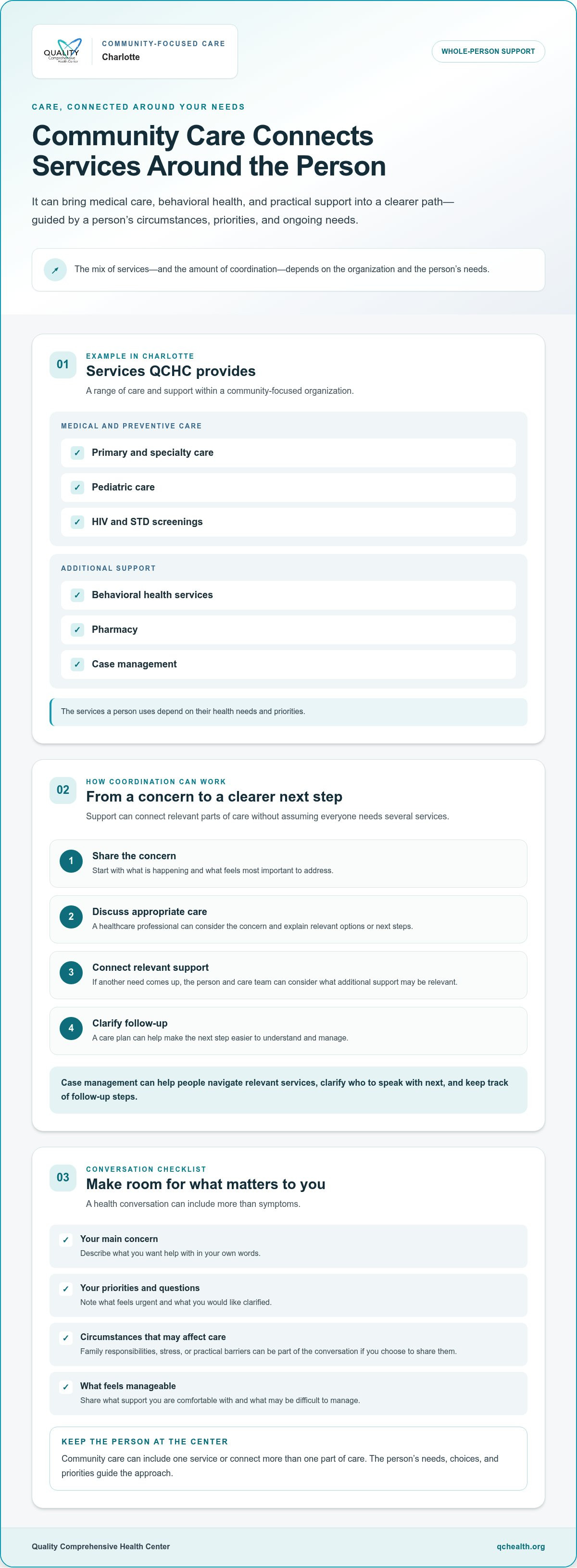
In Charlotte, Quality Comprehensive Health Center (QCHC) provides primary and specialty care, pediatric care, behavioral health services, pharmacy, HIV and STD screenings, and case management. This range of services brings medical care and supportive coordination together within a community-focused organization. The services a person uses depend on their health needs and priorities.
How is community care different from a single clinic visit?
A clinic visit is one encounter: a patient discusses a concern, receives care, and may leave with guidance or a follow-up plan. Community care can include that visit, but it also describes how support can connect across time or needs. For example, someone receiving medical care may also benefit from behavioral health support or help understanding the next step in their care.
Coordination helps people avoid piecing together every part of their care alone. One patient may need a single service, while another may value help connecting relevant services. Either way, the approach starts with the person, respects their choices, and focuses on care that fits their needs.
How Community Care Connects Health Needs Into More Coordinated Support
Health concerns don’t always arrive one at a time. A person may seek help for a physical symptom while also managing stress, family responsibilities, or difficulty getting to appointments. Community care can connect the steps around a person’s needs, so they don’t have to make sense of every part of the process alone.
A coordinated path often starts with sharing a concern and identifying what matters most. A healthcare professional can discuss appropriate care, explain next steps, and plan follow-up. If another need comes up, the person and care team can consider what additional support is relevant. The services and level of coordination depend on the setting and the person’s situation.
Care coordination links relevant services around a person’s needs, helping make the next step clearer and easier to manage. Mental Health America’s overview of Community care also describes ways community-based support can contribute to mental well-being.
Why whole-person support considers more than symptoms
Health is shaped by more than what’s happening in the body. Mental well-being, family responsibilities, and practical barriers can affect how someone experiences care and follows a plan. A conversation that makes room for those circumstances can help a person explain what feels urgent, what support they’re comfortable with, and what may be difficult to manage.
For example, someone discussing recurring headaches might also mention feeling overwhelmed and having limited time for appointments. That context doesn’t determine a diagnosis or guarantee a particular service. It helps the care team understand the person’s concerns and discuss realistic next steps together. The person’s priorities should guide that conversation.
What case management can contribute to care coordination
Case management can help someone understand their needs, navigate relevant services, and keep track of follow-up steps. That might mean clarifying who to speak with next or organizing questions for a future appointment. The aim is to make the process easier to understand and manage.
Case management complements clinical care. Clinicians assess health concerns and guide medical decisions; case management can help with the practical work of navigating support. At Quality Comprehensive Health Center, case management is part of a broader community-focused approach. Learn more about QCHC’s community-based care and how its local support brings care needs into the conversation.
Is Community Care Lower-Quality or Only for People Without Insurance?
No. Where care is delivered doesn’t, by itself, determine its clinical quality. Community care describes an approach and setting, not a lower standard of treatment or a particular insurance category. People deserve thoughtful assessment, respectful communication, sound clinical decisions, and appropriate follow-up in every care setting.
It’s reasonable to want to know what to expect from a healthcare experience. Useful signs of patient-centered care include having time to explain concerns, receiving clear information about options and next steps, and being treated with dignity. The National Academy of Medicine discusses community-based models of care that connect medical care with social support. This broader approach doesn’t replace clinical judgment; it recognizes that care can respond to more than a diagnosis alone.
What should people understand about quality in community-based care?
Care approach and clinical quality are related, but they aren’t interchangeable. A community-based model may emphasize access, continuity, and attention to a person’s circumstances. Those features don’t, by themselves, establish a particular clinical result, just as a traditional setting alone doesn’t establish quality.
Rather than relying on assumptions about a setting, focus on the care itself: Are your concerns heard? Are explanations understandable? Do you know the plan and what follow-up is recommended? These questions can support an informed conversation without relying on unverified rankings or outcome claims. Respect matters, as does appropriate clinical decision-making.
Can insured and uninsured people both benefit from community care?
Yes. Community care is an approach to delivering support, not a label for someone’s insurance status. People may seek community-based services for many reasons, including access to care, support for ongoing health needs, or a welcoming setting. Insurance status alone doesn’t define who may benefit from local, person-focused care.
For uninsured patients, Quality Comprehensive Health Center offers a sliding fee scale. The fee scale provides an option for uninsured patients, while the amount a person pays depends on the applicable arrangements. Having insurance also doesn’t mean a person’s needs are automatically met; people may still value care that listens, explains options, and makes next steps clearer. The key is to seek care that treats each person with respect and addresses their health concerns with appropriate professional attention.
How to Take Part in Community Care and Prepare for a Health Conversation
A health conversation can start with a simple description of what’s concerning you. You don’t need medical vocabulary or a complete health history prepared. A few notes can help you feel ready to share what matters and work with your care team on next steps.
What information can help you describe your needs?
Use this short preparation plan before an appointment or other healthcare conversation:
Learn more about QCHC, and consider these steps to prepare:
Name your main concern. Write down what you’ve noticed, when it started, and what you most want help with.
Set your priorities. Choose the questions or concerns you most want to discuss, especially if time feels limited.
Gather useful details. If available, bring a medication list and relevant health information, such as previous test results or notes from another visit.
Think about what affects your care. Consider practical barriers, family responsibilities, or preferences you’d like the care team to understand.
These notes don’t need to be polished. Your own words are enough. You can say, “I’m not sure what’s causing this, but I’ve noticed…” or explain what makes it difficult to follow a recommendation. Those details can help guide a useful discussion.
If you’re thinking about building a more consistent relationship with a provider, read about the importance of a primary doctor. Ongoing care can give you a familiar place to discuss concerns and follow-up.
How can families and care teams work together?
Families can offer support by helping someone remember questions, share relevant information, or understand next steps. The patient should guide what gets shared and who takes part. When someone else joins the conversation, clarify the patient’s preferences and consent so their voice remains central.
Ask the care team to explain recommendations in plain language. You might ask, “What should I do next?” or “When should I follow up?” If something isn’t clear, it’s okay to ask again. A shared understanding helps everyone know their role and what the plan involves.
For additional local guidance, explore QCHC’s Charlotte care center guide. To learn about care and support at Quality Comprehensive Health Center, explore QCHC’s healthcare services.
Community Care in Charlotte: How QCHC Connects Local Health Support
In Charlotte, community care takes shape through local organizations that bring health services closer to the people and neighborhoods they serve. Quality Comprehensive Health Center (QCHC) is a Charlotte-based nonprofit providing community-focused healthcare from its facility on Beatties Ford Road. The organization has more than 20 years of experience serving the community.
What community-based healthcare can look like in Charlotte
QCHC brings medical and behavioral health support together within a community-based organization. Its services include primary and specialty care, pediatric care, behavioral health, pharmacy, HIV and STD screenings, and case management. People may have different health needs at different times, so the right support depends on their individual circumstances.
Not every service is right for every person or concern. A family may seek pediatric care, while another person may have a different health question. Case management can help people navigate their needs and follow-up. The focus is on accessible, affirming care that recognizes each person’s priorities, rather than assuming everyone needs the same path.
How to explore QCHC’s approach to community care
Compassionate support begins with being heard and treated with respect. Clear communication can help people understand their options and take part in decisions about their care. For readers considering behavioral health support, QCHC’s Charlotte mental health check-in guide offers related information about wellness and support.
Whether you’re learning about local healthcare for yourself or a family member, understanding a provider’s approach can help you see how its services fit within the community. QCHC’s Charlotte presence connects clinical care with a commitment to accessible, person-centered support. Explore QCHC’s community-focused care to learn more about its approach.
Take Your Next Step Toward Connected Care
Community care brings healthcare closer to everyday life by connecting clinical support with a person’s needs, priorities, and follow-up. It isn’t limited to people without insurance, and a community-based setting alone doesn’t determine quality. Clear communication, respectful care, and appropriate clinical guidance matter wherever care happens.
Preparing a few questions and sharing what matters to you can make a health conversation easier to begin. You don’t need perfect words or every detail in hand. Start with your main concern, then work with the care team to understand possible next steps.
In Charlotte, Quality Comprehensive Health Center is a community-based nonprofit with more than 20 years of experience serving the community. Its medical and behavioral health services, along with case management, reflect an approach that recognizes more than a single appointment or concern.
To take your next step, explore community-focused care at QCHC. Start with your main health concern and learn more about the support available through this Charlotte-based community health center.
Frequently Asked Questions
What does community care mean in healthcare?
Community care connects healthcare with support rooted in local communities. It’s an approach to care, not one specific treatment or clinic visit. Depending on a person’s needs and the organization, it may bring together prevention, medical care, behavioral health support, and help planning follow-up. The idea is to make care more responsive to people’s lives and priorities, while recognizing that each person’s needs and care journey are different.
What services are included in community care?
Services vary by provider and community. They may include primary care, specialty care, pediatric care, preventive screenings, behavioral health services, pharmacy, and case management. In Charlotte, Quality Comprehensive Health Center provides these kinds of support, including HIV and STD screenings. Not every service is appropriate for every person. Care should reflect the individual’s concerns and clinical needs.
Is community care only for people without insurance?
No. Community care describes an approach to healthcare, not a person’s insurance status. People with different circumstances may benefit from local, person-centered support. QCHC offers a sliding fee scale for uninsured patients. Payment arrangements depend on individual circumstances, so a particular cost or coverage outcome won’t apply to everyone. You can include questions about payment in a healthcare conversation.
How does community care support mental health?
Community care can support mental health by connecting behavioral health services with other healthcare needs when appropriate. A person might discuss stress or emotional well-being with a care professional alongside other health concerns. Respectful communication and clear next steps can help make it easier to talk about what’s going on. In Charlotte, QCHC includes behavioral health services as part of its community-focused care.
Can community care help coordinate several health needs?
It can. Depending on the setting and the person’s needs, care coordination may help clarify which services are relevant, what to do next, and how follow-up fits into the care plan. Case management can support people in navigating needs and services, while clinical decisions remain with healthcare professionals. Not everyone needs multiple services, but coordinated support can make the process easier to understand for people managing more than one concern.
How can I access community care in Charlotte?
Start by identifying your main health concern and the kind of support you’re looking for, then explore local community-based healthcare. Quality Comprehensive Health Center is a Charlotte-based nonprofit located on Beatties Ford Road, with more than 20 years of experience serving the community. Before a health conversation, jot down your priorities and questions, and bring medication or health information if available. You don’t need medical terms to explain what you need.


Comments