
Why Your Primary Doctor is Important for Your Health in 2026
- QCHC Communications

- Jul 1
- 12 min read
Updated: Jul 6
What if the most effective way to lower your medical bills in 2026 isn't a new insurance plan, but a person who actually knows your name? With the recent expiration of enhanced ACA subsidies leading to higher premiums, many families feel the weight of a complex and expensive healthcare system. You might wonder if an annual visit is worth the effort when you feel fine. However, understanding why your primary doctor is important for your health goes beyond a simple checkup. It's about finding a dedicated advocate in a world of automated portals and rising costs.
We know how exhausting it is to navigate health disparities or feel like just another number in a crowded waiting room. You deserve a Medical Home where your story matters and your voice is heard. In this article, you'll discover how a primary care provider acts as your personal health anchor, helping you manage chronic conditions like diabetes or hypertension while keeping long-term expenses down. We'll explore the shift toward value-based care models like the new ACCESS program, the benefits of personalized wellness plans, and how a trusted relationship ensures that no part of your well-being is overlooked.
Table of Contents
The Foundation of Wellness: What is a Primary Care Doctor?
A Primary Care Provider (PCP) isn't just a name on an insurance card. They are your lifelong partner in health. From annual flu shots to managing complex chronic illnesses, they see the full picture of your life. To understand the basics, one might ask: What is a Primary Care Doctor? Historically, this role ensures you have a consistent point of entry into the medical system. This consistency is why your primary doctor is important for your health, as it creates a "Health Home Base" where your records, history, and values are stored in one place. When you have a dedicated provider, you aren't starting from scratch at every appointment.
To better understand this concept, watch this helpful video:
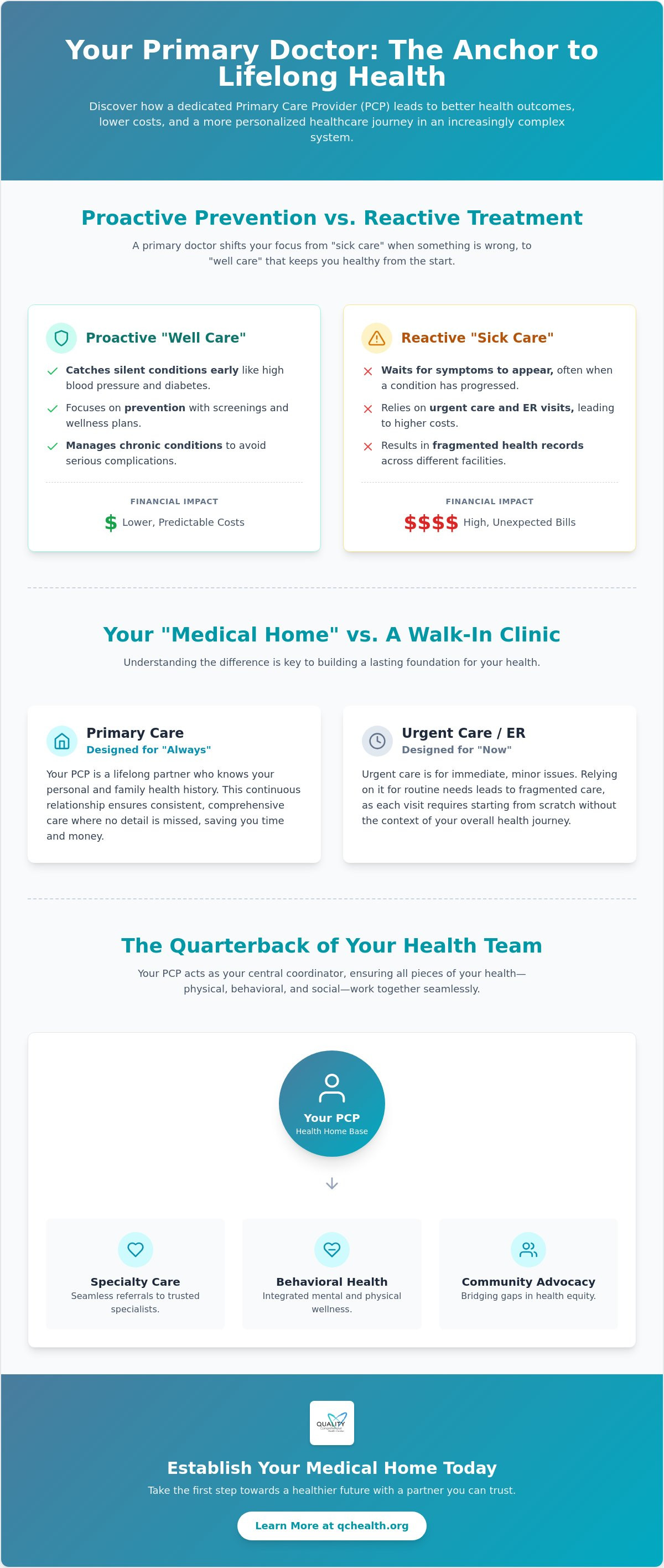
Building a foundation for wellness involves a diverse team. Your care team often includes Medical Doctors (MDs), Family Nurse Practitioners (FNPs), and Physician Assistants (PAs). Each professional brings a unique perspective to your care. Together, they shift the focus from "sick care," where you only visit when something is wrong, to "well care." In 2026, the medical field is moving rapidly toward value-based care models. This means your PCP focuses on your whole life, including your nutrition, stress levels, and environment, to prevent problems before they start. It's a proactive approach that treats you as a person, not just a set of symptoms.
The Difference Between Primary Care and Urgent Care
Urgent care centers are designed for "now," while primary care is designed for "always." If you have a minor injury on a Saturday, Vital Urgent Care is helpful for immediate medical attention. However, relying on walk-in clinics or the ER for routine needs leads to fragmented health records. Your PCP already knows your history, your allergies, and your family's health patterns. This continuous care saves money and time because you don't have to explain your entire medical story at every visit. It ensures that no detail is lost in the shuffle of different facilities.
Your First Point of Contact for All Health Needs
Navigating the healthcare system can feel like walking through a maze. Your PCP acts as your first point of contact, simplifying the process by coordinating physical, behavioral, and social health needs. This relationship is built on trust and shared community values. When you have a provider who understands the specific challenges of your neighborhood, you get care that is both clinically excellent and personally attentive. We believe health is a shared responsibility, and your doctor is your strongest ally in achieving it.
Proactive vs. Reactive: Why Prevention is the Best Medicine
Prevention isn't just a medical term; it's a strategy for living a full, uninterrupted life. Many people wait until they feel pain to seek help, but that's a reactive approach that often comes too late. This is exactly why your primary doctor is important for your health. They look for the subtle signs of illness that you might miss. According to the Proactive vs. Reactive: Why Prevention is the Best Medicine stance by the AAFP, primary care provides the essential screenings needed to stay ahead of illness through every stage of life.
The financial reality of 2026 makes prevention even more critical. With the recent expiration of enhanced ACA subsidies leading to higher premiums, avoiding the emergency room is a financial necessity. A simple wellness exam costs significantly less than an emergency intervention for a condition that could have been managed early. By staying ahead of seasonal risks through immunizations and age-related wellness exams, you're protecting both your physical well-being and your wallet. We believe you are worthy of a personalized health roadmap that considers your unique family history and lifestyle choices.
Catching Chronic Conditions Before They Progress
Silent killers often hide behind a lack of symptoms. High blood pressure and Type 2 Diabetes can damage your heart and kidneys for years without you feeling a thing. Regular screenings allow your provider to intervene before these conditions lead to permanent damage. Preventative screening is a tool for long-term survival. When we detect hypertension early, we can implement lifestyle changes or medications that prevent a future stroke or heart attack. It's about empowering you to take control of your numbers before they take control of your life.
Staying on Top of Routine Screenings
Wellness looks different at every age. From pediatric care that tracks growth to adult exams that monitor cholesterol, consistency is key. This comprehensive approach includes sexual health screenings as a standard, shame-free part of your yearly routine. Integrating these tests into your wellness plan provides psychological peace of mind and ensures you're protecting yourself and your community. There's a unique sense of relief that comes with a clean bill of health from a provider you trust. If you're ready to move from reactive care to a proactive partnership, you can start your wellness journey with a team that truly cares about your long-term success.
Beyond the Checkup: Managing Chronic Disease and Specialty Care
Your health journey doesn't end when the annual physical is over. For many in our community, managing a long-term condition requires a team of experts working in harmony. This is exactly why your primary doctor is important for your health; they act as the "Quarterback" for your entire care team. They coordinate the complex handoffs between cardiologists, endocrinologists, and therapists to ensure everyone is following the same playbook. Without this central hub, your care can become fragmented, which often leads to conflicting medications, duplicate tests, or missed symptoms. We believe you deserve a medical partner who sees the whole picture of your life, not just a single diagnosis.
Managing chronic conditions like HIV/AIDS, hypertension, or diabetes requires more than just clinical expertise. It requires a deep understanding of the social and financial barriers that can stand in the way of your wellness. That's where the role of a Charlotte medical social worker becomes vital. They work alongside your clinical team to help you navigate high-deductible plans or find community resources. This holistic approach ensures that your treatment plan is actually sustainable in your daily life. Listen. Support. Heal. These three pillars guide how we manage your long-term wellness.
Integrated Behavioral Health and Primary Care
Mental health is just as essential as physical health, yet the two are often treated as separate worlds. If you're struggling with depression or anxiety, it becomes significantly harder to manage a physical illness like heart disease. We solve this by integrating counseling directly into the medical visit. Having a "one-stop-shop" for your medical and mental health check-in in Charlotte means you get seamless support without the stress of multiple appointments. It's a compassionate way to ensure no part of your well-being is left behind.
Navigating Specialty Referrals with Ease
When you need specialized care, your PCP ensures you see the right person at the right time. They maintain a centralized medical record, which acts as a single source of truth for your history. This prevents the frustration of repeating your story to every new specialist you meet. Perhaps most importantly, your doctor translates complex specialist findings into plain language. They make sure you leave the office feeling empowered and informed, rather than confused by medical jargon. By bridging the gap between clinical complexity and personal understanding, your PCP ensures you remain the most important member of your own care team.
Breaking Barriers: The Physician as a Community Advocate
Rooted in our mission to serve, we believe the physician should be a foundational civic pillar. A doctor's role extends far beyond the four walls of an exam room. They don't just treat illnesses; they dismantle the obstacles that keep you from getting better. This advocacy is exactly why your primary doctor is important for your health. They act as a bridge between high-quality medicine and the real-world challenges you face every day. By identifying barriers, building trust, and delivering results, your provider ensures that your path to wellness is clear and supported.
Health doesn't happen only during a clinical visit. It happens in your home, on your commute, and at your kitchen table. We recognize that social determinants like housing stability, food security, and reliable transportation are just as critical as any prescription. If you can't find a ride to the clinic or don't have access to fresh produce, your health will suffer regardless of the treatment plan. Your primary care team works to connect you with resources that address these fundamental needs. This holistic approach empowers you to take charge of your own wellness with the tools you actually need to succeed.
Eliminating Health Disparities in Charlotte
Location-based care is essential for reaching those who have been historically underserved. By placing clinics on Beatties Ford Road and other key areas, we bring professional medical authority directly into the neighborhood. Trust is built when you see providers who look like you and understand the cultural nuances of your community. This representative healthcare model helps close the gap in outcomes for marginalized populations. Health Equity is the formal principle of ensuring every individual has the resources they need to reach their highest level of wellness regardless of their zip code.
A Judgment-Free Medical Environment
Many patients stay away from doctors because they've felt ignored or judged by the traditional medical system. We've created a safe space where affirming care is the standard, particularly for HIV prevention and sexual health. When you feel seen and respected, you're more likely to stay consistent with your treatment and screenings. This supportive environment lowers the barriers to care and leads to significantly better long-term health outcomes. Advocacy means standing with you, not just talking at you. Join a community that prioritizes your worth by scheduling your primary care visit today with a team that truly understands your journey.
Establishing Your Medical Home in Charlotte
A Medical Home is more than just a physical building; it's a formal principle of care that prioritizes your stability and worthiness. It represents a promise of accessibility and comprehensive support for every stage of your life. This model is exactly why your primary doctor is important for your health, as it ensures your medical journey is never fragmented or lonely. Instead of bouncing between disconnected offices, you have a central hub where your history is respected and your future is planned. Establishing this foundation is a vital step toward long-term wellness and peace of mind.
Creating your Medical Home involves four simple, action-oriented steps. Identify. Verify. Schedule. Prepare. First, identify your specific needs, whether you require pediatric care for your children, chronic disease management, or behavioral health services. Second, verify accessibility by looking for clinics that accept NC Health Choice or offer sliding fee scales. This ensures that financial hurdles don't block your path to treatment. Third, schedule a "get-to-know-you" visit. Trust is the baseline of effective medicine, and a face-to-face meeting helps build that bond. Finally, prepare your health history and a list of essential questions for your new doctor to ensure your first visit is productive and empowering.
Affordable Care for Every Charlotte Family
We believe that high-quality healthcare is a right, not a privilege. At QCHC, we are committed to providing professional medical services regardless of your ability to pay. Navigating the system with a high deductible or no insurance can feel overwhelming, but we are here to lower those barriers. Our team helps you manage costs through sliding fee scales and the 340B pharmacy program, which significantly reduces the price of essential medications. By centering our principles on community worthiness, we ensure that every neighbor has access to the life-saving care they deserve. This commitment to affordability is another reason why your primary doctor is important for your health in an era of rising costs.
Why QCHC is Your Partner in Health
For over 20 years, we have served as a foundational civic pillar in the Charlotte community. Our holistic approach is built on the idea that health is a shared responsibility. By combining primary care, an on-site pharmacy, and behavioral health services under one roof, we provide a seamless experience that respects your time and your dignity. We are proud of our modern facilities, but our focus remains on the human, compassionate care that happens inside them. We invite you to experience a healthcare relationship that feels like a supportive neighbor rather than a detached institution. Join our community and establish your Medical Home at Quality Comprehensive Health Center today.
Your Health Journey Deserves a Trusted Partner
Your wellness is a lifelong journey that requires more than just occasional medical intervention. It requires a dedicated partner who understands your history and advocates for your future. We've explored how early detection saves lives and how integrated behavioral health supports the whole person. This comprehensive care is exactly why your primary doctor is important for your health. By acting as your clinical anchor, a primary care provider ensures that no detail of your physical or mental well-being is overlooked.
At Quality Comprehensive Health Center, we've spent over 20 years building a foundation of trust in Charlotte. Our state-of-the-art facility on Beatties Ford Road is designed to be a welcoming safe space for everyone. We believe in removing financial barriers, which is why we offer a sliding fee scale for our uninsured neighbors. You're worthy of high-quality, compassionate care that treats you like a person, not a patient number. Take the first step toward a healthier tomorrow and Schedule your first appointment at Quality Comprehensive Health Center today. Together, we can build a stronger, healthier community.
Frequently Asked Questions
Do I really need a primary care doctor if I am currently healthy?
Yes, you need a primary doctor even when you feel your best to establish a baseline for your wellness. This is exactly why your primary doctor is important for your health; they detect "silent" conditions like hypertension before they become emergencies. Regular visits ensure you stay ahead of potential risks through screenings and immunizations. Establishing this relationship now means you have a trusted advocate ready if you do get sick.
What is the difference between family medicine and internal medicine?
Family medicine practitioners are trained to treat patients of all ages, from newborn infants to seniors. Internal medicine physicians focus exclusively on adult care and the management of complex chronic diseases. Both serve as excellent primary care providers. Your choice depends on whether you want a single doctor for your entire household or a specialist dedicated to adult health needs and disease prevention.
How can a primary doctor help me save money on healthcare?
A primary doctor helps you save money by preventing expensive emergency room visits and hospital stays. By catching a condition like Type 2 Diabetes early, you avoid the high costs of treating advanced complications later. Routine wellness exams and early interventions are far more affordable than reactive crisis care. Investing in a consistent relationship with a provider protects your physical health and your financial stability.
What should I do if I don’t have insurance but need a primary doctor in Charlotte?
You should look for community health centers like QCHC that offer a sliding fee scale based on your income. We believe that everyone deserves high-quality care regardless of their ability to pay or insurance status. Our team also helps families navigate local resources and programs like NC Health Choice. No one should have to choose between their health and their household budget in our community.
How often should I see my primary care provider for a checkup?
Most healthy adults should schedule a comprehensive wellness exam at least once a year. This annual visit is the best way to track changes in your health and update necessary screenings. If you are managing a chronic condition like asthma or high blood pressure, your provider may recommend more frequent visits. Consistency helps maintain your Medical Home and ensures your care plan stays current and effective.
Can a primary care doctor help with my mental health concerns?
Yes, primary care doctors are trained to screen for and help manage mental health concerns like anxiety or depression. We view mental wellness as a formal principle of your overall well-being, not a separate issue. At QCHC, we integrate behavioral health services directly into your primary care experience. This holistic approach ensures you receive compassionate support for both your mind and your body in one safe space.
Will a primary care doctor coordinate my care with other specialists?
Yes, your primary doctor acts as the "Quarterback" for your entire healthcare journey. They manage the referrals to specialists like cardiologists or therapists and keep a centralized record of all your treatments. This coordination is why your primary doctor is important for your health; it prevents conflicting medications and duplicate tests. They ensure every member of your medical team is working toward the same wellness goals.
What questions should I ask when choosing a new primary care provider?
Ask about their approach to preventive care and how they involve patients in the decision-making process. You should also inquire about their experience with your specific health concerns and how they handle specialist referrals. Don't hesitate to ask about their office's accessibility, such as their use of sliding fee scales or integrated pharmacy services. Finding a provider who listens and respects your voice is essential for a lasting partnership.


Comments