


Why Your Primary Doctor is Important for Your Health in 2026

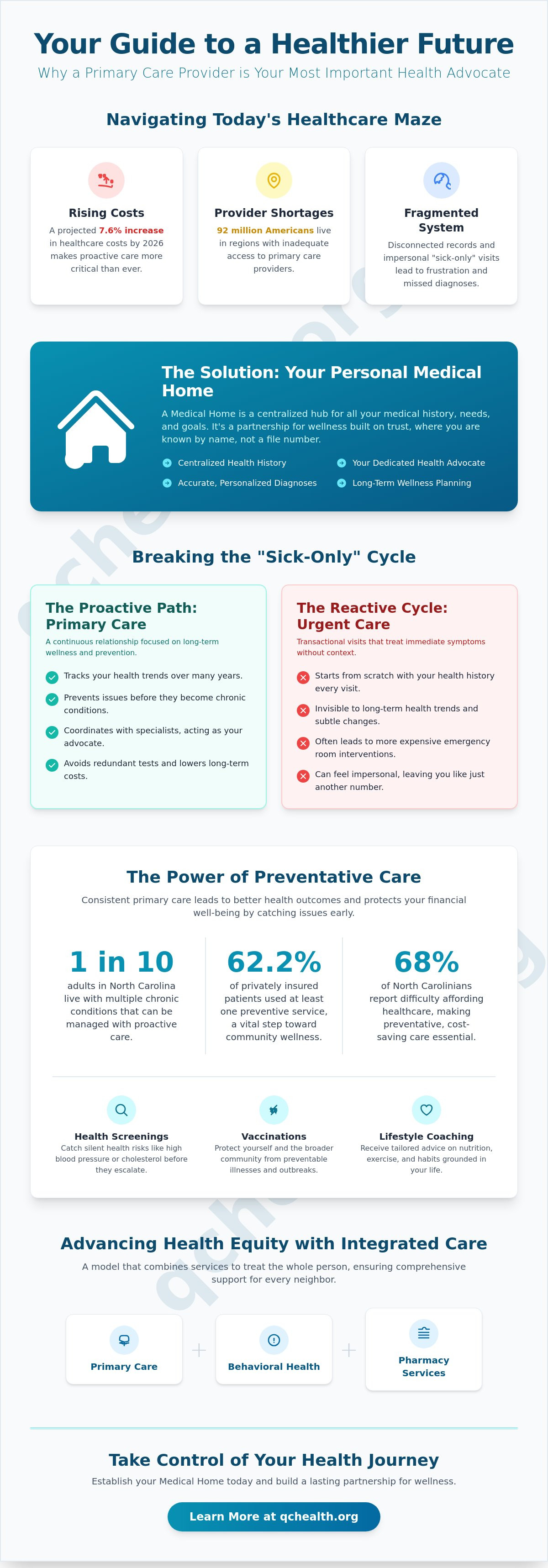
In 2026, healthcare costs are projected to rise by up to 7.6 percent, and for many, maintaining Medicaid coverage now requires 80 hours of monthly work or volunteering. With 92 million Americans living in regions with a shortage of providers, the search for reliable care feels more like a burden than a right. You probably feel the weight of fragmented records and the high price of emergency visits. It's frustrating to feel like just another number in a complex system. Understanding why your primary doctor is important for your health is the first step toward reclaiming your peace of mind.
We believe that every person deserves a dedicated partner in their journey toward Wellness. You will discover how a primary provider serves as your lifelong advocate, prevents chronic illness, and navigates the maze of specialists on your behalf. This article explores how finding a true Medical Home lowers your long-term costs and ensures your care remains human, compassionate, and deeply personal. We will look at the role of prevention, the power of integrated records, and the ways a consistent doctor protects your future by honoring your worth, listening to your needs, and coordinating your care.
Key Takeaways
Establish a Medical Home to centralize your history, simplify your records, and ground your care in a place where you are known and valued.
Understand why your primary doctor is important for your health through preventative screenings that catch risks early and keep the Charlotte community thriving.
Navigate the complex healthcare system with a dedicated advocate who coordinates your specialty care and ensures your referrals lead to the right treatment.
Break the "sick-only" cycle by moving beyond impersonal urgent care visits toward a relationship built on trust, listening, and long-term Wellness.
Access integrated support through a model that combines primary care, behavioral health, and pharmacy services to advance Health Equity for every neighbor.
Table of Contents
What is a Primary Care Provider? Establishing Your Medical Home
A Primary care physician is your first point of contact for any health concern. They serve as the essential gateway to the medical system. At its core, this role is about more than just clinical expertise. It's about establishing a Medical Home. We define a Medical Home as a centralized hub for all your medical history, needs, and goals. It's a place where you're known by name, not just by a file number. This environment fosters a deep sense of belonging and trust. Moving beyond the "one-off" visit is essential. Instead, you enter a partnership for wellness that evolves as you do. This ongoing connection is exactly why your primary doctor is important for your health in an increasingly complex world.
When you have a consistent provider, diagnoses become more accurate. They don't just see a symptom; they see a pattern. They understand your baseline. This stability is vital for your long-term well-being. It allows for a level of personalized care that fragmented systems simply cannot offer. We believe that health is a shared responsibility. Your doctor is your advocate, your guide, and your neighbor in care.
Continuity of Care: Building a Lifelong Health Record
Trusting one provider ensures your medical story stays complete and accurate. When a doctor knows your history, they prevent dangerous medical errors. They recognize which treatments worked before and which didn't. This knowledge is crucial for personalizing your 2026 wellness plan. Your family history isn't just a list of boxes to check; it's a roadmap for prevention. Starting over with a new doctor every time you feel sick is inefficient. It's frustrating. It often leads to redundant tests and wasted time. A steady partnership means your provider sees the whole picture, ensuring every decision is rooted in your unique history.
Your Health Historian: Tracking Trends, Not Just Symptoms
Your doctor acts as a dedicated historian for your body. They identify subtle changes in blood pressure, cholesterol, or weight that occur over several years. These trends are often invisible during a quick visit to an urgent care center or an emergency room. By understanding your lifestyle and your specific community context, they create a baseline for your health. This baseline is your most powerful tool for early detection. It helps catch anomalies before they become chronic conditions. We prioritize tracking, listening, and acting with intention. This proactive approach is why your primary doctor is important for your health and your long-term peace of mind. It honors your worth and protects your future.
Preventative Care: Why Your Primary Doctor is Important for Wellness
We believe that health is a shared responsibility. It isn't just about reacting to a fever or a sudden pain; it's about nurturing your body before a crisis occurs. This proactive approach is exactly why your primary doctor is important for your health. In 2024, data showed that 62.2 percent of privately insured patients used at least one preventive service. This shift toward wellness is vital because one in ten adults in North Carolina currently lives with multiple chronic conditions. By prioritizing regular check-ups, you aren't just visiting a clinic. You're investing in a future where you remain active and present for your family.
Your primary provider offers a shield through vaccinations and immunizations. These services protect you and the broader Charlotte community from preventable outbreaks. Beyond physical shots, your doctor provides lifestyle coaching tailored to your specific needs. Whether it's nutrition advice, exercise plans, or support for smoking cessation, this guidance is grounded in your unique life context. Research on the Contribution of Primary Care to Health Systems highlights that consistent primary care leads to significantly better health outcomes. By catching issues early, you avoid the high cost of emergency room interventions. Since 68 percent of North Carolinians report difficulty affording healthcare, these preventative steps are essential for your financial and physical well-being.
Screening for Silent Health Risks
Preventative care is the proactive defense of your future self. Even when you feel fine, annual wellness exams are critical for uncovering silent risks like hypertension or high cholesterol. These conditions often don't have obvious symptoms until they cause serious damage. Consistent monitoring allows your doctor to manage these levels through simple lifestyle changes or medication before they lead to a stroke or heart attack. We focus on tracking these trends to keep you thriving. Our team provides compassionate primary care designed to catch these risks long before they become emergencies.
Integrated Behavioral Health: Caring for the Whole Person
Physical health and mental wellness are deeply interconnected. You can't treat one without honoring the other. Your primary doctor is the first person you should talk to about stress, sleep issues, or persistent sadness. They're trained to identify early signs of depression or anxiety that might manifest as physical symptoms. By integrating behavioral health into your routine visits, we remove the barriers to specialized support. If you need deeper care, your provider streamlines referrals to counselors or therapists within the same trusted network. This holistic view ensures that every part of your well-being is seen, heard, and supported.
Breaking the 'Sick-Only' Cycle: Addressing Common Barriers
Many people only seek medical attention when they feel unwell. This reactive approach creates a "sick-only" cycle that often results in expensive emergency room visits and missed opportunities for early intervention. Breaking this pattern is vital for your long-term well-being. Understanding why your primary doctor is important for your health means shifting your perspective from emergency response to lifelong maintenance. We believe that health is a shared responsibility. It requires a relationship built on trust, consistency, and mutual respect rather than a series of disconnected appointments with strangers.
Barriers to care are real and often overwhelming. In 2026, new Medicaid regulations require adults to demonstrate 80 hours of monthly work or volunteering while facing eligibility redeterminations every six months. These hurdles make having a steady Medical Home more critical than ever. Your primary provider helps you navigate these administrative shifts while keeping your clinical care on track. They ensure that your health doesn't take a backseat to paperwork or financial stress. We focus on lowering these barriers by sounding like a supportive neighbor rather than a detached institution.
Urgent Care vs. Primary Care: Knowing the Difference
Walk-in clinics serve a specific purpose. They're excellent for acute issues like a sudden flu, a minor burn, or a sprained ankle. However, an urgent care provider is not a substitute for a primary doctor. These clinics are designed for quick fixes, not the management of chronic conditions. They lack your full medical history and don't track your health trends over time. This fragmented care comes with hidden costs, such as redundant testing and a lack of follow-up. A primary provider sees the whole picture, ensuring your treatments are coordinated and safe.
Building Trust in the Exam Room
Trust is the foundation of effective medicine. For many in our community, a "trust gap" exists due to past experiences or cultural disconnects. We prioritize affirming care that respects your background, identity, and personal values. You deserve to be heard. Advocating for yourself starts with finding a Charlotte doctor accepting NC Health Choice or Medicaid who views you as a partner. Rapports are built through honest dialogue and active listening.
Taking control of your consultation empowers you to receive better treatment. Preparing a specific list of questions to ask my new doctor ensures that nothing is overlooked. This preparation helps bridge the gap between clinical expertise and your lived experience. When you and your doctor are on the same page, your care plan becomes more effective, sustainable, and personally attentive. We are here to listen, understand, and act in your best interest.
Navigating the Charlotte Healthcare System with an Advocate
Think of your primary care provider as the quarterback of your medical team. They don't just treat symptoms; they lead the entire strategy for your well-being. In a city like Charlotte, the healthcare landscape is vast and often confusing. Having a single point of contact ensures that your care remains organized and efficient. This level of coordination is a primary reason why your primary doctor is important for your health as you move through different stages of life. They hold the map to your history, ensuring that every specialist you see is on the same page.
We believe that health is a shared responsibility between the provider and the community. This partnership is especially vital during major life transitions. Moving from Pediatric care to adult medicine can feel like losing a safety net. Your primary doctor bridges this gap, ensuring that your childhood health records and established baselines follow you into adulthood. They provide a sense of continuity that prevents you from having to tell your story from scratch at every new office. By acting as your dedicated advocate, they ensure you never have to face a complex diagnosis alone.
Coordinating Specialty Care and Referrals
When your health requires Specialty care, such as Cardiology or Endocrinology, your primary doctor manages the transition. They don't just hand you a phone number. They ensure that specialists receive your latest test results and understand your background. This prevents "medication overload," where different doctors prescribe drugs that might conflict with one another. Your primary provider reviews all your prescriptions, from the Pharmacy to the specialist's office, keeping your treatment plan safe and streamlined. They simplify the process of getting the right care at the right time.
Beyond Medicine: Connecting with Community Resources
True wellness goes beyond the walls of an exam room. We recognize that factors like food insecurity, unstable housing, or transportation barriers directly impact your physical health. These are known as Social Determinants of Health. Your primary doctor acts as a bridge to essential community resources. Through integrated case management, they can help you find local programs that provide nutritious food or assistance with utility bills. This holistic approach ensures that your socio-economic well-being is supported alongside your clinical needs. We are committed to advancing health equity by addressing these underlying challenges. If you are ready to find a partner who sees the whole picture, we invite you to schedule an appointment with our primary care team today.
Quality Comprehensive Health Center: Your Partner in Health Equity
We believe that every Charlotte resident deserves access to high-quality medical services, regardless of their background or bank account. For over 20 years, Quality Comprehensive Health Center has stood as a foundational civic pillar in the Beatties Ford Road community. Our mission is built on the formal principle of Health Equity. We provide integrated care that brings Primary care, behavioral health services, and a Pharmacy together under one roof. This coordination is exactly why your primary doctor is important for your health; it ensures your physical and mental well-being are treated as one inseparable journey. By centralizing these services, we eliminate the need for you to travel across the city to different clinics, saving you both time and stress.
Accessibility is a right, not a privilege. We understand the stress of being uninsured or underinsured in a shifting economy. To lower these barriers, we offer sliding fee scales that adjust based on your income. This ensures that cost never stands between you and the preventative screenings or life-saving medications you need. Our deep roots in the Beatties Ford Road area allow us to understand the specific challenges our neighbors face. We don't just work here. We are part of the fabric of this community. This local expertise helps us address the social factors that impact your vitality. When you walk through our doors, you find a modern facility paired with the warmth of a supportive neighbor. This combination of advanced technology and human compassion defines our approach to service.
Holistic Support for Individuals and Families
We treat the person, not just the diagnosis. Our practitioners provide judgment-free, compassionate care that honors your cultural background and lived experience. In an era of detached institutions, we remain personally attentive. Your Wellness is our standard. We focus on building long-term relationships that foster trust and empowerment for every family we serve. This consistent partnership is why your primary doctor is important for your health and your peace of mind. We are committed to being a reliable anchor for your family's future, offering a sense of belonging that goes beyond a standard clinical appointment.
Start Your Wellness Journey Today
Taking the first step toward a healthier future is simple. To ensure a successful start, please bring a photo ID, any current insurance cards, and a list of your current medications to your initial visit. Having these items ready allows our team to build your baseline record quickly and accurately. Our practitioners are ready to welcome you into a Medical Home where you are truly seen and heard. You deserve an advocate who fights for your health every day. It is time to prioritize your worth. Schedule your primary care visit at QCHC and experience the difference of community-centered medicine.
Secure Your Future with a Trusted Medical Home
Your health is a lifelong journey that requires a steady, reliable partner. By establishing a Medical Home, you move beyond the cycle of reactive urgent care visits and begin building a proactive defense for your future self. You've seen how consistent screenings and integrated behavioral health care prevent chronic illness while lowering long-term costs. This consistent advocacy is exactly why your primary doctor is important for your health and the collective well-being of our Charlotte community.
At Quality Comprehensive Health Center, we combine a legacy of 20+ years of service with a state-of-the-art facility on Beatties Ford Road. We provide integrated primary and behavioral health care because we believe treating the whole person is the only way to achieve true Health Equity. You are worthy of care that is personally attentive, technologically advanced, and deeply compassionate. We prioritize your worth by offering a sanctuary for healing and growth.
Empower your health—schedule an appointment with Quality Comprehensive Health Center today. We are here to listen, to heal, and to serve as your dedicated health advocate. Your journey toward lasting Wellness starts with a single, courageous step.
Frequently Asked Questions
Is it really necessary to see a doctor if I feel healthy?
Yes, because many serious conditions like hypertension and early-stage diabetes often have no visible symptoms. Regular visits allow your provider to establish a baseline for your unique body. This proactive approach is exactly why your primary doctor is important for your health even when you feel fine. We focus on catching small changes before they become life-altering emergencies.
What is the difference between a family doctor and a primary care physician?
A primary care physician is a broad category that includes family doctors, internists, and pediatricians. While a family doctor treats patients of all ages from infants to seniors, other primary providers might focus specifically on adults. Both serve as your medical home and your first point of contact for any clinical concern or wellness goal.
Can a primary doctor help me manage my mental health?
Yes, your primary doctor is often the first person to identify and treat behavioral health concerns. They provide initial screenings for anxiety, depression, and stress while coordinating integrated support. We treat the whole person by linking your physical symptoms to your emotional well-being, ensuring you receive compassionate care for both your mind and body.
How often should I see my primary doctor for a check-up?
Most adults should schedule a comprehensive wellness exam at least once every year. If you're managing chronic conditions or taking specific medications, your provider might suggest more frequent visits to monitor your progress. These regular touchpoints allow us to track health trends and adjust your care plan with intention and personal accountability.
What should I do if I don't have health insurance but need a doctor?
You should seek out community health centers that offer sliding fee scales based on your household income. These programs are designed to lower barriers for the uninsured and underinsured. We believe that everyone deserves high-quality care. Our mission is to ensure that your financial situation never stands in the way of your worth or your wellness.
How do I choose the right primary care provider in Charlotte?
Look for a provider who listens to your concerns and respects your cultural background. It's helpful to find a medical home that offers integrated services like a pharmacy and behavioral health in one location. You should also verify that they accept your specific coverage, such as Medicaid or NC Health Choice, to ensure your care remains affordable.
Can my primary doctor help me with specialists and referrals?
Yes, your doctor acts as the dedicated coordinator for all your specialty care needs. They ensure that experts like cardiologists or endocrinologists receive your full medical history and share their results. This quarterbacking role is a vital reason why your primary doctor is important for your health; it prevents medical errors and keeps your treatment plan organized.
What happens during a first-time primary care visit?
Your first visit focuses on building your lifelong health record and establishing a baseline for future care. The provider will review your medical history, discuss your family's health patterns, and perform a physical exam. This initial consultation is about more than just data. It is the beginning of a partnership rooted in trust, listening, and mutual respect.


Comments