
Signs You Might Need to Talk to a Therapist: A 2026 Guide to Mental Wellness
- QCHC Communications

- 4 days ago
- 12 min read
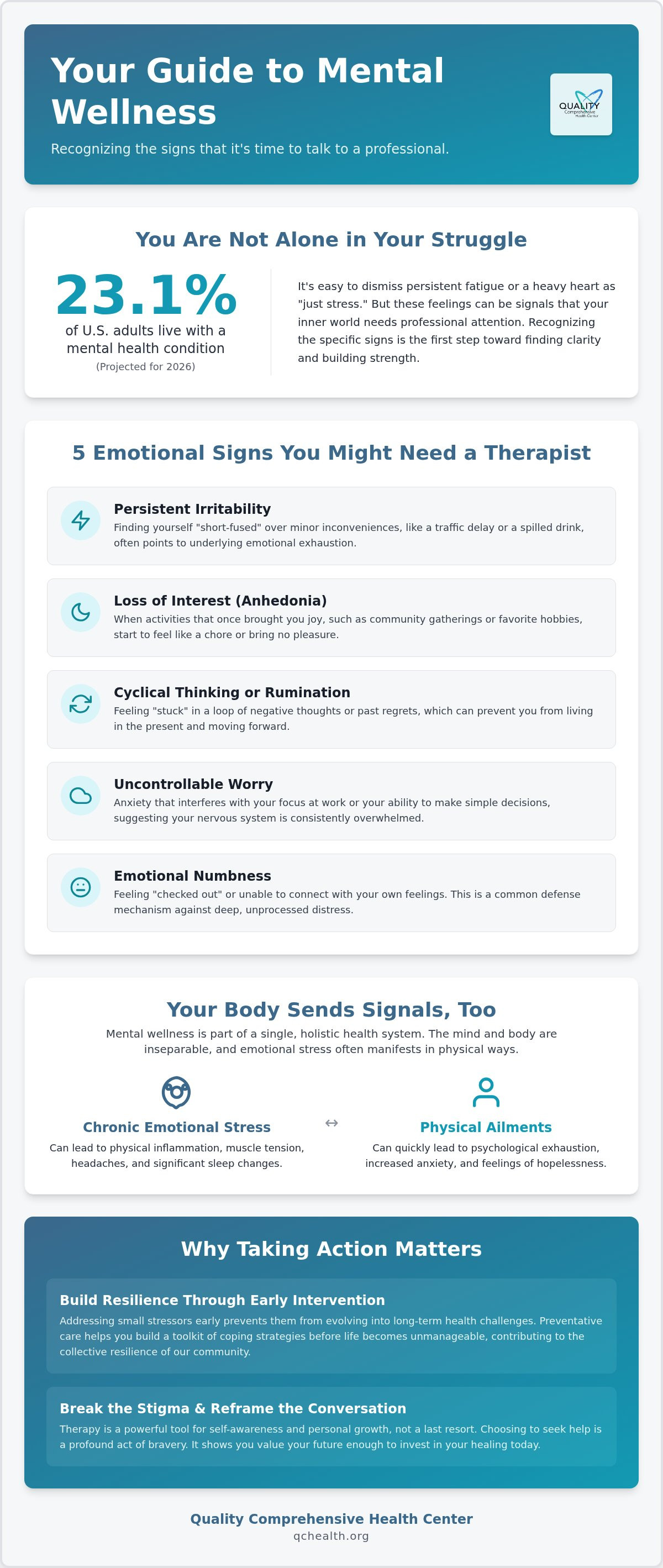
What if the persistent fatigue you feel isn't just about a lack of sleep, but a signal that your inner world needs professional attention? It's easy to dismiss a heavy heart as "just stress" or to feel silenced by the outdated stigma that still affects our neighborhoods. In 2026, over 23 percent of adults in the U.S. live with a mental health condition, proving that you're never alone in your struggle. Recognizing the specific signs you might need to talk to a therapist is the first step toward finding clarity, building strength, and honoring your Worthiness.
You deserve to feel balanced, empowered, and whole. We understand that distinguishing between daily burnout and a deeper emotional need is difficult when you're overwhelmed by responsibilities. This guide helps you identify those subtle signals so you can reclaim your well-being and resilience. We'll provide clear criteria for seeking professional support, explain how your physical and mental health are connected, and point you toward affordable local resources. Seeking care. Finding balance. Reclaiming peace. We believe that health is a shared journey, and your wellness is the foundation of our Community.
Table of Contents
Understanding Mental Wellness as a Foundation for Health
Mental wellness is far more than the simple absence of a clinical diagnosis. It's a vibrant, active pursuit of Worthiness that allows you to navigate life's challenges with clarity and purpose. True health requires a deep sense of belonging and the emotional flexibility to handle stress without losing your sense of self. Understanding Mental Wellness means recognizing that your internal world is the bedrock upon which the rest of your life is built. When this Foundation is stable, you can participate fully in your community and pursue your highest aspirations.
The mind and body are inseparable components of a single, Holistic Health system. Chronic emotional stress often manifests as physical inflammation, while physical ailments can quickly lead to psychological exhaustion. Treating them as separate entities is an outdated approach that ignores the complex reality of the human experience. This is why scheduling a mental health check-in Charlotte is just as essential as your annual physical exam. It’s a proactive way to ensure every part of your being is receiving the attention it deserves.
To better understand how these signals appear in daily life, watch this helpful video regarding the common indicators that it might be time for professional support:
Breaking the Stigma in Our Community
Cultural perceptions and historical mistreatment often create barriers that prevent people from seeking the care they need. In many neighborhoods, there's a lingering pressure to "stay strong" or keep family matters private, which can mask the signs you might need to talk to a therapist. We're here to reframe therapy as a powerful tool for self-awareness and personal growth rather than a last resort for the broken. Choosing to seek help is a profound act of bravery. It shows you value your future enough to invest in your healing today. Acknowledging struggle. Seeking support. Reclaiming power.
Why Early Intervention Matters in 2026
In 2026, the landscape of mental healthcare emphasizes prevention as a means of achieving true health equity. With approximately 23.1 percent of U.S. adults living with a mental illness, waiting for a crisis is no longer a viable strategy. Addressing small stressors early prevents them from evolving into long-term health disparities that affect your ability to work, parent, and thrive. Preventative care allows you to build a toolkit of coping strategies before life becomes unmanageable. By acting now, you contribute to the collective resilience of our city. Healing yourself. Supporting others. Strengthening Charlotte.
5 Emotional Signs You Might Need to Talk to a Therapist
Recognizing internal shifts requires a high level of self-awareness and honesty. While everyone experiences occasional mood swings, certain signs you might need to talk to a therapist are more persistent and disruptive to your daily life. These aren't personal failings or signs of weakness. They are signals from your mind that your current coping mechanisms are reaching their limit. When your emotional "check engine" light stays on, it’s a Principle of self-care to seek professional insight.
Persistent Irritability: Finding yourself "short-fused" over minor inconveniences, like a traffic delay or a spilled drink, often points to underlying emotional exhaustion.
Loss of Interest: When activities that once brought you joy, such as community gatherings or favorite hobbies, feel like a chore, it’s time to pay attention.
Cyclical Thinking: Feeling "stuck" in a loop of negative thoughts or past regrets can prevent you from living in the present and moving forward.
Uncontrollable Worry: Anxiety that interferes with your focus at work or your ability to make simple decisions suggests your nervous system is consistently overwhelmed.
Emotional Numbness: Feeling "checked out" or unable to connect with your own feelings is a common defense mechanism against deep, unprocessed distress.
Distinguishing Between Stress and Persistent Distress
Persistent distress is defined as a cluster of symptoms that last for more than two consecutive weeks and significantly impair your ability to function. There is a profound difference between having a difficult week and experiencing clinical anxiety or depression. Caring for Your Mental Health involves monitoring the frequency and intensity of these feelings to determine when your baseline has shifted. Use this brief checklist to evaluate your current state:
Are these feelings present most of the day, nearly every day?
Do they interfere with your work, family, or social responsibilities?
Have friends or family members noticed a change in your behavior?
Do your typical ways of relaxing no longer provide the relief they once did?
The Weight of Unprocessed Trauma
Past experiences don't always stay in the past. They often manifest as current emotional triggers that feel sudden, intense, and overwhelming. Every mind has a "carrying capacity," and when that limit is reached, even small daily stressors can cause an emotional overload. Specialized behavioral health services can help you unpack these complex experiences in a safe, supportive environment. Honoring your past. Healing your heart. Reclaiming your peace. By addressing these triggers with a professional, you honor your inherent Worthiness and build a stronger Foundation for your future. You don't have to carry the weight of the world alone.
Physical and Social Indicators of Emotional Struggle
Your body often acts as a vital messenger for your mind. When emotional distress is suppressed or ignored, it doesn't simply disappear; it often migrates into your physical being, manifesting as tangible discomfort. Recognizing these bodily signs you might need to talk to a therapist is a crucial part of maintaining your overall Foundation. You might notice that your sleep has become unpredictable and unrefreshing. Some people find themselves staring at the ceiling for hours with persistent insomnia, while others feel a heavy pull toward hypersomnia, sleeping through the day as a way to escape their thoughts or the weight of their responsibilities.
Chronic stress triggers a biological response that is far more than just a feeling. When you're under constant pressure, your nervous system remains in a state of high alert, flooding your system with cortisol. Over time, this hormonal surge can lead to real physical damage, resulting in chronic headaches, digestive issues, or muscle tension that doesn't respond to traditional rest. Flooding your body. Taxing your heart. Exhausting your mind. This intersection of mental and physical health is exactly why your primary doctor is important for your health. They can help rule out underlying medical issues while recognizing when your body is actually responding to deep-seated emotional pain.
Socially, you might find yourself pulling away from the vibrant Community life that Charlotte offers. Missing a neighborhood gathering or skipping a Sunday dinner once in a while is normal. However, a consistent pattern of withdrawing from friends and family is one of the common signs you might need help. You might feel like a "burden" to those you love, or perhaps you've noticed that "venting" to your inner circle no longer provides the relief it once did. When these behavioral shifts occur alongside physical pain, they serve as clear signs you might need to talk to a therapist to break the cycle of isolation.
Therapy provides a neutral, professional space where you can be completely honest without worrying about the impact on your personal relationships. It allows you to process your emotions safely so you can return to your loved ones with more presence and genuine energy. Protecting your boundaries. Preserving your connections. Strengthening your spirit. By seeking help, you ensure that your social circle remains a source of joy rather than another source of stress. Choosing to speak with a professional is an investment in your long-term Worthiness and your ability to participate fully in the world around you.
Taking the First Step: How to Start Your Healing Journey
Admitting that you need support is a profound act of self-advocacy. It marks the transition from merely noticing the signs you might need to talk to a therapist to actively protecting your future. This journey begins with finding a provider who honors your unique cultural background and lived experience. You aren't just looking for a clinical expert; you're looking for a partner in your wellness. Finding the right fit requires patience, but your inherent Worthiness makes the effort essential.
The landscape of mental healthcare includes various professionals, each bringing unique expertise to your care. Licensed Clinical Social Workers (LCSWs) and Professional Counselors often focus on practical coping strategies and talk therapy. Psychologists typically have advanced degrees and may specialize in psychological testing or complex diagnostic assessments. In 2026, many of these providers work within an integrated "Medical Home" model. This ensures your mental and physical health are treated as one inseparable Foundation. When you enter your first session, remember that it is an introduction. Use this time to see if you feel heard, respected, and safe.
Finding Affordable Care in Charlotte
Financial concerns should never be a barrier to your healing. In Charlotte, community-based health centers often provide a more accessible alternative to private practices. These facilities focus on health equity, offering a sliding fee scale for uninsured neighbors to ensure everyone receives high-quality care regardless of their income. If you have insurance but are worried about costs, review this guide on how to get medical care with a high deductible plan. Accessing care. Removing barriers. Prioritizing wellness. You deserve professional support that fits your life and your budget.
Questions to Ask a Potential Therapist
Your first consultation is an opportunity to interview the provider. Don't hesitate to ask specific questions about their experience with trauma, health equity, or the specific stressors you're facing. You might ask about their primary approach, such as whether they prioritize traditional talk therapy or active behavioral strategies. Trust your "gut feeling" during this meeting. If you don't feel a sense of connection or safety, it's perfectly acceptable to continue your search. Finding a therapist who aligns with your values is a vital Principle of the therapeutic process.
Taking this first step is a commitment to your long-term resilience and the well-being of your entire family. If you're ready to move forward, request an appointment for behavioral health services today to begin your partnership with a provider who cares about your whole health. We believe that a healthier individual builds a stronger Community. Your journey toward balance starts with a single, brave conversation.
Holistic Support at Quality Comprehensive Health Center
At Quality Comprehensive Health Center (QCHC), we believe that mental wellness is the Foundation of a thriving life. If you've recognized the signs you might need to talk to a therapist, our mission is to ensure you don't walk that path alone. We operate as a principled advocate for health equity in Charlotte, providing a sanctuary where modern clinical excellence meets deep-seated community empathy. Our state-of-the-art facility on Beatties Ford Road isn't just a clinic; it's a welcoming pillar designed to serve every neighbor with dignity and respect. Seeking care. Finding balance. Reclaiming peace.
Integrated Behavioral Health and Primary Care
We treat the whole person, not just a list of symptoms. Our integrated "Medical Home" model means your therapist and primary care doctor work together as a single, collaborative team. This approach ensures your medical records and behavioral health care plans are in one secure place, reducing the stress of navigating disconnected providers. Treating the body. Healing the mind. Strengthening the spirit. By unifying these services, we provide a seamless experience that prioritizes your long-term wellness over temporary fixes. You benefit from a comprehensive strategy that addresses how your physical health and emotional state influence one another every day.
A Supportive Neighbor in Charlotte
For over 20 years, QCHC has remained deeply committed to the socio-economic well-being of our clients. We understand that barriers to healthcare are real, which is why our behavioral health services are available regardless of your insurance status or income level. We offer a sliding fee scale to ensure that every individual in our city can access the support they deserve. We aren't just a provider of clinical services; we're a foundational civic pillar dedicated to outreach and collective participation. Joining our mission. Achieving your goals. Building our future. We invite you to become part of this shared responsibility for health.
Your journey toward healing is an investment in your inherent Worthiness. If you're ready to take the next step, contact us to schedule an appointment today. Our licensed clinical social workers and counselors are here to help you reclaim your resilience and find your way back to balance. Healing yourself. Supporting your family. Uplifting our Charlotte Community.
Empowering Your Journey Toward Lasting Wellness
Honoring your mental health is a lifelong Principle that requires both self-awareness and active participation. We've explored how emotional shifts like persistent irritability and physical signals like unexplained fatigue are often the subtle signs you might need to talk to a therapist. By recognizing these indicators early, you protect your Foundation and ensure your body remains a place of strength. Breaking cultural stigmas and embracing professional support isn't just about individual healing; it's about building a more resilient Charlotte for everyone.
Quality Comprehensive Health Center has served our city for over 20 years, operating as a foundational pillar of care from our state-of-the-art facility on Beatties Ford Road. We remain deeply committed to health equity, offering a sliding fee scale to ensure every neighbor can access high-quality behavioral health services regardless of income. Choosing help. Finding hope. Reclaiming wellness. You don't have to navigate these challenges alone when a supportive community is ready to stand with you.
Your inherent Worthiness deserves to be prioritized. Please Schedule a confidential mental health check-in at QCHC today and take the first step toward a more balanced life. We believe that when you thrive, our entire community grows stronger together.
Frequently Asked Questions
How do I know if my problems are 'serious enough' for therapy?
You don't need to wait for a total crisis to seek professional support. If your emotional state prevents you from functioning at work or connecting with loved ones, it's serious enough. Many people wait until they're completely overwhelmed, but recognizing the signs you might need to talk to a therapist early can prevent long-term distress. Your mental wellness is a foundational Principle of your overall health, and seeking help is a sign of profound self-awareness.
What is the difference between a therapist, a counselor, and a psychiatrist?
Licensed Clinical Social Workers (LCSWs) and Counselors specialize in talk therapy and behavioral strategies to help you navigate life's challenges. Psychiatrists are medical doctors who primarily focus on the biological aspects of mental health and can prescribe medication. At QCHC, our integrated model ensures these professionals work together. This collaborative effort provides a seamless journey from diagnosis to treatment within your Medical Home, ensuring all parts of your health are addressed.
Can I afford therapy if I don't have health insurance in Charlotte?
Financial status shouldn't stand in the way of your healing. We offer a sliding fee scale for all patients, which adjusts the cost of services based on your household income and size. As a community-centric organization in Charlotte for over 20 years, our mission is to advance health equity. We provide the same high-quality care to every neighbor, regardless of their insurance status or their current ability to pay.
What should I expect during my very first therapy session?
Your initial session is primarily about building a connection and understanding your unique history. Your therapist will ask about your current challenges, your goals for the future, and any physical symptoms you've noticed. It's a safe space to be honest without judgment. Think of this as a collaborative starting point where you and your provider begin building a Foundation for your long-term emotional resilience and your inherent Worthiness.
How long does it usually take to start feeling better?
Every healing journey follows a unique timeline based on your specific needs and goals. While some people experience a sense of relief after just a few sessions, others may require more time to process deep-seated trauma or complex life changes. We focus on steady, sustainable progress rather than quick fixes. Your therapist will regularly check in with you to ensure your treatment plan aligns with your personal growth and the outcomes you desire.
Is my information confidential if I see a therapist at a community health center?
Your personal information is strictly protected by federal HIPAA regulations and our own high standards of personal accountability. Whether you're receiving primary care or behavioral health services, your records are confidential and handled with the utmost discretion. We view trust as the bedrock of the therapeutic relationship. Our modern facilities use advanced technology to ensure your data remains secure while our staff remains personally attentive to your privacy needs.
Do you offer therapy for children and adolescents?
We provide comprehensive behavioral health services for children and adolescents to address the unique stressors facing young people today. Our pediatric care team works closely with counselors to support youth facing academic pressure, social media challenges, or family transitions. By intervening early, we help children build the resilience they need for a healthy future. We believe that supporting our youth is a shared responsibility that strengthens our entire Community.
How do I talk to my family about my decision to start therapy?
Choosing to start therapy is a brave decision that benefits your entire household. You might frame the conversation by explaining that you're prioritizing your health so you can be a more present and supportive family member. Reframe the decision as a proactive step toward wellness rather than a reaction to a "problem." By being open about your journey, you help break the stigma and model healthy self-care for those you love.


Comments