


How to Transfer Prescriptions to a New Pharmacy: What You Need

You usually don’t need to call your old pharmacy first. When transferring prescriptions to a new pharmacy, ask the new pharmacy to request eligible prescriptions from the previous one. Transfers usually take a few hours to one business day. Federal and state laws may restrict transfers of some controlled-substance prescriptions.
Changing pharmacies can feel like one more task when you’re trying to keep your care on track. Having the right information ready can make the request clearer and help prevent billing issues, especially if your insurance details have changed.
This guide explains what information to give the new pharmacy, how to request a transfer, and what happens to available refills. You’ll also learn what to do when a prescription has no refills left, why timing matters, and which restrictions may apply to controlled substances.
Table of Contents
Controlled-substance transfer restrictions
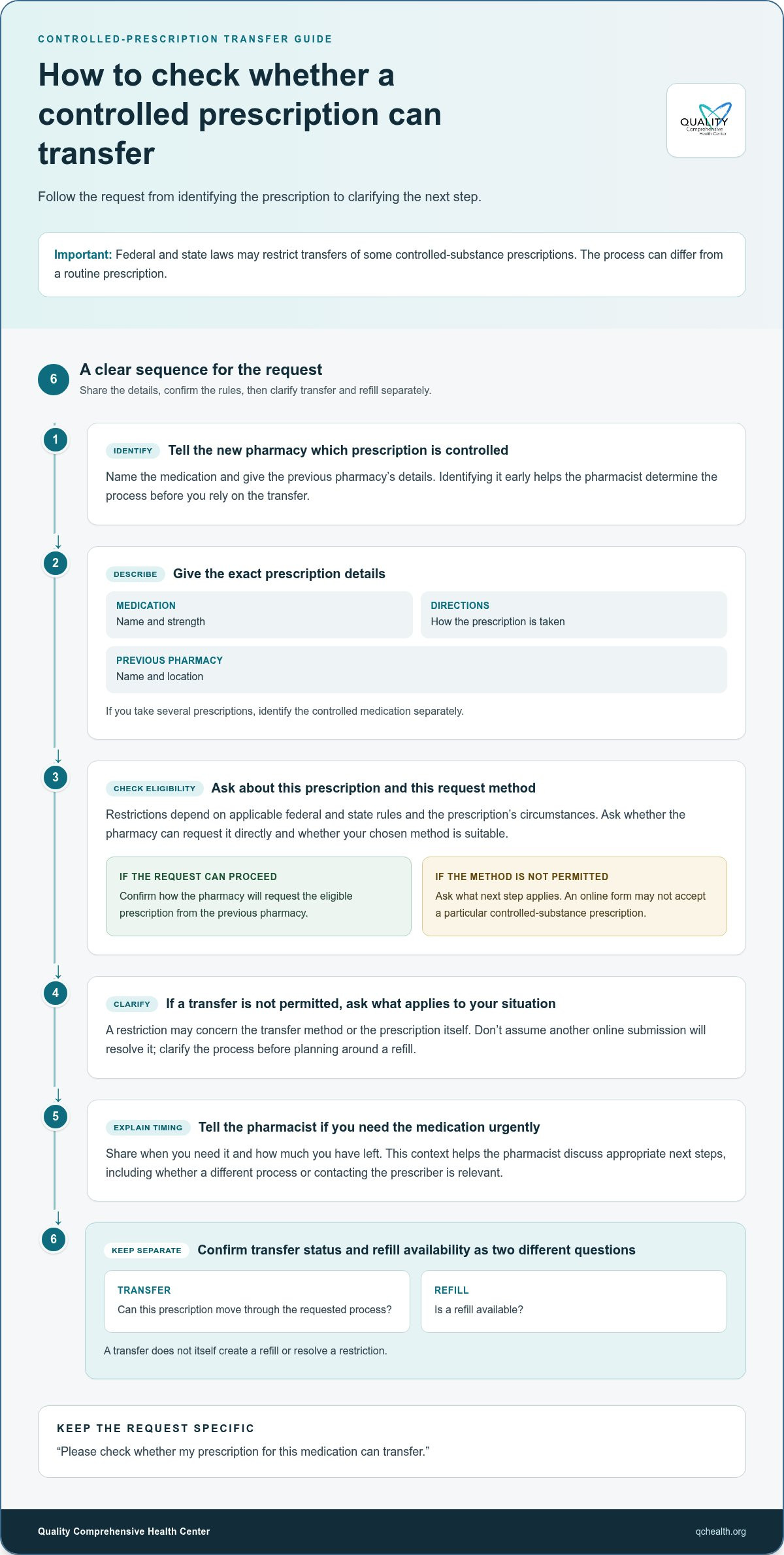
Tell the new pharmacy which prescription is controlled. Give the medication name and your previous pharmacy’s details. Federal and state regulations may limit which prescriptions can transfer or prohibit certain transfer methods. A controlled medication may therefore follow different steps from a routine prescription. Naming it early helps the pharmacist identify the right process before you rely on the transfer.
Ask whether the specific prescription can transfer. Restrictions depend on applicable federal and state rules and the prescription’s circumstances. Ask whether the pharmacy can request it directly or whether an online request is unsuitable. For example, an online form may not accept a particular controlled-substance prescription. The pharmacist can explain the process for that prescription rather than treating all controlled medications alike.
Describe the prescription accurately. Share the medication name, strength, directions, and your previous pharmacy’s name and location. These details help distinguish the exact prescription from other medications in your record. If you take several prescriptions, identify the controlled medication separately. A clear request, such as “Please check whether my prescription for this medication can transfer,” gives the pharmacy a specific item to review.
Ask what happens if a transfer isn’t permitted. Federal and state laws restrict transfers of some controlled-substance prescriptions. If the pharmacy says the prescription cannot move through your requested method, ask what next step applies to your situation. The restriction may concern the transfer method or the prescription itself. Don’t assume another online submission will resolve it. Clarify the process before planning around a refill.
Explain any urgent medication need. Tell the pharmacist when you need the medication and how much you have left. This context helps them understand the timing and discuss appropriate next steps. For example, if a transfer restriction prevents the usual request, explain that your supply is nearly finished. The pharmacist can identify whether a different process is needed and whether contacting the prescriber is relevant.
Keep transfer and refill questions separate. A transfer restriction concerns whether a prescription can move; refill availability concerns whether medication remains authorized for dispensing. Ask both questions directly. For example, confirm whether the prescription can transfer and whether a refill is available. This distinction helps you understand what to do next without assuming a transfer creates a refill or resolves a restriction.
Information needed to transfer a prescription
Prepare the prescription details and insurance information before starting the request. These details help the receiving pharmacy identify the right medication and process the transfer.
Gather the Required Prescription InformationCollect the medication name, strength, directions, and your previous pharmacy’s name and location. Use the prescription label to confirm the spelling and dosage details. Include the prescriber’s name if it appears on the label. Share updated insurance information with the new pharmacy to help prevent billing issues. Use the label and insurance card rather than relying on memory.
Check Transfer Rules Across State LinesTell the receiving pharmacy where the prescription is currently held and where you want it transferred. A prescription may be transferred across state lines when eligible; applicable federal and state rules and the medication type affect the process. Some controlled-substance prescriptions may have restrictions. A routine prescription and a controlled medication may require different transfer steps.
Match each medication to its details. If you take several prescriptions, prepare a separate entry for each one. Pair each medication name with its strength and directions instead of making a general request for “all my medicines.” This makes it easier to spot omissions or mismatches before the pharmacies communicate. A current medication list can help you organize the information.
Keep insurance details current. Give the receiving pharmacy updated insurance information, including the plan details on your current card. If your coverage changed, provide the new information instead of relying on the old pharmacy’s record. Accurate details help the new pharmacy process billing correctly. Keep your card handy so you can read the information directly.
Ask about transfer charges. A transfer fee depends on the receiving pharmacy’s policy and process. Keep this question separate from medication coverage: insurance information concerns billing for the prescription, while a transfer fee concerns the pharmacy’s transfer process. Being specific helps you understand any costs before the request proceeds.
Share the details with the new pharmacy. Patients can ask the new pharmacy to contact the previous pharmacy for eligible prescriptions. Provide the medication details, previous pharmacy information, and updated insurance. If you’re managing prescription changes alongside ongoing care, community pharmacy support can be part of that conversation.
Before transferring prescriptions, give the new pharmacy your updated insurance information. Providing current details as you prepare the request can help prevent billing issues. Keep the information handy so you can share it before the prescription is transferred.
If you need medication urgently, tell the new pharmacist that the need is urgent. The pharmacist may expedite the prescription or contact the prescriber. Make the urgency clear when you speak with the pharmacist so it is communicated directly. An urgent need and updated insurance information are separate details to raise: tell the pharmacist about the urgency and provide current insurance information to the new pharmacy before transferring prescriptions.
Requesting a transfer through the new pharmacy
Start with the pharmacy you want to use. When transferring prescriptions to a new pharmacy, ask its staff to request eligible prescriptions from your current pharmacy. You generally don’t need to coordinate the request with the old pharmacy yourself.
Ask the receiving pharmacy to start the request. Tell staff you want to transfer a prescription and name the pharmacy that currently holds it. The new pharmacy can contact the previous pharmacy about eligible prescriptions. For example, say, “Please request my prescription from my current pharmacy.” Identify the medication so staff can find the right record and explain any next steps.
Provide details for each prescription. Share each medication’s name and strength, along with your current pharmacy’s name and location. If you’re moving several prescriptions, name each one rather than asking vaguely for “everything.” This gives the receiving pharmacy a clear list and helps you notice if a medication needs separate handling.
Request prescriptions across pharmacy chains. The process is similar when the pharmacies belong to different chains: contact the receiving pharmacy and ask it to request eligible prescriptions. Give the former chain’s name and the medication details. You generally don’t need to manage communication between the two pharmacies yourself.
Explain mail-order or specialty dispensing. Tell the intended pharmacy how you currently receive the medication and name the prescription. Ask whether it can request an eligible transfer or whether another prescription action is needed. Mail-order and specialty arrangements may use a different dispensing process from local retail prescriptions. Describing your current setup helps the pharmacy identify the relevant next step.
Describe problems reaching the current pharmacy. If it’s closed or won’t transfer the prescription, tell the receiving pharmacist what happened. Give the old pharmacy’s name and the medication details, then ask the new pharmacy to make the request. If the transfer cannot be completed and a new prescription is needed, the pharmacist can discuss whether contacting your prescriber is appropriate.
Flag an urgent medication need. Tell the new pharmacist when you need the prescription and how much medication remains. A pharmacist may expedite the request or contact the prescriber. For example, explain that your current supply is nearly gone. This gives the pharmacist useful context to discuss the next step and timing.
This is useful context for deciding what to do next. In general, you don’t need to contact the old pharmacy yourself because the new pharmacy handles the transfer. Give the receiving pharmacist the information needed to identify the prescription and clearly explain any timing concerns.
If you need medication urgently, tell the new pharmacist. They may expedite the prescription or contact the prescriber. Explain when you need it and how much medication remains so the pharmacist understands the immediate need while considering the request.
Requesting a transfer through the new pharmacy
Start with the pharmacy you want to use. When transferring prescriptions to a new pharmacy, ask its staff to request eligible prescriptions from your current pharmacy. You generally don’t need to coordinate the request with the old pharmacy yourself.
Ask the receiving pharmacy to start the request. Tell staff you want to transfer a prescription and name the pharmacy that currently holds it. The new pharmacy can contact the previous pharmacy about eligible prescriptions. For example, say, “Please request my prescription from my current pharmacy.” Name the medication so staff can locate the right record and explain any next steps.
Provide details for each prescription. Share each medication’s name and strength, along with your current pharmacy’s name and location. If you’re moving several prescriptions, name them separately instead of asking vaguely for “everything.” This gives the receiving pharmacy a clear list and helps you notice whether a medication needs separate handling.
Request prescriptions across pharmacy chains. If you’re transferring prescriptions to a new pharmacy in a different chain, contact the receiving pharmacy and ask it to request eligible prescriptions. Give staff the former chain’s name and the medication details. You generally don’t need to manage communication between the two pharmacies yourself.
Explain mail-order or specialty dispensing. Tell the intended pharmacy how you currently receive the medication and identify the prescription. Ask whether it can request an eligible transfer or whether another prescription action is needed. Mail-order and specialty arrangements may follow a different dispensing process than local retail prescriptions. Describing your current setup helps the pharmacy identify the appropriate next step.
Describe problems reaching the current pharmacy. If it’s closed or won’t transfer the prescription, tell the receiving pharmacist what happened. Provide the old pharmacy’s name and the medication details, then ask the new pharmacy to make the request. If the transfer can’t be completed and a new prescription is needed, the pharmacist can discuss whether contacting your prescriber is appropriate.
Flag an urgent medication need. Tell the new pharmacist when you need the prescription and how much medication remains. A pharmacist may expedite the request or contact the prescriber. For example, explain that your current supply is nearly gone. This gives the pharmacist useful context to discuss the next step and timing.
How long does a prescription transfer usually take?
Use the usual timeline to plan ahead. A prescription transfer usually takes a few hours to one business day. Start the request before your current supply runs out. That gives the pharmacies time to communicate and address questions about the prescription. If you need the medication urgently, tell the receiving pharmacist when you make the request.
Give complete details at the start. Share the medication name and your previous pharmacy’s name and location. For multiple prescriptions, identify each medication separately. Clear details help the receiving pharmacy direct its request to the right place and record. If information is missing or doesn’t match, staff may need to clarify it before completing the transfer.
Separate a transfer from a renewal. A prescription with a refill available follows a different path from one with no refills left. If no refills remain, the receiving pharmacy may contact your prescriber to request a renewal. That additional step can affect when the medication is ready. Tell the pharmacist about the refill status when discussing timing.
Explain any controlled-substance restriction. Federal and state laws restrict transfers of some controlled-substance prescriptions. Those restrictions may affect whether the prescription can move through the requested process. Identify the medication when asking about timing. If it cannot follow a routine transfer path, ask the pharmacist what next step applies before relying on the usual timeline.
Tell the pharmacist if the need is urgent. Explain when you need the medication and how much you have left. The pharmacist may expedite the prescription or contact the prescriber. For example, say your current supply is nearly finished. This gives the pharmacist practical context to address the timing and discuss a suitable next step.
Ask what is still pending. If the prescription hasn’t arrived, ask whether the pharmacy is waiting for the previous pharmacy, a prescriber, or more information. These are distinct parts of the process. Knowing what remains can help you understand what action may move the request forward. Keep the medication name and previous pharmacy details ready for that conversation.
Plan your next step with support. Don’t wait until your supply runs out to start a transfer request. If you need help thinking through medication timing, reach out for medication guidance. Share the medication name, the remaining supply, and whether a refill is available. Those details help make the timing discussion specific and focused.
Quality Comprehensive Health Center: Specialty care
Quality Comprehensive Health Center provides specialty care for people whose health needs call for focused support. If a prescription change connects to a broader concern, Primary Care & Internal Medicine can address general health needs, while specialty care supports specific conditions. Families can also access Pediatric Care for children and Behavioral Health & Counseling Services for mental health support.
Medication questions can be part of a wider care conversation. Share what has changed and how it affects your health, so your care needs remain central. Contact Quality Comprehensive Health Center or visit qchealth.org to learn more.
Keep your next care step within reach
A pharmacy change can be a practical moment to consider care beyond a prescription. If a medication question connects to a broader health concern, Quality Comprehensive Health Center offers primary care, specialty care, and Pediatric Care for children and families. Bring your questions to a conversation centered on your health and the support that fits your needs.
Taking the next step with transferring prescriptions to a new pharmacy doesn’t mean you have to manage every care question alone. A trusted care team can help you consider how your health needs connect, including questions that may call for primary or specialty care.
Contact Quality Comprehensive Health Center to start a conversation about your care. You deserve support that helps you move forward with clarity and confidence.
Frequently Asked Questions
How do I transfer a prescription to a new pharmacy in the U.S.?
Ask the pharmacy you want to use to request the eligible prescription from your current pharmacy. You can make the request in person or by phone, and explain if a specific medication is time-sensitive. For example, if you’re changing pharmacies after moving, give the new pharmacy the name and location of the previous one. It can guide you through any next steps for that prescription.
What information does the new pharmacy need to transfer a prescription?
Have the prescription label and your current insurance card handy when making the request. The label can help you identify the exact medication and avoid confusing it with another prescription. If you’re moving several prescriptions, organize them separately rather than relying on a general request. Tell the pharmacy if your insurance information has changed so it can use your current coverage details.
Can a pharmacy transfer prescriptions for controlled substances?
Some controlled-substance prescriptions may be transferred, but applicable federal and state laws can restrict transfers or the methods used. There isn’t one rule for every controlled medication. Tell the receiving pharmacist which prescription you mean and ask about its transfer process. If the requested method isn’t allowed, the pharmacist can explain the next step for that prescription.
Which prescriptions cannot be transferred between pharmacies?
Some prescriptions may not be transferable through a particular method, and federal and state laws can restrict transfers of controlled-substance prescriptions. The limits depend on the prescription and applicable rules, so a general list may not describe every case accurately. For example, an online transfer option may not be permitted for a particular prescription. Ask the receiving pharmacist to explain the process for that medication.



Comments