


Case Management Services in Charlotte, NC: How to Find Support

When care involves several providers, plans, and follow-up steps, it can be hard to know what to do next. If you’re looking into case management services Charlotte NC, start by asking what support a provider offers, who may qualify, and how to get started. Services, eligibility, and costs can vary.
Case management may help connect a care plan with practical next steps. Before sharing personal information, ask what the service can coordinate, whether it involves communication with other providers, how privacy is handled, and what payment options apply. Asking these questions is a practical way to find out whether the service may fit your needs.
This article explains what case management can involve, what to ask a Charlotte provider, and how to explore support through Quality Comprehensive Health Center (QCHC). QCHC is a Charlotte-based community nonprofit offering case management alongside primary care, specialty care, behavioral health, and other health services. Confirm the current service scope, eligibility, referral process, and cost directly with a provider.
Table of Contents
What Do Case Management Services in Charlotte, NC Do?
Keeping up with appointments, different providers, and daily responsibilities can feel like a lot to manage at once. You may be unsure whom to contact, what information to bring, or which step to take next. Asking about case management services Charlotte NC can help you explore whether support with care coordination is available.
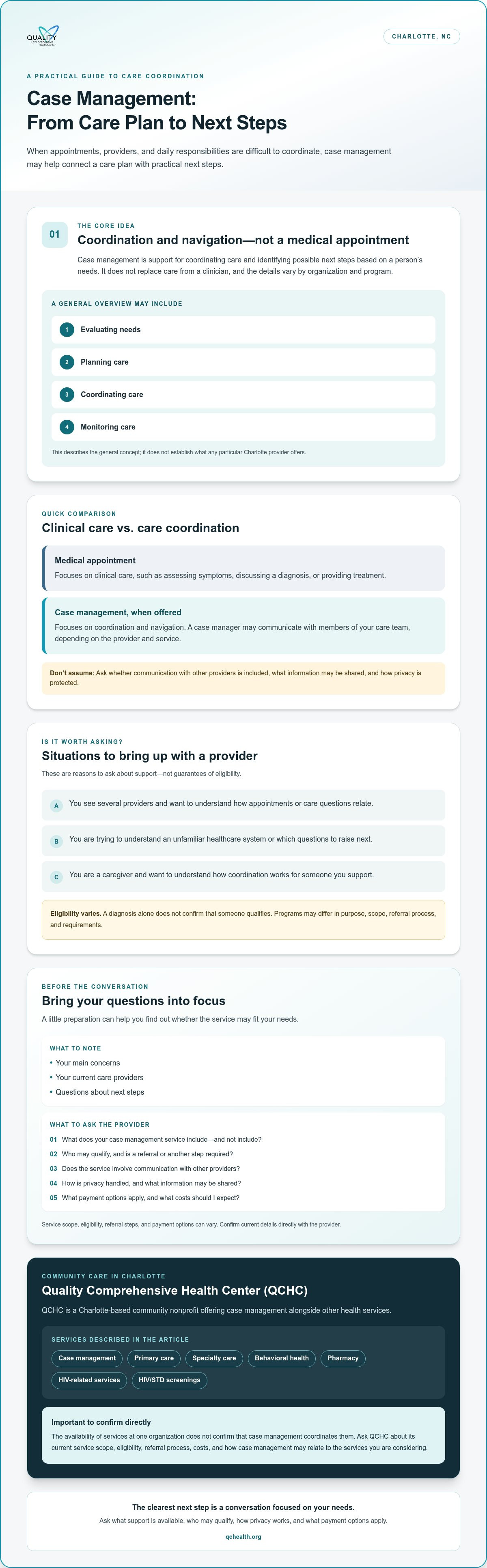
In brief, case management is support for coordinating care and identifying possible next steps based on a person’s needs. The details vary by organization and program. An overview of Medical case management describes a process that can include evaluating needs, planning, coordinating, and monitoring care. This helps explain the general concept, but it does not establish what a particular Charlotte provider offers.
The video below is aimed at medical professionals and providers, and offers another perspective on case management:
How is case management different from a medical appointment?
A medical appointment focuses on clinical care, such as assessing symptoms, discussing a diagnosis, or providing treatment. Case management, when offered, focuses on coordination and navigation. It does not replace care from a clinician. Depending on the provider and service, a case manager may communicate with members of your care team. Ask whether that is part of the service, what information may be shared, and how your privacy is protected. Don’t assume every organization includes this kind of communication.
Who might consider asking about case management?
Consider asking if you see several providers, are trying to understand an unfamiliar healthcare system, or are unsure what questions or next steps to discuss. Caregivers may also want to understand how coordination works for someone they support. These are reasons to ask, not guarantees of eligibility.
Programs differ in purpose, scope, referral process, and eligibility requirements. A diagnosis alone doesn’t confirm that someone qualifies. Before relying on a service, ask what support is currently available, whom it may serve, and whether a referral or other steps are required.
What Support Could Case Management Connect in Charlotte?
Care needs don’t always fit into one appointment. You may receive care from different providers, be managing an ongoing health concern, or be unsure which questions to raise next. A case management conversation can help clarify whether coordination is available and whether it may fit your situation. The specific support depends on the organization, service, and your eligibility.
Possible coordination topics are examples to ask about, not a guaranteed list of services. The Case Management Society of America describes case managers as patient advocates who work collaboratively to support care. Ask a provider what coordination means in its program, who may be involved, and what the service does and does not include.
Can case management help people navigate multiple health needs?
If you see more than one provider, ask whether case management can help you understand how appointments or care questions relate to each other. For example, you might want to clarify which provider to contact about a concern or what information to bring to an appointment. These are useful questions to raise, not promises about what a specific case manager will do.
Quality Comprehensive Health Center (QCHC) offers primary care, specialty care, pharmacy, and HIV-related services, including HIV/STD screenings. These offerings may relate to different health needs, but their availability at one organization does not confirm that case management coordinates them. Ask QCHC how its case management works and whether it may relate to the services you’re considering. You can also explore QCHC’s specialty care information as you prepare questions.
Can healthcare support include behavioral or community needs?
Health planning can involve more than clinical appointments. Some providers may discuss behavioral health or practical barriers as part of care planning. QCHC offers behavioral health services, but confirm directly whether and how those services connect with its case management. Don’t assume case management includes housing assistance, transportation, benefits help, or referrals to community programs. Ask what support is available and whether outside resources are part of the process.
Before deciding, clarify the service scope, who may qualify, and whether coordination with other providers is included. If you’re seeking case management services Charlotte NC, these questions can help you understand what a provider may offer in your circumstances.
Is Case Management Only for a Crisis or a Specific Diagnosis?
No. Case management isn’t automatically limited to people in crisis, but that doesn’t mean every program is open to everyone. Services can have different purposes, eligibility rules, referral steps, and levels of support. A program designed for a particular group may work differently from another provider’s service. Check the requirements for the specific support you’re considering.
North Carolina Medicaid’s definition of targeted case management describes a specific Medicaid service and its functions. It can help explain one form of case management, but it is not a description of every program in Charlotte or confirmation that a particular person qualifies. Ask the provider what applies to your circumstances.
Do you need a particular diagnosis or referral?
Requirements depend on the provider and service. A diagnosis alone may not establish eligibility, and one program’s rules may not apply to another. If you’re considering QCHC, ask whether its case management requires a referral, particular documentation, or other steps. If you’re unsure where to begin, ask who can explain the eligibility process.
What should you ask about privacy and affordability?
Questions about personal information and cost are a reasonable part of choosing care. Before sharing details, ask how information is handled, who may access it, and whether it could be shared with members of a care team. Request an explanation of the provider’s privacy practices rather than relying on assumptions.
Costs and payment arrangements vary by service. Ask whether fees apply to case management specifically, whether your insurance is accepted for this service, and whether a sliding-fee option applies. Don’t assume a payment arrangement for a medical visit also applies to case management. Clear answers can help you decide what to do next.
Eligibility: Who may qualify for this specific service?
Getting started: Is a referral or documentation needed?
Privacy: Who can access your information, and how is it handled?
Cost: What fees or insurance arrangements apply to case management itself?
If you’re comparing case management services Charlotte NC, asking these questions is a practical first step, whether you’re seeking routine coordination or support during a difficult period. QCHC offers case management alongside healthcare services, but confirm its current eligibility, referral process, privacy practices, and payment options directly with the organization.
How to Prepare to Ask About Case Management in Charlotte
A little preparation can make it easier to explain what you need and understand what a provider may offer. You don’t need to have every detail figured out before reaching out. A short summary and a few questions can start a useful conversation about case management services Charlotte NC.
What information should you gather before reaching out?
Write down your main concerns, the care you’re currently receiving, and what you hope to clarify. If you’re comfortable, have relevant appointment details and insurance information nearby. You can also ask a caregiver to help organize questions or join the conversation, if that works for you.
1. Summarize your needs. Note what feels difficult to coordinate and what you’d like help understanding.
2. List current providers. Write down the names or types of clinicians you see and any upcoming appointments related to your question.
3. Gather details you’re comfortable sharing. Keep insurance information and relevant appointment notes available, but ask how personal information is handled before providing sensitive details.
4. Write down your questions. Ask what the service covers, who may qualify, whether referrals are required, what it costs, and what happens next.
If you have an urgent medical concern, don’t wait for a case management conversation to seek appropriate medical care. Case management is not a substitute for urgent assessment or treatment.
What questions can help you understand the service?
Ask the provider to explain the service in plain language. Find out who provides it, what coordination may include, and whether eligibility criteria or a referral process apply. Then clarify whether fees, insurance coverage, or a sliding-fee option apply to case management specifically. These details may differ from those for a medical appointment.
You can also ask, “If this service isn’t a fit for me, what should I consider next?” The provider may be able to explain other steps or point you toward information, but confirm what guidance it can provide. If you’re reviewing healthcare costs, QCHC’s information about getting medical care with a high-deductible plan may be a useful topic to explore. Confirm whether those details apply to case management.
To ask about current case management availability and how to get started, contact QCHC through its website. You can bring your questions without knowing in advance whether you qualify.
Explore Case Management Services at QCHC in Charlotte
If you’re looking for case management services Charlotte NC, Quality Comprehensive Health Center (QCHC) is a community-based nonprofit healthcare provider in Charlotte that serves underserved populations. Its work focuses on advancing health equity and reducing barriers to care. QCHC offers case management alongside primary care, specialty care, behavioral health services, pharmacy, pediatric care, and HIV-related services.
Having several services at one organization may give you a place to ask how they relate to your needs. Their presence together does not confirm that case management coordinates them or that every service is appropriate or available to every person. Ask QCHC what its case management currently includes, how it relates to other services, and whether your needs may fit.
How QCHC’s community-based care may fit your needs
QCHC’s community-focused approach centers respectful care for individuals and families who may face barriers to healthcare. Its offerings include primary and specialty care, behavioral health services, and pharmacy services. If you’re exploring nearby care options, QCHC’s guide to finding a Charlotte care center may also help you consider what to look for in a provider. Confirm directly which services are currently available and how to access them.
QCHC operates on Beatties Ford Road in Charlotte. Confirm its current street address and visit process with the organization before traveling. Checking first can help you plan your visit.
How to take the next step with QCHC
Start with a direct question. Ask whether case management is currently available, who may qualify, whether a referral or documentation is needed, and what the service includes. Also check whether fees, insurance, or a sliding-fee option apply specifically to case management. Don’t assume eligibility or payment arrangements for another healthcare service are the same.
If the service isn’t a fit, ask what other next steps QCHC can suggest. You don’t need every answer before making an inquiry. A brief explanation of your concerns and the care you’re already receiving can help begin the conversation.
Contact QCHC to ask about case management, current availability, eligibility, and whether the service may fit your circumstances.
Take a Clear Next Step Toward Care Coordination
Case management can help people understand possible next steps and explore how care coordination might fit their needs. Services vary, so ask each provider about scope, eligibility, referrals, privacy, and cost before getting started. A short summary of your current care and a few questions can make the first conversation easier.
For people exploring case management services Charlotte NC, Quality Comprehensive Health Center (QCHC) is a community-based nonprofit healthcare organization serving Charlotte. QCHC has more than 20 years of experience and offers case management alongside a range of healthcare services. Contact the organization directly to confirm current availability, how the service works, and whether it may suit your circumstances.
Contact QCHC to ask about case management services. Ask about availability, eligibility, and next steps so you can decide whether the service fits your needs.
Frequently Asked Questions
What do case management services include?
Case management generally helps people understand and coordinate possible next steps related to their care. Specific support depends on the organization and your circumstances. Ask who provides the service, what coordination may involve, and whether eligibility or referral requirements apply. QCHC offers case management in Charlotte, but contact the center to confirm what its service currently includes.
Who can receive case management services in Charlotte, NC?
Eligibility depends on the provider, service, and individual situation. Don’t assume a diagnosis, insurance plan, or referral automatically qualifies you. Ask the organization what requirements apply, what information to have ready, and whether other support options may be appropriate if its case management isn’t available or suited to your needs. Eligibility decisions may differ across programs.
Do I need a referral for case management at QCHC?
Ask QCHC directly whether you can inquire yourself or need a referral from a clinician or another organization. Before reaching out, it may help to note your main care questions and the providers involved in your care. Confirm whether any documents are needed rather than assuming what to bring. Requirements may depend on the specific service.
Is case management free or covered by insurance?
Fees and coverage depend on the service, your insurance plan, and the provider’s policies. Don’t assume case management is free or covered because a clinic offers other services. Ask QCHC whether fees apply to case management specifically, whether your plan is accepted for this service, and whether a sliding-fee option is available. Confirm your individual benefits with your insurer.
Can a case manager help coordinate care between providers?
Care coordination may be part of case management, but the tasks offered vary by provider. Ask whether the service can help you organize appointments, clarify possible next steps, or communicate with your care team. Before sharing personal information, find out how communication works and whether you need to give permission. Confirm which coordination activities QCHC currently provides.
How do I get started with case management services in Charlotte?
To explore case management services Charlotte NC, contact a local provider and explain what kind of support you’re seeking. Ask about current availability, eligibility, referrals, fees, and what information to prepare. QCHC offers case management in Charlotte, but contact the center to confirm its current process and whether the service may fit your circumstances. For an immediate medical need, seek appropriate urgent care rather than waiting for coordination support.
Is case management the same as seeing a doctor or therapist?
No. A medical or therapy appointment focuses on clinical evaluation or treatment, while case management may focus on coordinating care or helping you understand possible next steps. The roles can relate, but they aren’t interchangeable, and what each service includes depends on the provider. Ask which team member handles clinical concerns and who, if anyone, supports coordination. This can help you contact the right service for your needs.


Comments