


Anxiety counselling in Charlotte for symptoms, CBT and care

You don’t have to wait until anxiety feels unbearable to seek support. If worry is persistent, feels excessive, or interferes with daily life, anxiety counselling can help you understand what’s happening and explore ways to cope.
It can be hard to focus, sleep, or feel at ease when anxious thoughts or physical symptoms keep returning. Reaching out for care is a practical step, not a sign that you should have handled everything on your own.
In this guide, you’ll learn what anxiety can feel like, how counselling and cognitive behavioral therapy (CBT) may help, and when it makes sense to seek treatment. You’ll also find practical considerations about insurance and Medicaid coverage when looking for care in Charlotte. The goal is to make the next step clearer and more manageable.
Table of Contents
Cognitive behavioral therapy (CBT)
Cognitive behavioral therapy, or CBT, focuses on how thoughts, feelings, and actions interact. In anxiety counselling, it can offer practical ways to respond to anxious thoughts and situations.
How CBT Works
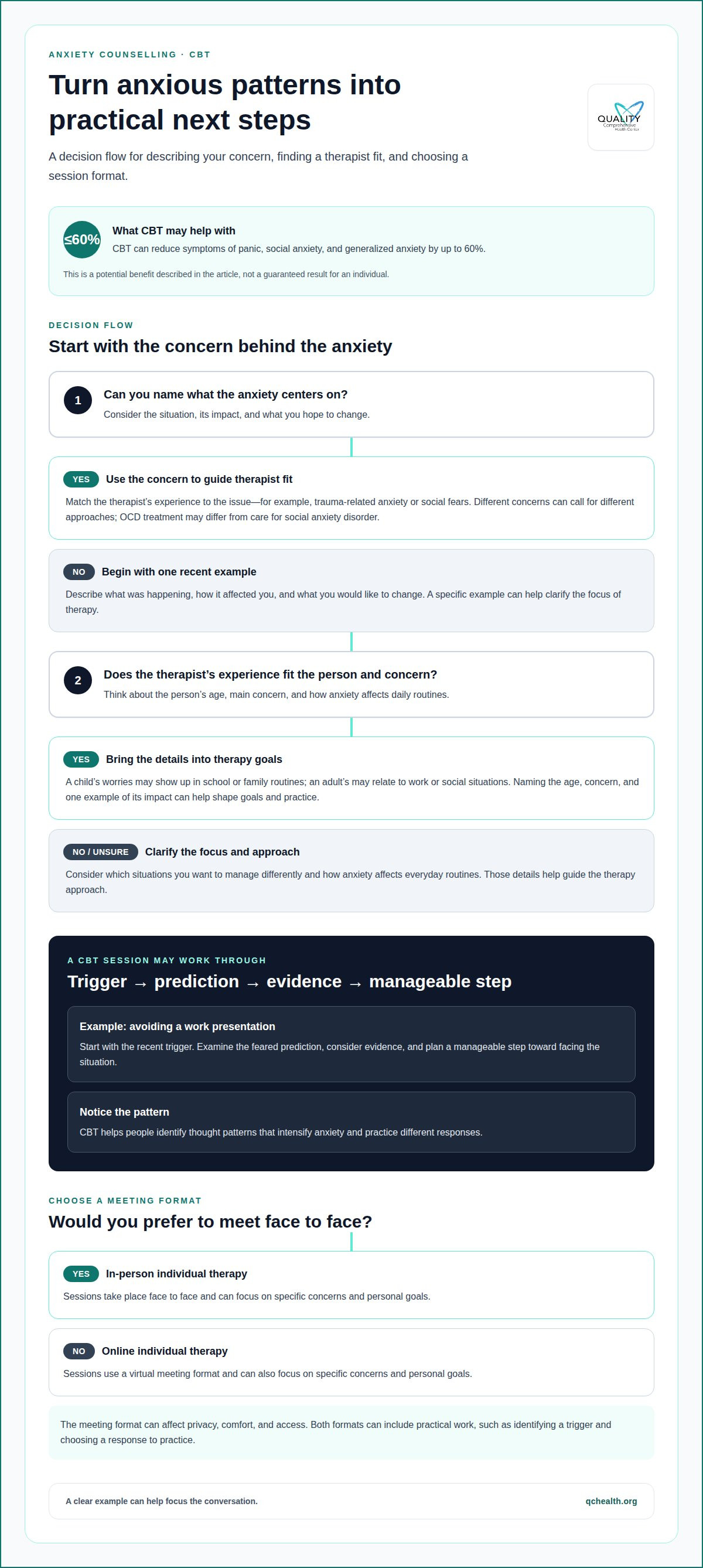
CBT helps people notice thought patterns that intensify anxiety and practice different responses. A session might start with a recent trigger, such as avoiding a work presentation. The therapist and individual can examine the feared prediction, consider evidence, and plan a manageable step toward facing the situation. CBT can reduce panic, social anxiety, and generalized anxiety symptoms by up to 60%.
Finding an Anxiety Therapist
A useful starting point is matching a therapist’s experience to the concern bringing you to care. For example, someone whose anxiety is connected to trauma may benefit from a clinician familiar with trauma, while another person may want help with social fears. Describing the situation, its impact, and what you hope to change can help shape the focus of therapy.
Tailored Therapy for Anxiety Disorders
Anxiety disorders don’t all involve the same triggers or patterns, so treatment should fit the person’s symptoms and specific concern. OCD treatment, for example, may differ from care for social anxiety disorder. A therapist’s approach should reflect what the anxiety centers on, how it affects daily routines, and which situations the person wants to manage differently. Those details help guide therapy goals and practice.
Therapist Specialties and Populations
Therapists may focus on concerns such as anxiety, trauma, or depression, and their experience can vary across age groups. A child’s worries may show up in school or family routines, while an adult may describe anxiety around work or social situations. Naming the person’s age, main concern, and one example of its impact can help clarify whether the therapist’s specialty and approach fit.
In-Person and Online Individual Therapy
Individual therapy gives one person space to discuss specific concerns and work toward personal goals. In-person sessions take place face to face; online sessions use a virtual meeting format. Both can focus on practical work, such as identifying a trigger and choosing a response to practice. The main difference is the meeting format, which can affect privacy, comfort, and access.
Physical and emotional symptoms of anxiety
Anxiety can affect thoughts, feelings, sleep, concentration, and the body. Notice when symptoms arise and how they affect everyday activities.
Common Signs of Anxiety
Signs may include feeling restless or on edge, difficulty concentrating, trouble sleeping, or a sense of dread. For example, someone might replay a conversation at night, then struggle to focus at work the next morning. Anxiety can also center on specific situations, such as social gatherings, separation from loved ones, or performance demands. The pattern and its impact matter more than one difficult moment.
Anxiety is a normal response to stress or perceived danger. It may become a concern when it feels excessive, persists, and interferes with daily life. A useful first step is to note what was happening before symptoms began, what you felt, and what you did next. This can help you recognize whether a stressful response is occasional or part of a recurring pattern that deserves attention.
Physical Symptoms
The body can respond to anxiety with sensations that feel intense or unfamiliar. A person might notice a racing heartbeat, tense muscles, sweating, or an unsettled stomach before speaking in a meeting. Panic can bring a sudden wave of fear or dread, sometimes alongside physical discomfort. These experiences can disrupt ordinary tasks, especially when someone begins avoiding situations associated with them.
Panic attacks typically last a few minutes. During one, focus on a simple grounding step: name what is happening, then bring your attention to your immediate surroundings. Physical symptoms can have different causes, so a symptom by itself doesn’t establish that anxiety is the cause. Consider when it occurs, what else is happening, and whether it repeatedly appears in similar situations.
Emotional and Cognitive Changes
Anxiety may shape both emotional reactions and thinking habits. A small uncertainty, such as waiting for a reply, can lead to repeated worst-case predictions or difficulty shifting attention. Some people feel irritable or overwhelmed; others withdraw from plans or seek constant reassurance. These responses can affect relationships, school, and work, even when the feared outcome never occurs.
Try recording one example with three details: the situation, the thought, and the response. For instance, write “team meeting,” “I’ll make a mistake,” and “I stayed silent.” This brief record can make the link between a trigger and a reaction easier to discuss in care. It can also show whether the same thought or avoidance pattern appears in different situations.
Recurrence and Symptom Management
Anxiety symptoms can ease and return, particularly when familiar stressors arise. A flare-up doesn’t erase progress; it can show which situations still feel difficult. Note what changed, which symptoms returned, and what helped you stay engaged with daily routines. These details give a clearer picture than judging progress by one hard day.
When symptoms keep interrupting sleep, concentration, relationships, or responsibilities, consider discussing the pattern with a mental health professional. In Charlotte, behavioral health services can be a next step for exploring support. Bring a recent example, including its trigger and effect on daily life, to help focus the conversation.
Insurance and Medicaid acceptance
Insurance coverage for mental health care depends on your plan and the service involved. Medicaid enrollment alone doesn’t establish whether a specific practice accepts Medicaid or whether every service is covered. Separate eligibility from provider participation and benefits. That distinction can help clarify what your coverage may mean for counselling.
What to Review in a Health Plan
Start with your plan’s behavioral health benefits and look for outpatient therapy. Then check whether the clinician or practice is in the plan’s network. A plan may treat in-network and out-of-network care differently. Review the plan documents or member materials for any deductible, copayment, coinsurance, referral, or prior-approval requirements that apply to the service.
Check how the plan describes the type of appointment. An individual therapy session and a medication-management visit may be categorized differently. If you’re considering virtual care, look for information about telehealth benefits, since coverage terms can vary by plan. Review the service name alongside the provider’s network status; either detail alone may give an incomplete picture.
Medicaid and Behavioral Health Benefits
For Medicaid, distinguish having coverage from finding a participating provider. Review your plan’s behavioral health information and provider directory for outpatient counselling, then note any stated referral or authorization steps. If the directory lists a practice but not the service you need, that distinction matters. Identifying the service category helps clarify whether the listing applies to therapy rather than another kind of care.
Coverage questions are separate from clinical fit. A plan may describe which services it covers, while the clinician’s approach determines whether the care addresses anxiety symptoms. For example, someone seeking CBT can look for “outpatient therapy” and “behavioral health” in benefit materials, then consider whether the clinician offers the approach they want.
Medication and Referrals
Therapy and medication are different parts of mental health care. A therapist may help with behavioral therapy, coping strategies, and patterns of thinking, while medication decisions involve a prescriber. When a counselling center does not have prescribers, referrals can connect clients with prescribing care separately from therapy.
If medication is part of the conversation, identify which professional handles each step. Ask whether the appointment is for therapy or prescribing, and whether your plan treats those services differently. A referral connects you with a prescriber for an assessment; it doesn’t mean medication is required. Your symptoms, preferences, health history, and response to treatment all inform that discussion.
Making Coverage Questions Concrete
Write down the service, provider, and appointment format you’re considering. For example: “individual anxiety therapy, in person” or “virtual behavioral health appointment.” Then compare those details with your plan’s network and benefit terms. This focused approach can help you understand coverage without assuming Medicaid or private insurance works the same way for every practice or service.
Can I meet with a therapist in person or virtually?
Therapy sessions may take place in person or through a virtual appointment. Mindfulness practices, including the 5-4-3-2-1 grounding method, can be discussed and practiced in either format.
Mindfulness-Based Techniques for Anxiety
Mindfulness means directing attention to what’s happening now, rather than following every anxious thought. The 5-4-3-2-1 method offers a structured exercise: identify five things you see, four you feel, three you hear, two you smell, and one you taste. For example, name the chair beneath you and the sounds nearby.
Move through the sequence at a comfortable pace. If one sense feels unavailable, continue with the next. In a session, a therapist can guide the exercise and discuss what you noticed. The practice isn’t about forcing thoughts away; it gives your attention a present-focused task during a stressful moment.
Practicing Between Sessions
A short mindfulness practice can fit into an everyday routine. Before entering a busy store, pause and name objects around you, such as a sign, a doorway, and a shopping basket. Then notice your feet on the floor and listen for nearby sounds. This turns an abstract technique into a specific action.
Writing down the situation and the exercise afterward can help you discuss it in therapy. Note what was happening, which senses you used, and whether you returned to the task at hand. If the exercise feels frustrating, that reaction is useful to bring up. A therapist can help adapt the practice to your needs.
In-Person Therapy
In-person sessions let you meet a therapist face to face in a shared setting. You can describe a recent situation, such as feeling tense before a family gathering, and practice grounding during the conversation. The therapist can observe how you work through the exercise and help connect it with your treatment goals.
Some people value having a defined place for therapy, separate from home or work. Think about what helps you speak openly and stay focused. For example, consider whether travelling to an appointment adds strain or whether a dedicated meeting space supports a sense of balance.
Virtual Therapy
Virtual sessions let you speak with a therapist through a video appointment. You can practice the same grounding sequence while seated in a familiar room. Before the session, choose a private spot and keep any needed materials nearby, such as paper for noting the five things you see.
Consider practical details that affect your focus, including privacy, sound, and a stable connection. If someone else is nearby, headphones and a closed door may help protect the conversation. Whether meeting virtually or in person, bring one example of anxiety you’ve been experiencing. That gives the session a clear starting point.
How counselling can help with anxiety
At a first anxiety counselling session, expect to discuss what’s troubling you, when it happens, and how it affects daily life. You can also share what you hope will change, such as feeling more at ease during work meetings.
Session frequency and length of care depend on your needs, goals, and response. Some people notice relief within several weeks; some anxiety therapies may take 5 to 20 weekly sessions, and meaningful changes may emerge after around 8-10 sessions.
Counselling can build understanding and coping strategies, but it can’t promise that anxiety will disappear or prevent every flare-up. Some people may resolve anxiety, while others use therapy tools to lessen its impact when symptoms return.
The value of counselling often lies in making anxiety easier to understand and respond to. A therapist can help you explore what contributes to anxious feelings, recognize patterns, and develop strategies that fit daily life. For example, an adult who repeatedly worries after difficult conversations might explore what those moments mean and how they affect relationships.
From Understanding to Practical Change
Counselling offers a structured place to examine the thoughts and beliefs connected with anxiety. Rather than treating every worry as fact, you can practice noticing a thought, considering its effect, and choosing a response. This can help interrupt a pattern such as anticipating criticism, avoiding a conversation, and feeling more isolated afterward.
Sessions can also help connect anxiety with its context. A therapist may explore whether changes at work, family tension, or a stressful transition coincide with worsening symptoms. The goal is not to assign blame. It’s to understand the pattern and identify a useful next step, such as preparing for one conversation or gradually returning to an activity.
Building Coping Strategies That Fit
A strategy becomes more useful when it matches the challenge. Someone who feels anxious before appointments might plan what they want to discuss, while someone overwhelmed by competing tasks might break one responsibility into smaller steps. Counselling helps turn broad goals into actions to practice between sessions and review together.
For young people, therapy may support clearer communication with parents or caregivers and help them feel less alone with worries. Adults may focus on work, caregiving, or relationship pressures. In both cases, sessions can help identify what support feels practical and how to ask for it.
Progress, Setbacks, and Limits
Progress may mean returning to a valued activity, communicating more openly, or spending less time caught in anxious thinking. It doesn’t have to mean never feeling anxious. A flare-up can be an opportunity to revisit a strategy and understand what changed, rather than a reason to dismiss earlier gains.
Consider behavioral health support if anxiety continues to disrupt everyday responsibilities or relationships. Bring one recent example and a goal you care about. That gives the conversation a clear starting point, while your experiences and response help shape the work that follows.
Quality Comprehensive Health Center: Specialty care
Quality Comprehensive Health Center offers Behavioral Health & Counseling Services for people seeking support with anxiety and related concerns. If symptoms are affecting daily life, these services can be a next step toward discussing your needs and possible care. The center also offers specialty care, primary care, and pediatric care, helping individuals and families access care suited to different health needs.
For a first conversation, share what has been difficult, how anxiety affects your routine, and what kind of support you’re seeking. This can help clarify whether behavioral health services align with your needs and what to discuss next.
Contact Quality Comprehensive Health Center to discuss behavioral health support.
Take a small step toward support
You don’t need a perfect explanation before reaching out. Start with what you want help changing, such as avoiding an important activity or feeling caught in worry. That can give a first conversation a clear, personal focus.
For people seeking anxiety counselling in Charlotte, Quality Comprehensive Health Center offers behavioral health services alongside specialty care, primary care, and pediatric care. These services support different needs for individuals and families.
If you’re ready to talk about your next step, contact Quality Comprehensive Health Center. Sharing what has been difficult and what support you’re looking for can help begin the conversation. Asking for care is a meaningful act of self-advocacy, and you deserve to take that step at your own pace.
Frequently Asked Questions
When should I seek treatment for anxiety?
Seek support when anxiety feels persistent, excessive, or interferes with daily life. For example, consider talking with a professional if worry repeatedly keeps you from attending class, completing work, or seeing people you care about. You don’t need to wait for a crisis. Describe what’s changing in your routine and how long the pattern has been affecting you.
How can counselling help?
Counselling can help you understand what triggers anxious thoughts and practice responses that fit your circumstances. For instance, if uncertainty makes you repeatedly cancel plans, a counsellor can help you explore what you fear and identify a manageable next step. You can also work on coping strategies and ways to communicate your needs. Bring a recent example to give the conversation a concrete starting point.
How can you or a loved one spot the signs of anxiety?
Look for patterns such as feeling on edge, difficulty sleeping or concentrating, and recurring dread. A loved one might notice someone withdrawing from plans or repeatedly seeking reassurance. Listen without dismissing their feelings, then offer practical help, such as accompanying them through an everyday task. A specific change, like avoiding a regular activity, can make it easier to start a caring conversation.
What is anxiety counselling and how does it work?
Anxiety counselling is a guided conversation with a trained mental health professional about anxiety and its effects. In sessions, you can discuss your concerns, explore triggers, and work toward practical ways to respond. The process may include setting a goal, such as returning to a social activity, then reviewing what felt difficult. The plan develops through discussion rather than a one-size-fits-all script.
What types of therapy are used for anxiety, such as CBT, exposure therapy, and ACT?
CBT helps people examine thought patterns and practice different responses. Exposure-based approaches can involve gradually facing feared situations, with steps shaped around the person’s concerns. ACT is another therapy approach; discuss its methods and fit with a qualified professional. For example, someone avoiding public speaking may need a different plan from someone distressed by intrusive thoughts. The approach should fit the specific anxiety concern.
How do I find a licensed anxiety counselor or therapist near me in the United States?
In Charlotte, start by looking for a mental health professional whose experience aligns with the concern you want help with. Quality Comprehensive Health Center provides Behavioral Health & Counseling Services through licensed clinical social workers and counselors. Consider whether you want individual support and whether the clinician’s stated focus fits your needs. A clear example of what you’re struggling with can help guide an initial conversation.
How much does anxiety counseling cost, and does health insurance cover it?
There isn’t one price that applies to every counseling appointment, and insurance benefits vary by plan and service. Quality Comprehensive Health Center accepts Medicaid, Medicare, and most private insurance plans. Sliding fee discounts are available for eligible patients. Review your plan’s behavioral health benefits, network information, and any applicable cost-sharing details to understand how your coverage applies.
Can I get anxiety counseling online, and how does teletherapy compare with in-person therapy?
Online counseling can take place through virtual sessions, while in-person therapy happens face to face. Both formats allow you to discuss concerns and work toward personal goals. For an online appointment, choose a private space where you can speak comfortably; for in-person care, consider whether travel fits your routine. The best format is the one that supports your ability to participate and communicate openly.


Comments